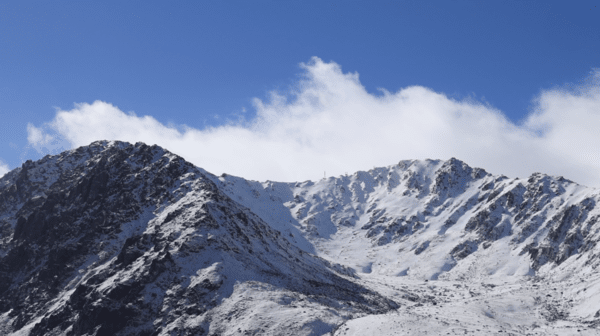
[News Culture] On the grasslands of Kyrgyzstan, hunters train golden eagles and herders milk their mares. In the mountain forests, families climb walnut trees to gather the autumn harvest, while in towns and villages, artisans teach their children how to build yurts and turn sheep’s wool into patterned carpets.
In a four-part series, EBS1’s “Travelogue Earth” follows voice actor Kim Kuk-jin through the Tian Shan mountains. Along the way, he joins families at work, cooks with residents of different ethnic communities and takes part in celebrations rooted in Kyrgyzstan’s nomadic traditions.
Eagle hunting and a wedding on the grasslands
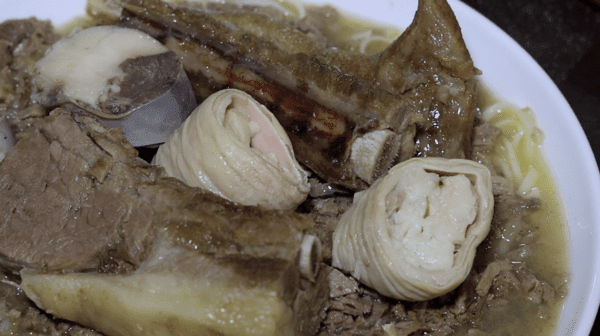
The journey begins in Bishkek, where Kim watches the changing of the guard at Ala-Too Square before heading to Osh Bazaar. Horse meat is among the offerings in the market’s meat section, and at a local restaurant, he tries beshbarmak, a traditional dish of meat and noodles.
Crossing the Too-Ashuu pass, once traveled by Silk Road merchants, the journey continues through the snow-covered Tian Shan mountains to Lake Issyk-Kul, one of the world’s largest mountain lakes.
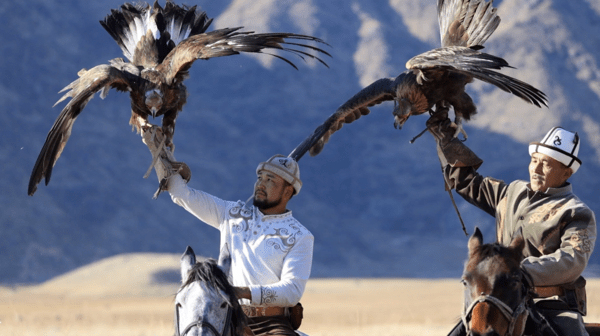
Out on the grasslands, Kim meets eagle hunters known as berkutchi and watches a golden eagle, a past winner of a traditional Salbuurun hunting competition, being put through its training. He also sees a Kyrgyz hunting dog known as the taigan in action and learns how hunters train their birds and teach the skills to others.
Many herding families have already returned to their villages for the season, but one family remains on the pasture. Kim joins them in milking a mare and samples kumis, a drink made from fermented mare’s milk.
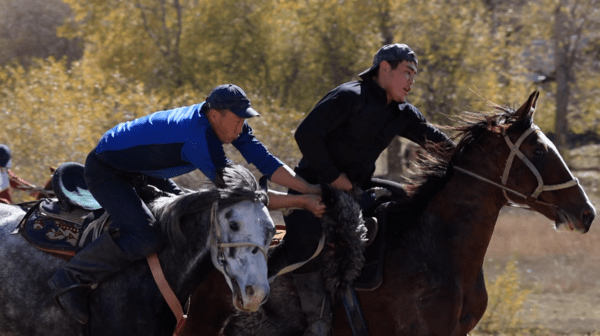
At a wedding, the groom prepares meat for the guests while the bride welcomes visitors indoors. After the marriage ceremony and a blessing from an imam, riders compete in kok boru, a traditional horseback game in which teams try to gain possession of a goat carcass.
Inside the walnut forests and rice mills
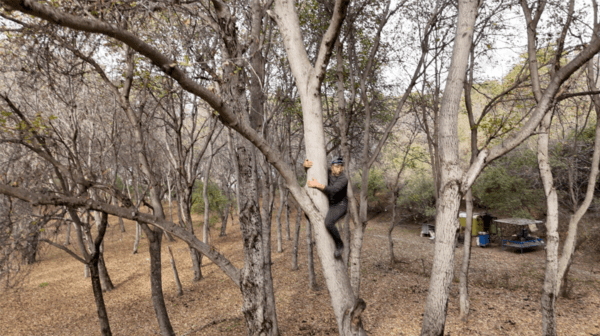
A Soviet-era vehicle carries Kim along unpaved roads into the walnut forests of Arslanbob. Among the largest natural walnut forests in the world, the area produces around 1,500 metric tons of walnuts each year.
Harvesting requires climbing high into the trees and shaking the branches until the walnuts fall. While members of a local family work overhead, Kim helps gather the nuts from the ground. Later, over a meal of plov and tandyr nan baked by the grandmother, he hears about the family’s life in the forest and the work that goes into each harvest.
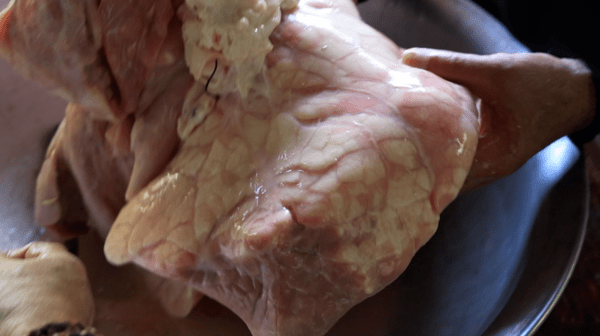
Another local specialty is olobo, made by filling a cow’s lung with seasoned milk and boiling it for more than an hour.
The landscape changes at Skazka Canyon, where colorful rock formations resemble dinosaurs, elephants and even the Sphinx. The canyon takes its name from the Russian word for fairy tale.
In Uzgen, a former trading center on the Silk Road, Kim browses a morning market filled with spices and other ingredients, including Korean ginseng. Outside the market, he meets a farming family producing the red rice for which the area is known.
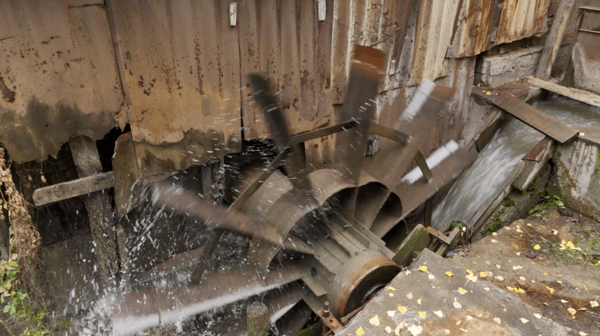
After harvesting, the rice stalks are kept in warm conditions for more than two weeks, giving the grains their reddish color. At a traditional water-powered mill, the family demonstrates how the rice is processed using methods handed down through generations. The visit ends over a plate of plov made with freshly milled rice, as the family talks about its farming traditions.
At home with Dungan and Cossack families
In the eastern city of Karakol, the market reflects the variety of communities living in the area, with Kyrgyz kurut, a dried dairy snack, sold alongside Uzbek-style bread.
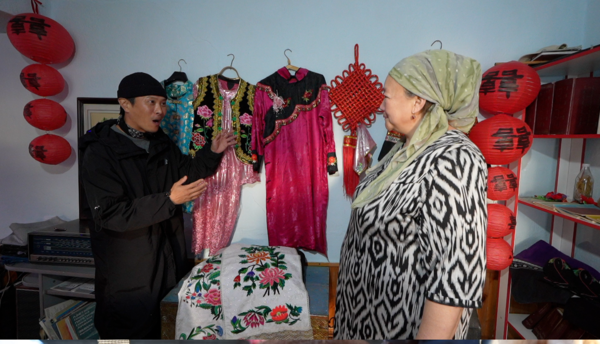
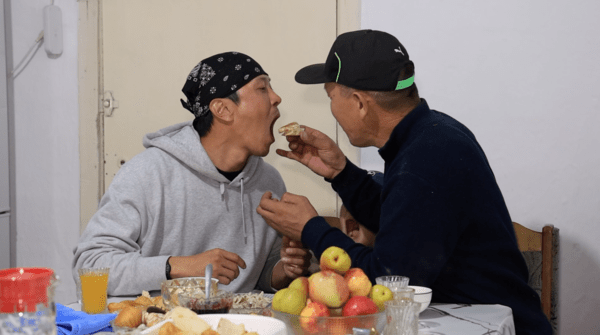
A Dungan family that has maintained its traditions for eight generations welcomes Kim into its home. After looking at traditional garments and hearing about the community’s history, he joins the family in the kitchen to make chive dumplings and ashlyan-fu, a cold noodle dish especially popular in Karakol. The experienced cook works quickly as Kim tries his hand at preparing the unfamiliar dishes.
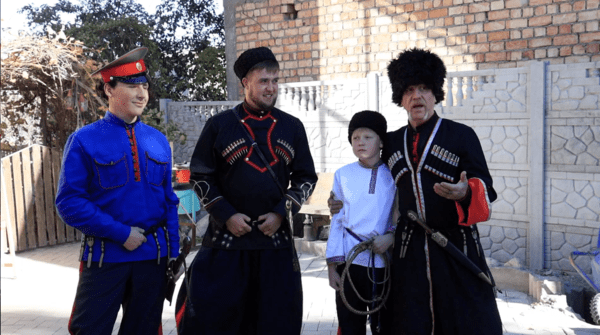
Elsewhere in the Tian Shan mountains, a Cossack family welcomes him into a Russian-style house built by the husband and wife. Members of the community demonstrate their traditional sword skills in folk clothing and military uniforms. At the dinner table, they serve varenyky, borscht and homemade walnut liquor, explain their custom of drinking without becoming intoxicated, and sing traditional songs.
Past a monument to Yuri Gagarin, the first human in space, a forest trail through Barskoon Gorge leads to a waterfall known as the Tears of the Snow Leopard.
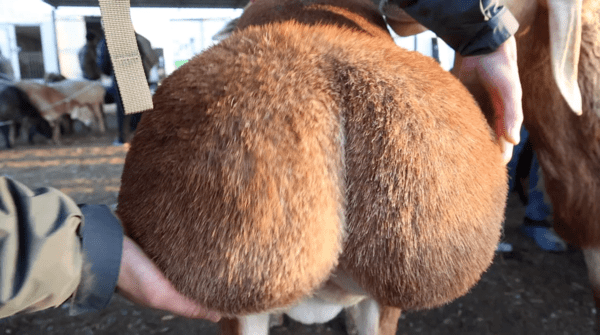
At the weekly livestock market in At-Bashy, farmers trade Arashan sheep, a highly valued local breed. Kim accompanies one of the farmers home to help tend the flock and learn how the sheep’s large reserves of tail fat help them withstand the cold. He also tries seasoned sheep fat served with bread, a familiar food among local livestock farming families.
Yurts, felt carpets and the skills behind them
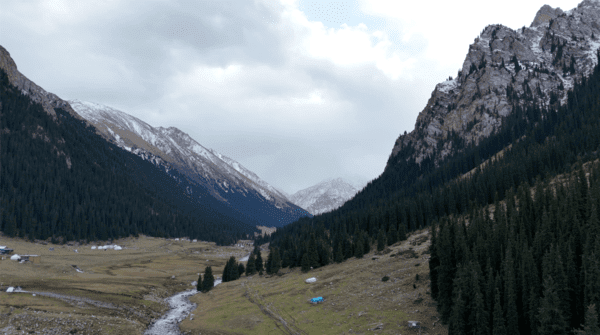
A specially equipped vehicle takes Kim up the rough mountain roads of Altyn-Arashan. After reaching the high mountain pastures, he rests at a lodge and warms up in the nearby hot springs.
Away from the mountains, Kim gets a taste of Kyrgyzstan’s growing interest in arm wrestling when he challenges a 15-year-old girl who has already won numerous medals in the sport.
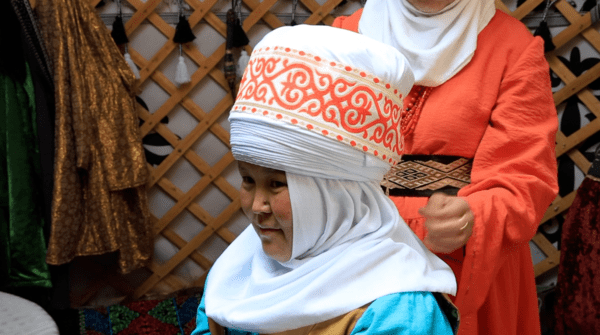
In another family home, a woman shows how the elechek, a traditional headdress worn by married Kyrgyz women, is put on. Starting with an inner cap, she carefully wraps some 40 meters of fabric around her daughter-in-law’s head.
Where the Greater and Lesser Naryn rivers meet, Kim joins local gold panners, searching through river sand alongside residents who spend long hours working along the riverbank.
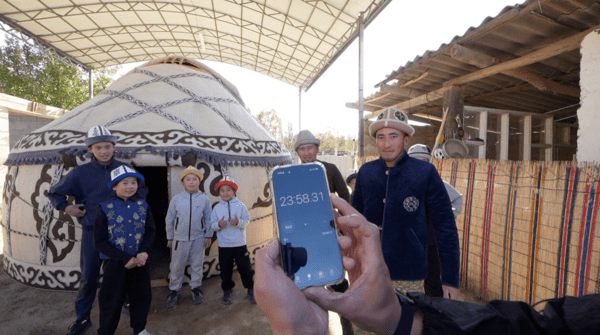
Back in Karakol, a third-generation yurt maker and winner of an international yurt assembly competition demonstrates how the traditional portable dwelling is constructed. He learned the craft from his family and is now teaching his children, who represent the fourth generation of yurt makers. The assembly reveals how the materials fit together and the skill required to build a home suited to nomadic life.
The final visit takes Kim to a village where artisans make traditional Kyrgyz felt carpets, including shyrdak and ala-kiyiz. Joining the villagers in making an ala-kiyiz carpet, he helps arrange patterns in sheep’s wool before hot water is poured over it and the wool is pressed underfoot.
The group works to the rhythm of music, treading the wool together. After all their effort, the finished carpet turns out to have a slightly misshapen pattern, prompting laughter.
“Travelogue Earth” airs Nov. 30–Dec. 3 at 8:40 p.m. KST on EBS1.
Reported by News Culture M.J._mj94070777@nc.press
Copyright ⓒ 뉴스컬처 무단 전재 및 재배포 금지


