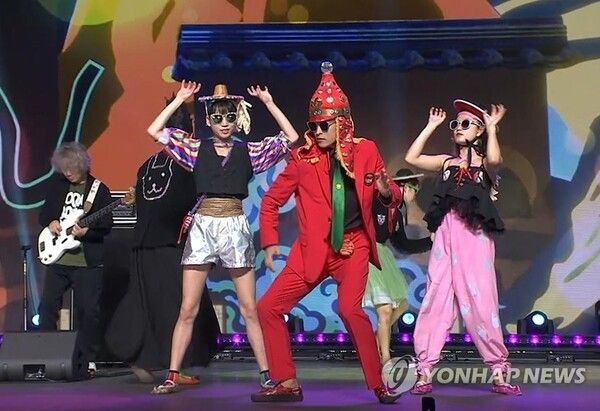
[News Culture] In 2020, Leenalchi's "Tiger Is Coming" brought the sounds of pansori to an international audience through a series of Korean tourism videos. Its combination of traditional vocals, driving bass lines and contemporary dance offered an unexpected introduction to a musical form more commonly associated with lengthy narratives performed by a singer and drummer.
The song, based on an episode from the traditional pansori work Sugungga, featured in the Korea Tourism Organization's Feel the Rhythm of Korea campaign. Paired with choreography by Ambiguous Dance Company and scenes of Seoul, it became an example of how centuries-old musical material could find a place in contemporary popular culture.
Leenalchi's breakthrough was part of a longer transformation. Over the past two decades, Korean performers have adapted European literature for pansori, brought changgeuk productions to international theater festivals and experimented with new combinations of traditional instruments, vocal techniques and contemporary music. UNESCO recognition and government policies have also helped raise the profile of Korean traditional arts.
The changes can be traced back to an ambitious cultural policy announced in September 2006, shortly before News Culture was founded on November 11 that year. Twenty years later, the arts have gained new stages and audiences, but many of the questions raised at the time remain unresolved. Musicians still need opportunities to develop new work, audiences beyond major cultural centers and a professional environment in which traditional performance can support a lasting career.
A 2006 plan to bring traditional arts into everyday life
On September 27, 2006, the Ministry of Culture and Tourism announced Traditional Arts Revitalization Plan—Vision 2010, setting out a national strategy for preserving and promoting Korean traditional music, dance and folk performance.
The plan outlined five areas of action and 27 specific measures, covering preservation and creative production, public participation and commercial development, professional training and research, international promotion, and improvements to cultural infrastructure.
Traditional performing arts were already supported by established institutions. The National Gugak Center, the National Changgeuk Company of Korea and generations of musicians had maintained performance, education and transmission practices long before the new policy appeared. Pansori had also received international recognition in 2003, when UNESCO proclaimed it a Masterpiece of the Oral and Intangible Heritage of Humanity.
The government's concern was that traditional arts, despite their cultural importance, remained distant from the everyday experiences of many people. The 2006 initiative sought to strengthen preservation while providing more opportunities for the public to hear, learn and participate in traditional performance.
The following year, the government's Han Style development plan included Korean music among the cultural fields targeted for promotion. Proposed measures ranged from traditional music education and practical experience programs to the digitization of recordings and the development of music for television and film.
The policies reflected two closely related priorities: maintaining inherited artistic practices and creating conditions in which they could reach contemporary audiences. Both have continued to shape debates about traditional arts funding, education and cultural development.
Twenty years later, the most visible changes have occurred not only in government institutions but also in the repertoire itself, as performers have found new ways to work with the musical and theatrical traditions they inherited.
Pansori finds new stories, changgeuk travels abroad
Among the artists who have expanded the possibilities of pansori, Lee Ja-ram has been particularly influential.
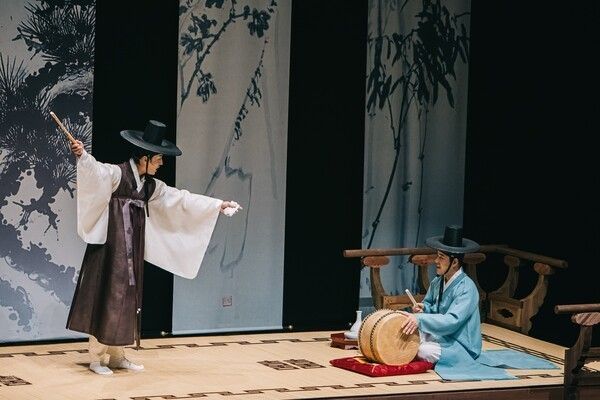
Her 2007 production Sacheonga adapted Bertolt Brecht's The Good Person of Szechwan into a contemporary pansori work. Rather than reproducing the play through conventional theater, Lee used the techniques of the traditional solo storyteller, moving between narration, dialogue and sung passages while a drummer accompanied and responded to her performance.
The relationship between the singer and the drummer remained central. Changes in vocal phrasing, rhythm and dramatic characterization allowed Lee to portray multiple figures within a single performance, drawing on established pansori techniques to tell a story far removed from the form's traditional narrative repertoire.
The production demonstrated that pansori could accommodate international literature without abandoning its own musical language. New text and melodies became part of a performance structure that remained recognizably Korean.
Lee continued to explore literary adaptation over the following years. In 2025, she premiered Snow, Snow, Snow (눈, 눈, 눈), a new pansori work based on Leo Tolstoy's short story Master and Man. The narrative follows two travelers who become lost in a snowstorm, confronting questions of responsibility, self-preservation and human relationships.
The singer's voice carries the changes in character and atmosphere, while the drum provides a rhythmic framework for the unfolding story. With only two performers responsible for much of the musical and dramatic action, the work illustrates the expressive range available within pansori's relatively spare performance format.
Changgeuk, the ensemble theater form derived from pansori, has developed along a parallel path. Unlike traditional solo pansori, changgeuk distributes roles among several singers and incorporates theatrical direction, stage design and instrumental accompaniment.
The National Changgeuk Company of Korea has used this flexibility to produce works based on both Korean narratives and international literature.
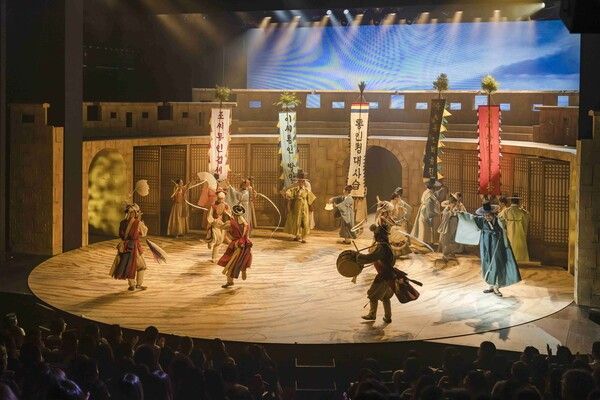
Its 2016 production Trojan Women adapted the ancient Greek tragedy for the changgeuk stage. Renowned pansori artist Ahn Sook-sun composed the vocal melodies, with music by Jung Jae-il and direction by Ong Keng Sen.
The production placed Korean vocal performance at the center of a story about women confronting the destruction of their city and the consequences of war. The singers' distinctive vocal textures, supported by an instrumental score and restrained theatrical staging, conveyed the characters' grief, anger and despair.
Trojan Women subsequently appeared at international festivals, including the Singapore International Festival of Arts and London's International Theatre Festival. Its overseas performances brought changgeuk to audiences who might have been unfamiliar with Korean traditional singing but recognized the themes of the Greek tragedy.
The company also found new material within Korea's own repertoire. In 2021, it premiered Guito, presented at the time under the English title Rabbit's Eight Sufferings. The production imagined what happened after the events of Sugungga, one of the surviving traditional pansori narratives.
Rather than repeating the story of the rabbit and the underwater kingdom, Guito followed a new character, Toja, the rabbit's son. The work extended the original tale through a different generation, allowing its creators to explore new situations while retaining familiar characters and narrative foundations.
The productions illustrate two approaches to contemporary changgeuk. Trojan Women brought material from another theatrical tradition into Korean musical performance, while Guito developed new possibilities within a story already embedded in the pansori canon.
Both relied on the expressive capabilities of singers whose training connects them to older performance practices. The innovations came through changes in narrative, composition and staging rather than the wholesale replacement of traditional techniques.
UNESCO recognition and the growth of international interest
Korean traditional performing arts have gained considerable international recognition over the past two decades, particularly through UNESCO's intangible cultural heritage framework.
Pansori was proclaimed a Masterpiece of the Oral and Intangible Heritage of Humanity in 2003 before being incorporated into the Representative List of the Intangible Cultural Heritage of Humanity in 2008.
The 2008 inscription followed the adoption of UNESCO's newer heritage framework. It did not represent a separate recognition of another pansori tradition, but the transfer of the previously recognized art form into the Representative List.
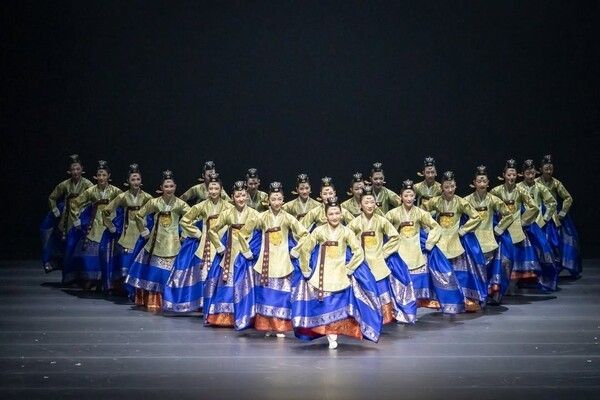
Other Korean traditions were added in subsequent years. Arirang, the lyrical folk-song tradition, was inscribed in 2012, followed by nongak in 2014 and talchum in 2022.
Their practices differ substantially. Arirang encompasses songs transmitted in different regional communities, while nongak combines percussion-led community music, dance and ritual. Talchum, Korea's mask dance drama, brings together music, movement, dialogue and theatrical satire, often using humor to criticize social hierarchies and familiar human behavior.
The UNESCO inscriptions acknowledge cultural practices maintained through teaching, performance and community participation. Their significance lies in the people and artistic knowledge involved, not simply in the historical age of the traditions.
For pansori, the relationship between an experienced singer and younger performers remains central to transmission. Nongak and talchum likewise depend on communities, performance groups and educational networks that continue to teach and practice their respective forms.
International recognition can draw attention to such practices and support cultural exchange. It cannot, by itself, ensure that artists have regular opportunities to perform or that younger generations will continue learning them.
Overseas performances have therefore become an important part of the field's development. Touring productions allow Korean musicians and theater companies to present their work directly to international audiences, while encounters with different theatrical traditions can influence the development of new productions.
The success of Trojan Women offers a useful example. The work was not conceived simply as a demonstration of Korean cultural heritage. It presented a complete theatrical production in which Korean vocal and musical techniques served a dramatic story.
For international audiences, that distinction matters. Traditional arts can be experienced as contemporary performance rather than only as cultural material being preserved or introduced.
When traditional sound became a digital phenomenon
Leenalchi's "Tiger Is Coming" became one of the most recognizable examples of Korean traditional music reaching audiences outside the conventional concert setting.
The group's approach combined pansori-derived vocal passages with prominent bass guitar lines, drums and repetitive rhythmic figures. Instead of reproducing the instrumental setting of traditional pansori, the musicians built arrangements that could sit comfortably alongside contemporary alternative pop while preserving the character of the vocal delivery.
The band's appearance in the 2020 Feel the Rhythm of Korea campaign introduced that sound through videos designed for online circulation. Ambiguous Dance Company's choreography added a visual element that complemented the music's unusual rhythmic combinations.
The result demonstrated how audiences could encounter elements of a traditional musical language through popular media without needing prior knowledge of its history or performance conventions.
Leenalchi was not alone in exploring such combinations. Korean musicians had been working across traditional music, jazz, rock, electronic music and other genres for years, experimenting with the sounds of traditional instruments and adapting established vocal techniques to new musical settings.
One institution that helped support this activity was the National Theater of Korea's Yeowoorak Festival, launched in 2010.
The festival brought together traditional musicians and performers from other genres, encouraging collaborative projects that explored contemporary approaches to Korean music. Its programs offered opportunities for artists to develop new combinations of sound and performance, while introducing audiences to work that did not fit neatly into established genre categories.
According to information released by the National Theater ahead of the 2026 festival, Yeowoorak had attracted approximately 88,000 audience members since its inception and achieved an average seat occupancy rate of around 90%.
Those figures point to sustained interest in contemporary programming rooted in Korean traditional music. They do not, however, establish that the audience for traditional performance as a whole has grown at the same rate.
That distinction became particularly important during the COVID-19 pandemic.
Beginning in 2020, the spread of the virus disrupted concerts, rehearsals and theatrical productions across South Korea. Performances were canceled or postponed, and restrictions on venue capacity made it difficult for artists to maintain regular schedules.
Traditional arts organizations faced the same problems affecting the wider performing arts sector. Musicians lost opportunities to perform, production teams had to revise their schedules, and new works sometimes reached the stage much later than originally planned.
The National Theater responded by making recorded productions available online and presenting performances without in-person audiences. These initiatives provided alternative ways for audiences to encounter traditional performance during periods when attending venues was difficult or impossible.
Online access, however, did not eliminate the financial and professional problems caused by the loss of live performances.
Government survey data illustrate the challenge. According to figures from the Ministry of Culture, Sports and Tourism's National Survey of Cultural and Artistic Activities, the reported rate of in-person attendance at gugak performances fell from 10.3% in 2019 to 2.4% in 2023.
The figures measure a specific form of cultural participation and do not include every way people may have encountered traditional music online. They nevertheless suggest that the increased visibility of individual artists and digital productions has not necessarily been accompanied by stronger attendance across the traditional performance sector.
For musicians whose careers depend on concerts, teaching and other professional activities, the difference between online exposure and paid performance opportunities remains substantial.
A dedicated law for gugak
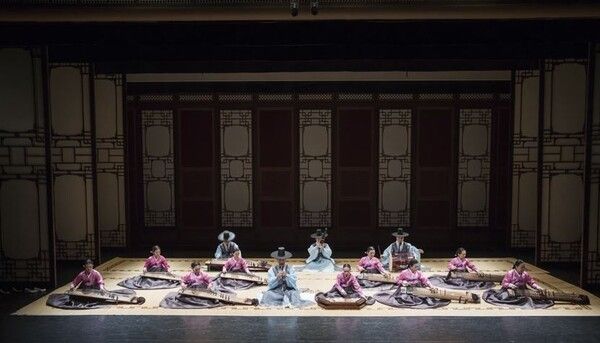
The government's approach to traditional arts support entered a new phase with the Gugak Promotion Act, enacted on July 25, 2023, and brought into force on July 26, 2024.
The legislation established a dedicated statutory framework for the preservation, transmission and development of gugak, encompassing traditional Korean music, dance and folk performance, along with contemporary works derived from those traditions.
Its provisions address support for creative work, public participation, professional training, international cooperation and the development of cultural industries associated with traditional arts.
The law also requires the government to prepare a basic promotion plan every five years and annual implementation plans. Regular surveys of the field and related industries are intended to provide information for policy development and evaluation.
Traditional arts had received public support long before the legislation was enacted. The National Gugak Center, government-funded ensembles and other organizations had already provided performances, education and preservation programs. The new law brought many of those priorities into a clearer legal framework.
Whether the legislation improves conditions for performers will depend on the resources committed to its implementation and how effectively programs reach the institutions and artists they are intended to support.
Reliable information about the field is essential to that work.
The National Gugak Center has published annual reports documenting performance, education and research activities. It has also released surveys examining the traditional music industry's businesses, workforce, revenue and operating conditions.
Such records provide a basis for understanding the sector beyond the performance of prominent companies or the attendance figures of major festivals. They can help identify where resources are concentrated, how professional opportunities differ across regions and what forms of support may be required.
The challenge of building careers outside Seoul
The next stage of traditional arts development will depend partly on what happens in schools, regional ensembles and local performance venues.
The National Gugak Center's 2024 Gugak Yearbook identified 17 four-year institutions offering programs classified within the Korean traditional music field. Ten were located in Seoul and Gyeonggi Province, with seven elsewhere in South Korea.
The figures reflect the publication's institutional and departmental classifications rather than a comprehensive assessment of educational quality. They nevertheless provide a starting point for examining how specialist training is distributed geographically.
For students considering a career in traditional performance, the availability of an academic program is only one factor. They also need access to experienced teachers, opportunities to develop their technique through practical performance and a professional environment in which they can continue working after graduation.
Regional universities can contribute to local cultural life by training performers and educators who go on to work in schools, arts centers and traditional music ensembles. Their graduates can also help introduce younger students and community audiences to Korean traditional arts.
But education alone cannot sustain a professional career. Musicians need performance opportunities, suitable rehearsal spaces and organizations capable of supporting both established repertoire and new productions.
The conditions are particularly demanding for contemporary works.
A new pansori production requires the creation of narrative text, the composition and development of vocal passages, and extensive rehearsal before it can be presented publicly. Changgeuk productions involve additional requirements, including ensemble training, theatrical direction, instrumental preparation, stage design and technical production.
The first performance is therefore only one stage in a much longer process. Artists need opportunities to revisit their work, refine it through performance and introduce it to audiences in different venues.
Without those opportunities, a production may disappear after its premiere, regardless of the time and resources invested in its creation.
This is one reason regional performance infrastructure matters. Regular programming beyond Seoul could provide additional opportunities for musicians while giving local audiences access to work that might otherwise remain concentrated in the capital.
The question is not simply how many performances can be presented in a particular year, but whether the field can provide enough continuity for performers to develop their artistic practices over time.
The next 20 years
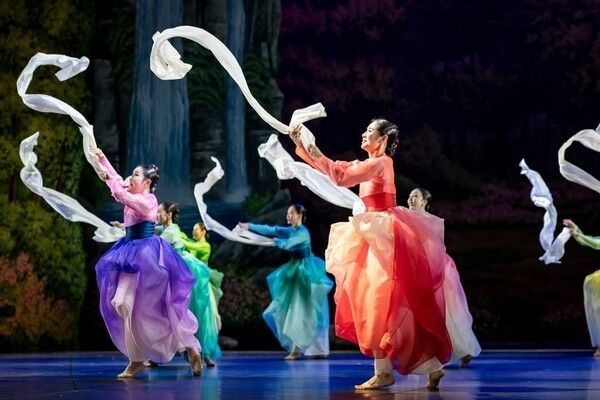
The ambitions outlined in Vision 2010 have taken different forms over the past two decades. UNESCO recognition has raised international awareness of Korean traditional performing arts, while productions such as Sacheonga and Trojan Women have shown how established musical forms can accommodate new narratives.
Leenalchi's success demonstrated another possibility: traditional vocal techniques and stories could reach broad audiences through popular music and digital media. The Yeowoorak Festival has provided a continuing platform for artistic collaboration, and the Gugak Promotion Act has established a more explicit legal basis for public support.
Yet the conditions facing individual artists remain uneven. International recognition does not necessarily lead to additional performances at home, and the popularity of one production cannot guarantee a steady audience for the wider field.
A traditional music concert organizer emphasized the need to connect international exposure with regular domestic performance opportunities.
"As Korean traditional music reaches audiences through overseas performances and digital media, it is important that this interest also leads people into concert halls at home," the organizer said. "Young artists need regular opportunities to present their work and meet audiences if the next generation is to develop."
The issue is particularly important for musicians beginning their careers. Training in pansori, traditional instruments, dance or theatrical performance requires years of sustained work, often beginning at a young age. Professional development continues long after formal education ends, through rehearsals, ensemble work and repeated encounters with audiences.
A career also depends on opportunities to perform regularly enough to maintain artistic standards and financial stability. For emerging musicians, access to regional venues and institutions can determine whether they remain active in the field or pursue work elsewhere.
The history of Korean traditional arts since 2006 provides considerable evidence of artistic adaptability. Performers have introduced new repertoire, explored international literature and developed contemporary musical settings without abandoning the techniques through which their traditions have been transmitted.
The next challenge is to make that work sustainable. Cultural policy will need to address not only the presentation of traditional arts to new audiences, but also the practical conditions under which musicians study, create and perform.
Leenalchi's "Tiger Is Coming" showed how far music rooted in pansori could travel when artists found a new way to present it. The success of contemporary changgeuk and original pansori productions has similarly demonstrated the continuing theatrical possibilities of Korean traditional music.
For the next generation, the opportunities that matter most may be less visible: an experienced teacher in a regional institution, a company willing to commission a new work, or a theater prepared to present a production beyond its premiere.
Those opportunities will help determine whether the international attention gained over the past 20 years develops into lasting artistic careers, regular performances and a broader audience for Korean traditional arts.
Reported by News Culture M.J._mj94070777@nc.press
Copyright ⓒ 뉴스컬처 무단 전재 및 재배포 금지


