
[News Culture] Twenty years after South Korea cut its screen quota in half, the country's film industry faces a very different threat. Hollywood competition once dominated the debate over the future of domestic filmmaking. Today, shrinking theatrical audiences, cautious investors and the rise of streaming are putting pressure on an industry that produced some of the world's biggest box-office hits and made history with Bong Joon-ho's Parasite.
A surprise blockbuster in 2026 has offered some relief. Jang Hang-jun's historical drama The King's Warden drew nearly 17 million admissions, becoming one of the biggest hits in Korean box-office history. Its success showed that audiences were still willing to turn out for a domestic film, even after years of declining attendance. But the film's extraordinary performance has done little to resolve the financing difficulties facing smaller productions or restore confidence across the theatrical market.
The contrast is striking for an industry that spent much of the 2010s celebrating one commercial milestone after another. Korean films routinely crossed 10 million admissions, domestic productions competed directly with Hollywood releases, and filmmakers gained international recognition. The challenge now is not simply to deliver another blockbuster, but to sustain a film business beyond the occasional runaway hit.
The making of a blockbuster industry
The transformation began in the early 2000s, as multiplex chains expanded and Korean productions started drawing audiences in unprecedented numbers. Silmido, Taegukgi: The Brotherhood of War and King and the Clown each passed 10 million admissions, giving the domestic industry a level of commercial reach that had once seemed unlikely.
That momentum was tested in 2006, when the government reduced the annual screen quota from 146 days to 73 as part of negotiations toward a free trade agreement with the United States. Introduced in 1967, the quota required theaters to reserve a minimum number of screening days for Korean films. Its reduction prompted fierce opposition from directors, actors and other industry professionals, who feared that Hollywood's financial resources and distribution networks would overwhelm local productions.
The dispute became a defining moment for Korean cinema. Supporters of the quota viewed it as an essential safeguard for domestic production, while the government's decision placed greater emphasis on the industry's ability to compete without the same level of protection.

Korean films nevertheless continued to draw enormous crowds. Bong's monster thriller The Host attracted 13.02 million admissions in 2006, while Tazza: The High Rollers sold 6.84 million tickets and 200 Pounds Beauty reached 6.61 million. These films demonstrated the commercial appeal of homegrown genre filmmaking, with Korean stories and stars generating audiences comparable to major imported releases.
The growth came with rising costs. As producers pursued larger projects and distributors competed for major releases, the financial consequences of a box-office failure became more severe. Even in 2008, when The Chaser, The Good, the Bad, the Weird and Scandal Makers emerged as hits, overall theatrical attendance weakened and investment became harder to secure.
The industry rebounded decisively in the following years. Between 2011 and 2016, Korean cinema entered its most sustained period of commercial expansion, with major hits arriving across crime thrillers, historical dramas, comedies and action films. The Thieves drew 12.98 million admissions, Masquerade 12.32 million, Miracle in Cell No. 7 12.81 million and The Attorney 11.38 million.
The run continued with Ode to My Father (14.27 million), Veteran (13.41 million), Assassination (12.71 million) and Train to Busan (11.57 million). These were not isolated successes. Korean films had become a reliable source of major theatrical revenue, supported by expanding investment, increasingly sophisticated production companies and a distribution system capable of delivering nationwide releases.
In 2013, admissions for Korean films reached 127.27 million, while the country's total theatrical box-office revenue stood at approximately 1.55 trillion won. The following year, The Admiral: Roaring Currents set a new benchmark with 17.61 million admissions, a record that has stood for more than a decade. The film's performance reflected both the size of the domestic audience and the industry's ability to turn a Korean historical subject into a mass-market event.
The commercial boom, however, strengthened the influence of major distributors and increased competition for screens. High-budget productions and films led by established stars took priority, leaving smaller releases to compete for limited space and audience attention. The same system that helped Korean cinema produce record-breaking hits also made it increasingly dependent on them.
The industry's success extended well beyond the domestic market. A Taxi Driver, the Along with the Gods films and Extreme Job continued the blockbuster run, while producers increasingly turned to franchises and established intellectual property, including webtoons, in search of dependable material.
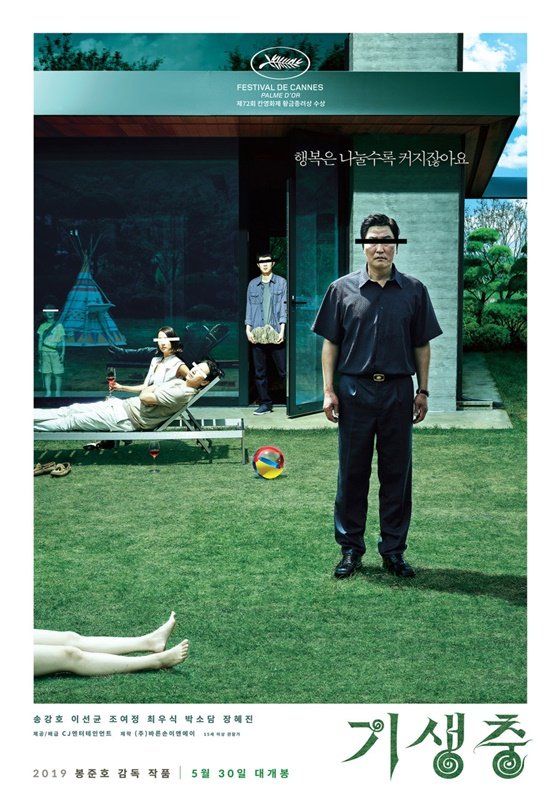
Then came Parasite. Bong Joon-ho's darkly comic thriller won the Palme d'Or at Cannes in 2019 before taking four Academy Awards in 2020, including Best Picture. It became the first non-English-language film to win the Oscars' top prize, bringing a level of international recognition that Korean filmmakers had spent decades working toward.
The achievement reflected a cinema with ambitions beyond its own box office. Korean directors had developed distinctive approaches to genre, social conflict and visual storytelling, while the domestic industry had given many of them the resources to pursue increasingly ambitious projects. By the time Parasite reached the Oscars, Korean cinema had already established itself as a major force in international film culture.
Its greatest moment of global recognition was followed almost immediately by a crisis that would transform the business of making and releasing films.
COVID-19 broke the theatrical model
The pandemic brought the industry to a near standstill. Cinema restrictions and public concerns about infection kept audiences at home, while distributors postponed major releases and production companies delayed new projects. South Korean theatrical admissions fell 73.3% in 2020 compared with the previous year.
The disruption reached every part of the business. Finished films remained on the shelf, investors faced uncertain returns and production crews lost work as shooting schedules were suspended or scaled back. Even when theaters reopened, the backlog of delayed releases created intense competition for screening dates, with many films struggling to recover their costs.
Streaming services, meanwhile, became an increasingly important destination for Korean talent and investment. Netflix and other platforms expanded their Korean-language offerings, and the worldwide success of Squid Game demonstrated how effectively Korean productions could reach international audiences outside the theatrical market.
For actors, directors and production companies, streaming offered projects at a time when theatrical financing had become more difficult. For cinemas, it introduced another challenge: persuading audiences accustomed to watching films and series at home that a trip to the theater was worth the additional expense.

The return of large crowds for The Roundup in 2022 was an encouraging sign. The crime-action sequel attracted 12.69 million admissions, helping establish that domestic films could still become major theatrical events after the pandemic.
Other hits followed. 12.12: The Day drew 13.13 million viewers, The Roundup: No Way Out reached 10.68 million, The Roundup: Punishment recorded 11.5 million and the supernatural thriller Exhuma attracted 11.92 million.
The problem was what happened between those successes. Films without strong advance recognition often struggled to gain traction, while rising ticket prices made moviegoers more selective. Production and marketing costs remained high, but the potential audience for an average theatrical release had become smaller and less predictable.
The result was an increasingly polarized market. A major franchise or widely discussed release could still sell millions of tickets, but many other films disappeared from theaters quickly, sometimes before word of mouth had a chance to develop. For investors, the risk of backing an untested director or a mid-budget drama became harder to justify.
A succession of 10 million-admission films could no longer be taken as evidence that the industry as a whole was healthy.
A record-breaking hit, but no guarantee of recovery
In 2025, not a single Korean film reached 10 million admissions. The absence of a blockbuster underscored a difficult year for domestic producers, with investment slowing and the theatrical market struggling to recover its pre-pandemic audience.
The picture changed dramatically in early 2026. Jang Hang-jun's The King's Warden, released earlier in the year, became a word-of-mouth phenomenon and eventually drew 16.93 million admissions. Its success placed it among the most widely attended Korean films in box-office history, just behind the longstanding record held by The Admiral: Roaring Currents.

The film was followed by other successful domestic releases, including the horror feature Salmokji: Whispering Water and Colony. Together, they helped produce a marked improvement in the first-half box office. According to figures cited by the Korean Film Council, admissions for Korean films rose 74.9% during the first six months of 2026 compared with the same period a year earlier.
Those numbers provided much-needed encouragement for an industry that had spent several years struggling with weak ticket sales. They also suggested that audience interest in domestic productions could recover when films generated strong word of mouth and offered a compelling reason to visit theaters.
The recovery was far from secure. Hollywood tentpoles competed aggressively for screens during the summer, and Korean releases struggled to maintain the exceptional momentum established by The King's Warden. By November, the industry's fortunes again appeared increasingly dependent on individual titles rather than consistent demand across the release calendar.
One blockbuster can dramatically improve annual attendance figures, but it cannot solve the difficulties facing films that lack a major star, an established franchise or an extensive marketing campaign. Investors remain cautious about projects without obvious commercial advantages, leaving mid-budget productions and emerging filmmakers particularly exposed.
That presents a problem for an industry whose international reputation was built on more than large-scale commercial entertainment. Korean cinema's strongest periods also produced distinctive thrillers, independent dramas and films that challenged familiar genre conventions. Some became hits, while others helped establish directors and performers who would later reach much larger audiences.
The financing and distribution environment now offers fewer opportunities for that kind of development. As production budgets increase and theatrical runs become less predictable, companies have stronger incentives to concentrate resources on titles regarded as relatively safe investments. The approach may limit immediate financial exposure, but it also narrows the opportunities available to new filmmakers and original stories.
The extraordinary success of The King's Warden has demonstrated that Korean audiences have not abandoned the theatrical experience. What remains uncertain is whether the industry can translate that enthusiasm into a more dependable market for films beyond the year's biggest releases.
Twenty years after filmmakers protested the reduction of screen quotas, the central concern has shifted. Korean cinema has proved that it can compete with Hollywood, draw audiences in the tens of millions and win the world's most prestigious film awards. Its next challenge lies closer to home: securing enough investment, screens and audience attention to keep a diverse range of Korean films in production.
Another 10 million-admission success may be on the horizon. For the filmmakers struggling to finance their next project, the more consequential question is whether a film can still build an audience without becoming a blockbuster.
Reported by News Culture M.J._mj94070777@nc.press
Copyright ⓒ 뉴스컬처 무단 전재 및 재배포 금지


