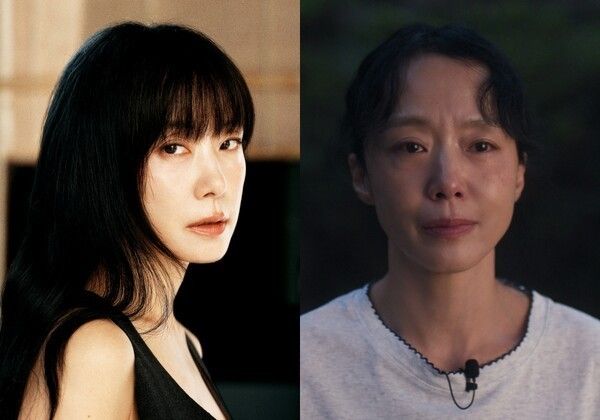
[News Culture] Nearly 20 years after Secret Sunshine, Jeon Do-yeon has reunited with director Lee Chang-dong for Possible Love, returning not with another performance built around emotional eruption but with one that draws its force from what remains unspoken.
As Mi-ok, the wife of laid-off worker Ho-seok, Jeon plays a woman who keeps daily life moving while her husband remains trapped in the aftermath of a violent labor struggle. Her brightness is not a sign that she has escaped the pain around her; it is the way she survives it. Across the film, Jeon lets that resilience register through ordinary gestures, small shifts in expression and moments in which Mi-ok seems to be testing how much freedom remains available to her.
News Culture recently met with Jeon in Seoul to discuss Possible Love, her first film with Lee since the performance that won her Best Actress at Cannes, and how both she and the director arrived at this collaboration differently from the way they had two decades ago.
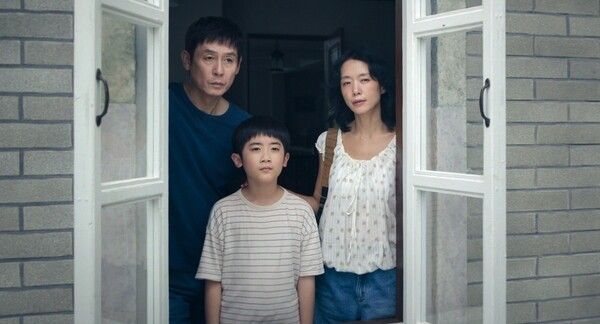
Possible Love follows two couples whose lives intersect in ways that expose differences in class, desire and the choices available to them. Ho-seok, played by Sul Kyung-gu, is a dismissed worker still carrying the trauma of the strike and its aftermath, while Mi-ok tries to hold their family together. They eventually encounter documentary filmmaker Ye-ji, played by Cho Yeo-jeong, and her husband Sang-woo, played by Zo In-sung, forcing tensions that had long remained beneath the surface into view.
Jeon said Mi-ok’s outwardly positive disposition became one of the keys to understanding her. Where Ho-seok responds to his wounds by retreating into silence, Mi-ok keeps moving, speaking and maintaining the routines around them. “If Ho-seok hides his pain by becoming quiet, Mi-ok’s brightness is her way of dealing with what has happened and protecting the family,” Jeon said. “I didn’t see that positivity as something simple or carefree. It was part of how she endured.”
Rather than building the character from extensive reference material, Jeon deliberately avoided repeating methods she had used on earlier films, including Birthday. She began instead with the people she saw around her, photographing clothes, bags and other details from ordinary passersby and sharing them with Lee as they worked out Mi-ok’s physical presence. The goal was not to make the character look conspicuously working-class, but to find a texture that felt lived in without drawing attention to itself.
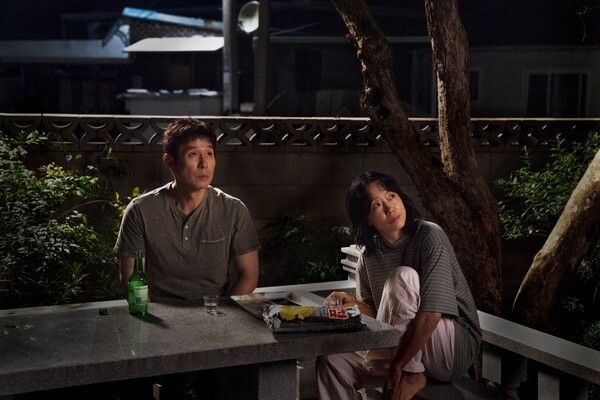
That same restraint runs through two of Mi-ok’s most important sequences. A scene by the sea with Sang-woo briefly opens the possibility of another life, only for Mi-ok to confront the illusion behind that freedom, while the final scene with Ho-seok brings the couple back together on a wooden platform, sharing soju beneath the moon.
“The scene by the sea is a moment when Mi-ok realizes that what she thought might be freedom was partly an illusion, and she pushes back against that,” Jeon said. “Then, when she sits with Ho-seok at the end and they drink together, I think she comes face to face with what might actually still be possible between them.”
Returning to Lee’s set after nearly two decades was, in Jeon’s words, unexpectedly calm. The experience of making Secret Sunshine had been famously intense, and Jeon acknowledged that she had once approached Lee’s work by pushing herself toward an almost punishing level of concentration. This time, she found herself doing less.
One of Lee’s recurring instructions was simple: feel it, but do not show it.
“For a long time, I had this compulsion to make sure I was doing something, to make sure the emotion could be seen,” Jeon said. “This time I tried to let go of more of that calculation. The director would tell me to feel something without trying to express it, and I began to understand what he meant as we went along.”
She described the process as a different version of what actors often call “Lee Chang-dong magic,” not because he extracted something through relentless pressure, but because the absence of that pressure allowed reactions to emerge more naturally.
“I realized that working on one of his films could actually be enjoyable,” she said. “That was very different from the past.”
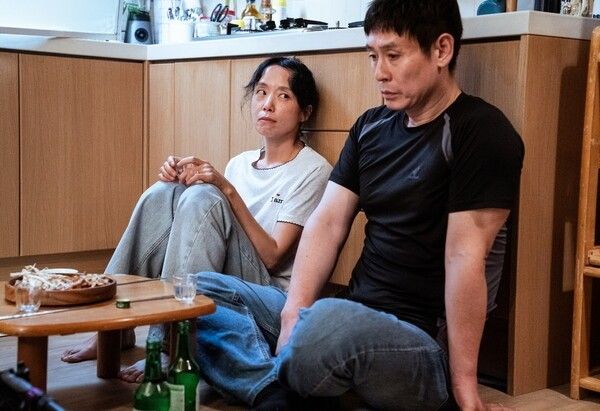
The shift also changed the way she responded to the actors around her. Possible Love marks Jeon’s sixth project with Sul Kyung-gu, and the familiarity between them gave Mi-ok and Ho-seok a history that did not need to be manufactured from scratch. Their trust was comfortable enough that Jeon could even cut Sul’s hair for the film, while the performances around them brought different energies into the story.
Sul, she said, shared her feeling that the work had become less strained without becoming less serious. Zo took on the challenge of playing the clarinet for Sang-woo, while Cho helped hold together the increasingly complicated relationships among the four adults. Jo Yuri, appearing as the younger Mi-ok, gave Jeon another way to imagine the character before the disappointments and compromises that shaped her later life.
“The actors around me gave me a lot to respond to,” Jeon said. “Sul Kyung-gu and I have worked together many times, so there is a trust that already exists. Zo In-sung brought something very different through Sang-woo, Cho Yeo-jeong had this ability to hold the set together, and Jo Yuri gave a real sense of the life Mi-ok and Ho-seok had before we meet them in the present.”
The response to Jeon’s performance has been emphatic. Possible Love won the Silver Lion Grand Jury Prize at the Venice International Film Festival, and international reviews singled out her work for particular praise. Yet Jeon said the intensity of the reaction initially left her with surprisingly mixed feelings.
She had gone into the film during a period when she was questioning herself more than usual, only to discover that a performance she felt she had approached without extraordinary effort was being described in extravagant terms.
“That was confusing,” she said. “I was in a period where I had a lot of doubts about myself, and then people were responding to the performance with this enormous praise. Part of me was happy, of course, but another part of me wondered what exactly had changed.”
One lighter moment came when she listened closely to Zo In-sung’s analysis of the Venice competition and began to imagine the possibility of the film taking the Golden Lion, only to find herself suddenly tense as the awards approached. She now laughs at the memory, but the broader response to the film gave her something more lasting than a prize prediction.
“I think all that praise gave me a kind of strength,” Jeon said. “It made me think, maybe I don’t have to question everything I do quite so much. Maybe I can loosen up a little.”
The remark was delivered jokingly — she said it made her wonder whether she could “just do whatever I want from now on” — but it reflects a genuine change in the way she now regards her own instincts. After decades of work and a career marked by some of Korean cinema’s most demanding roles, Jeon appears less interested in proving that she can carry a performance than in giving herself permission to trust what is already there.
That confidence has also been reinforced outside film. Jeon recently completed an immersive production of The Cherry Orchard at the Wade Thompson Drill Hall in New York’s Park Avenue Armory, an experience that required her to confront the uncertainty of performing in an unfamiliar space for an international audience. Finishing the run to standing ovations gave her another measure of how much fear she could move through rather than avoid.
At the same time, the global reach of Netflix has placed Possible Love before viewers far beyond the festival circuit and Korean theaters, something Jeon regards less as a replacement for cinema than as another way for the work to find an audience.
For now, however, she is already looking toward the next role. Jeon said she wants to return to acting as soon as possible with her upcoming project Bang Ok-sook, rather than spending too long contemplating what the response to Possible Love might mean for her career.
That impulse may be the clearest sign of what the film has given her. Nearly 20 years after Secret Sunshine, Jeon has not returned to Lee Chang-dong’s cinema to repeat the intensity that once defined their collaboration. She has returned with less compulsion to demonstrate, less fear of leaving something unexpressed and a greater willingness to trust the space between what an actor feels and what an audience eventually sees.
Possible Love is now available to audiences worldwide on Netflix following its theatrical release.
Reported by News Culture M.J._mj94070777@nc.press
Copyright ⓒ 뉴스컬처 무단 전재 및 재배포 금지


