[News Culture] Antigone believes her brother must be buried. Creon believes a ruler cannot allow a traitor to receive that honor. Neither begins from a position that feels trivial to the person holding it, and neither is prepared to yield.
That collision drives ANTHROPOLIS V: Antigone/Epilog, the final installment of the National Theater Company of Korea’s five-part Anthropolis cycle. Running Dec. 2-26 at Myeongdong Theater in Seoul, the production turns to one of Greek tragedy’s most durable conflicts while asking a more contemporary question: what happens when a conviction strong enough to organize a life becomes too rigid to accommodate another person’s claim?
The production draws on Sophocles and Roland Schimmelpfennig’s reworking of the myth, with Jung Young-doo adapting and directing. Known primarily for work across dance, choreography and interdisciplinary performance, Jung makes his first foray into directing a straight play while also handling the choreography.
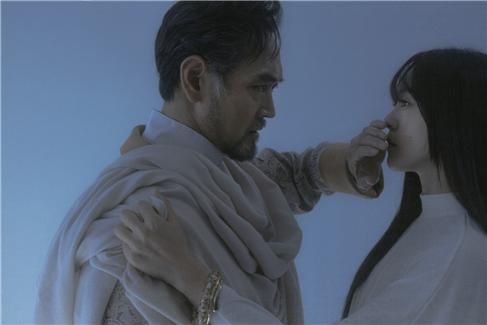
Thebes has survived a civil war, but peace does not resolve the conflict that follows. Creon, newly installed as king, forbids the burial of Polyneices, who fought against the city. Antigone defies the order and performs the burial rites for her brother.
The familiar opposition between family and state is only the beginning. Creon understands his decree as part of the responsibility of governing a damaged city. Antigone understands burial as an obligation that no political authority can erase. Both act from a sense of duty, which is precisely what makes compromise so difficult.
Antigone/Epilog is less interested in identifying the character who possesses the correct answer than in examining what certainty does to the people around them. A principle may be defensible on its own terms; the consequences change when enforcing it requires another person to surrender what they consider equally fundamental.
That tension also gives the production a way into its treatment of generations.
The staging considers how values are inherited between those who built and maintained an existing social order and those who must live with, question and eventually reshape it. The divide is not presented simply as old against young. What separates generations is also experience: the conditions under which particular ideas of duty, survival and responsibility were formed.
The question, then, is not whether one generation should defeat the other. It is what can be carried forward when inherited structures and emerging values no longer fit neatly together.
That concern extends the central conflict rather than replacing it. Creon and Antigone remain individuals with specific obligations, histories and consequences attached to their decisions. Their confrontation becomes a way to examine how communities respond when incompatible ideas of what is necessary occupy the same space.
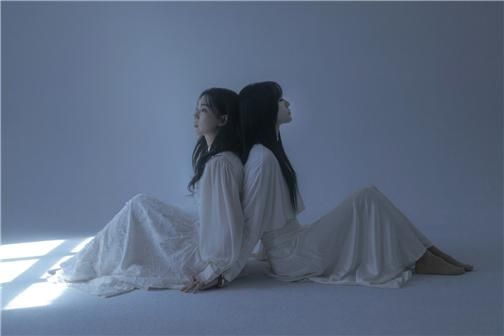
Tiresias provides another vantage point. The prophet has appeared across the Anthropolis cycle, occupying the unstable territory between human judgment and knowledge that exceeds it. In Antigone/Epilog, he becomes a reminder that certainty has limits, particularly when people begin to mistake their own reasoning for a complete view of what lies ahead.
The chorus works differently. Rather than functioning as a reliable moral referee, it responds to events from multiple positions, carrying social context and competing reactions into the room. Its presence keeps Antigone and Creon’s dispute from becoming an isolated argument between two protagonists; every decision changes the community watching it unfold.
Jung’s staging places unusual weight on the body within that structure.
Movement does not arrive as a separate dance sequence layered onto the text. Gestures, stillness, distance and physical alignment continue to operate while characters speak, and they remain active when language stops. The approach allows relationships to register through bodies in space as well as through argument.
For a tragedy dominated by people stating what they believe, that physical dimension offers another source of information. A body can hesitate while a voice sounds certain. Distance between performers can widen before a relationship is verbally broken. Silence can become part of the conflict rather than an absence of it.
The production’s visual environment combines containers with the large-scale “billboard” structure that has recurred throughout the Anthropolis series. Video extends action beyond the performers themselves, continuing a visual language established across the cycle while giving Jung a framework for his movement-centered approach.
The physical vocabulary is especially relevant to a play about people who become increasingly fixed in their positions. Where the argument pushes toward absolutes, movement can register instability, resistance and change that the characters themselves may be unwilling to acknowledge.
Jung has described human beings as living with circumstances they did not choose while still trying to construct coherent lives through belief and decision. The problem, in his reading, begins when the beliefs needed to sustain that coherence become too solid to coexist with someone else’s.
That makes Antigone/Epilog a fitting endpoint for Anthropolis. The five-part project has followed the mythology of Thebes through generations of inherited violence, desire, guilt and consequence. By the time the cycle reaches Antigone, the catastrophe is no longer waiting in the distant past. It has been handed down.
The final production therefore arrives at inheritance in two senses: the curse inherited by the family of Thebes, and the values, institutions and responsibilities one generation leaves to another.
Antigone and Creon cannot simply step outside what they have inherited. Their tragedy lies partly in what each decides to do with it — and in the shrinking space they leave for another way of seeing the world.
Rather than updating the ancient play by assigning modern political positions to its characters, Antigone/Epilog keeps the conflict unstable. Private conscience, public authority, family obligation and civic responsibility remain entangled, while Tiresias, the chorus and Jung’s physical staging continually widen the frame around the two people at its center.
The tragedy does not begin because Antigone and Creon believe in nothing. It begins because each believes strongly enough that the other person’s claim becomes increasingly impossible to hear.
ANTHROPOLIS V: Antigone/Epilog runs Dec. 2-26 at Myeongdong Theater in Seoul.
Reported by News Culture M.J._mj94070777@nc.press
Copyright ⓒ 뉴스컬처 무단 전재 및 재배포 금지


