[News Culture] Silla’s defeat of Baekje and Goguryeo did not bring the wars of the seventh century to a clean end. The alliance that had made those victories possible was already beginning to fracture, leaving Silla to confront the growing ambitions of Tang China across the territories the two powers had just conquered together.
KBS1’s “History Special – Time Traveler” begins a two-part series on King Munmu with Episode 44, “Munmu Unifies the Three Kingdoms,” airing Nov. 8. The first installment traces the Silla-Tang alliance from the campaign against Baekje through the fall of Goguryeo, then turns to the political and military tensions that emerged once the common enemies were gone.
Born Kim Beop-min, King Munmu inherited a war already set in motion by his father, King Taejong Muyeol, or Kim Chun-chu. The episode follows how Munmu carried that campaign forward while navigating an increasingly difficult relationship with Tang, whose plans for the peninsula did not necessarily match Silla’s own.
A Tang force of 130,000 crosses the Yellow Sea
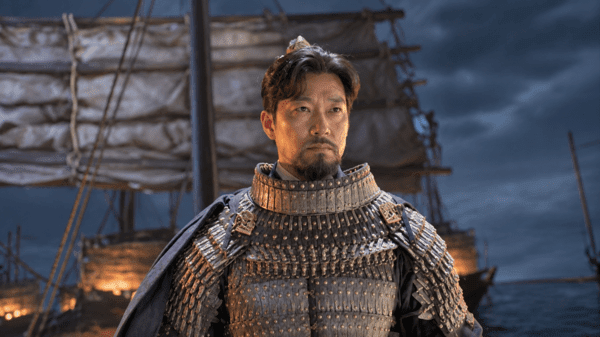
The fall of Baekje in 660 depended in part on control of the western sea routes. Tang sent a massive expeditionary force across the Yellow Sea while Silla advanced overland, placing Baekje’s capital of Sabi under pressure from two directions.
The program travels to Deokjeokdo and Soyado in Ongjin County, Incheon, islands positioned along important maritime routes off Korea’s west coast. Their geography helps reconstruct how the allied forces approached the peninsula and why sea access mattered to an operation aimed at Baekje’s political center.
The episode also examines the terrain around the Nonsan Plain and the routes available to troops moving toward Sabi. Rather than presenting Baekje’s collapse as a single decisive clash, it looks at the movement of men, ships and supplies that made the campaign possible.
Tang’s arrival with some 130,000 troops fundamentally altered the military balance. Contemporary records and field investigation are used to reconstruct how the alliance tightened its hold around Baekje before the kingdom fell.
A century of war between Silla and Baekje
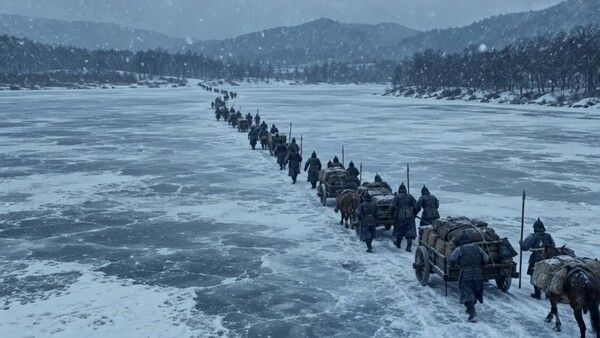
Silla and Baekje had once cooperated against Goguryeo, but by the sixth and seventh centuries their relationship had become defined by repeated war and losses that reached directly into both royal houses.
In 554, Baekje’s King Seong was killed during the Battle of Gwansanseong. Nearly a century later, Baekje forces took Daeyaseong in 642, where Kim Chun-chu lost his daughter Gota-so and son-in-law. The defeat became one of the turning points in Silla’s search for outside military support.
Kim Chun-chu subsequently strengthened ties with Tang, helping create the alliance that would eventually bring down Baekje and Goguryeo. After his death, Munmu inherited not only the throne but also a war with objectives that had expanded far beyond the original Silla-Baekje rivalry.
By returning to Gwansanseong, Daeyaseong and the diplomacy that followed, the episode places Munmu’s campaigns within a conflict that had been building for generations rather than treating unification as the work of a single reign.
When an ally became a strategic threat

Silla and Tang shared an immediate goal in defeating Baekje and Goguryeo, but agreement over the postwar order was another matter. Once the two kingdoms had fallen, Tang moved to strengthen its influence over their former territories, while Silla sought to secure the gains it had made and preserve its political autonomy.
One piece of evidence introduced in the program is the Feng Shixun stele discovered in China. Its inscription records the Tang general Su Dingfang with the title “Grand Commander of the Gyerim Route,” using an old name associated with Silla. The episode examines what that title may reveal about Tang military planning even before the campaign against Baekje began.
That evidence adds another layer to the alliance. Silla needed Tang’s military power to break the long stalemate against Baekje and Goguryeo, yet cooperation with the empire also created a new strategic problem once those enemies disappeared.
Munmu therefore had to keep the alliance functioning long enough to finish the war while preparing for the possibility that Tang itself could become Silla’s next opponent.
Goguryeo falls, but the war is not over

Goguryeo’s final crisis came amid internal division after the death of Yeon Gaesomun. Conflict among his successors weakened the kingdom at the same time Tang intensified its offensive, taking key strongholds before advancing toward Pyongyang.
The episode follows the collapse of a state that had endured for roughly seven centuries and examines Silla’s calculations as Tang forces moved deeper into the peninsula. For Munmu, the fall of Goguryeo completed a major phase of the war, but it also removed the last large buffer between Silla and Tang power.
In 668, Silla marked the fall of the two rival kingdoms, and in 669 the court issued proclamations reflecting a new understanding of the victories as the unification of the Three Kingdoms. Yet the political settlement remained unresolved. Tang forces and administrative structures still stood across former Baekje and Goguryeo territory, setting the stage for the Silla-Tang War that would follow.
That tension is central to the first half of the Munmu story. The king who helped complete the conquest of Baekje and Goguryeo would spend the next phase of his reign trying to ensure that victory did not simply replace two neighboring kingdoms with a more powerful imperial presence.
King Munmu later became associated with one of Silla’s most enduring royal legends: the wish to become a dragon of the East Sea after death and continue protecting the kingdom. “History Special – Time Traveler” approaches that legacy from the politics that preceded it, tracing the military alliances, family losses and shifting balance of power that shaped his reign.
“History Special – Time Traveler” Episode 44 airs Nov. 8 at 8:10 p.m. KST on KBS1.
Reported by News Culture M.J._mj94070777@nc.press
Copyright ⓒ 뉴스컬처 무단 전재 및 재배포 금지


