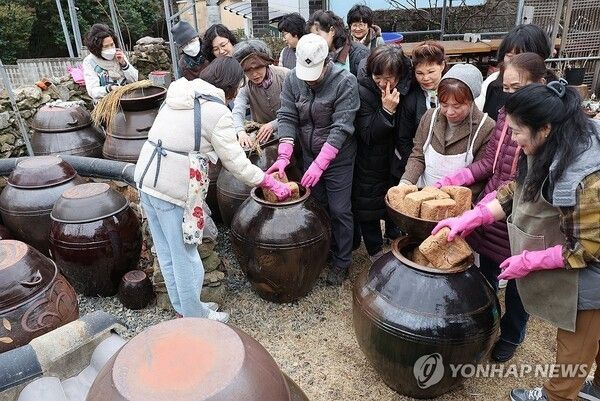
[News Culture] Nearly two years after Korea's traditional jang-making culture gained UNESCO recognition, attention is shifting to what comes next: keeping the practice alive, passing its knowledge to younger generations and finding a place for that heritage within a changing food industry.
The tradition of making jang, a family of fermented Korean sauces and pastes that includes doenjang (soybean paste) and ganjang (soy sauce), has long depended on skills passed down through households and communities. Its inclusion on UNESCO's Representative List of the Intangible Cultural Heritage of Humanity in December 2024 brought international recognition, but also raised questions about how those practices can be sustained beyond the designation itself.
South Korea's Ministry of Agriculture, Food and Rural Affairs and the Korean Food Promotion Institute will address those questions at the third Korean Cuisine Seminar, scheduled for November 25 at the Korean Food Culture Space's Ieum Hall in central Seoul.
The program will examine international approaches to safeguarding culinary heritage, the use of storytelling in children's heritage education and the implications of revised genetically modified organism (GMO) labeling regulations for soybean-based food manufacturers.
UNESCO Recognition and the Challenge of Keeping Tradition Alive
Korea's jang-making culture was inscribed on UNESCO's intangible heritage list on December 3, 2024, during the 19th session of the Intergovernmental Committee for the Safeguarding of the Intangible Cultural Heritage in Asunción, Paraguay. It became the country's second food-related inscription, following kimjang, the communal practice of making and sharing kimchi, in 2013.
The inscription recognizes more than the production of traditional condiments. UNESCO's designation encompasses the knowledge, beliefs and practices involved in preparing ingredients, fermenting and aging sauces, maintaining storage conditions and sharing the finished products.
Methods vary considerably among households. Differences in ingredients, fermentation periods and storage techniques have produced distinctive family traditions, while the skills themselves have traditionally been transmitted through everyday participation in food preparation.
Hahm Han-hee, director of the Center for Intangible Culture Studies, will examine how countries have used UNESCO recognition to support their culinary heritage. Her presentation will consider international examples and their implications for the preservation and continued use of Korean jang-making traditions.
The distinction between recognition and transmission is central to the discussion. Unlike historic buildings or physical artifacts, living heritage depends on people continuing to practice and teach the skills involved.
Documenting the knowledge of experienced practitioners, developing educational resources and creating opportunities for community participation are therefore essential to keeping the tradition viable.
International visibility may strengthen interest in Korean fermented foods, but recognition alone cannot ensure that traditional techniques continue to be practiced within families and local communities.
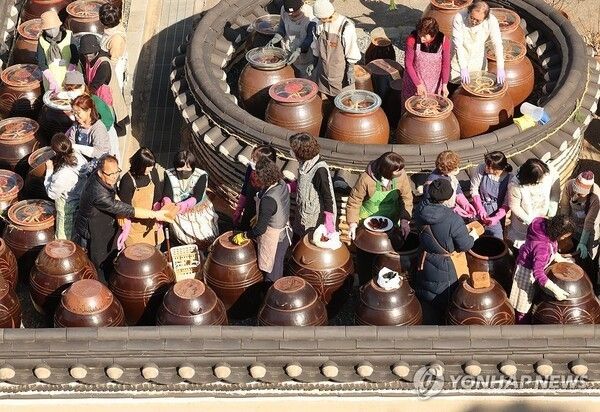
Turning Traditional Food Knowledge Into Children's Stories
One approach to safeguarding jang-making culture involves presenting its complex techniques through educational material designed for children.
Jin Yu-ri, a senior researcher at the Global Intangible Heritage Research Institute of Korea National University of Heritage, will discuss how traditional food knowledge can be adapted into storytelling, drawing on the picture book Kong Halmeoni-ui Jang Damgeugi (Grandma Bean's Jang-Making).
Her presentation will explore how knowledge associated with an intangible cultural tradition can be reorganized into a narrative that younger audiences can understand.
Making jang involves several distinct stages, including preparing meju, or fermented soybean blocks, allowing fermentation and maturation to take place, and separating the resulting liquid soy sauce from the solid soybean paste. Each stage requires an understanding of ingredients, equipment, seasonal conditions and timing.
Presenting those processes through illustrated stories offers a way to introduce children to the cultural and practical knowledge behind foods they may otherwise encounter only as finished products.
Jin will examine how the picture book translates traditional practices into an accessible narrative and what should be considered when adapting specialized knowledge for educational use.
The broader challenge is to move beyond introducing jang simply as a familiar Korean seasoning. Heritage education can also help children understand its origins, the science of fermentation and the relationship between traditional food production and family life.
New GMO Labeling Rules Put Soybean Products Under Scrutiny
While the first two presentations concern cultural preservation and education, the third turns to regulatory changes affecting the food industry.
Lee Seung-yong, a professor in Dongguk University's Department of Food and Medical Product Regulatory Policy, will examine changes to South Korea's GMO labeling system, focusing on soybean-based products.
On July 8, the Ministry of Food and Drug Safety revised its standards for labeling genetically modified foods. The amendments expand labeling requirements to certain products made with approved genetically modified ingredients, even when genetically modified DNA or proteins are no longer detectable in the finished food.
The revised requirements for soy sauce products, including traditionally brewed Korean soy sauce and other brewed varieties, will take effect on December 31, 2026. The expanded requirements also cover other specified soy sauce categories and certain sauces made using soy sauce as an ingredient.
The change marks a significant departure from an approach centered on whether genetically modified material remains detectable in the final product.
For manufacturers, compliance will require greater attention to ingredient sourcing, production records and the documentation needed to establish whether genetically modified raw materials have been used.
Importantly, the expanded labeling requirements do not imply that all Korean soy sauces contain GMO ingredients. Whether a product must carry a GMO label depends on the ingredients used and the applicable regulatory criteria.
Lee's presentation will review the development of ingredient-based labeling rules, potential implementation challenges and measures for effective post-market oversight.
The discussion is particularly relevant to manufacturers working with soybeans, which are central to traditional Korean fermented sauces and a wide range of processed food products.
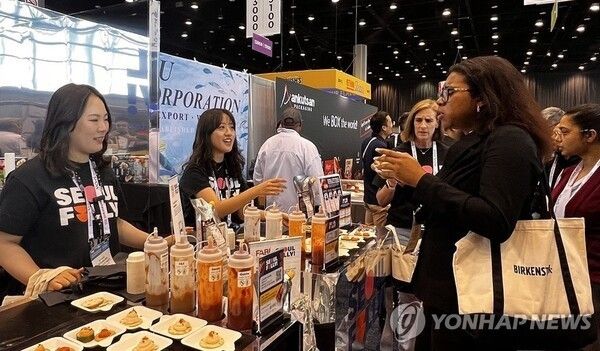
Connecting Heritage Preservation With Food Industry Policy
A general discussion involving the speakers and attendees will follow the three presentations on November 25.
Although the sessions address different subjects, they reflect two interconnected priorities: preserving the cultural knowledge behind traditional foods and ensuring that the industries producing and distributing those foods can respond to changing regulatory conditions.
For heritage practitioners and educators, the emphasis is on finding effective ways to transmit traditional knowledge. For food manufacturers, the immediate concerns include ingredient traceability, labeling compliance and adapting production management to new requirements.
Eom Jeong-woong of the Korean Food Promotion Institute's Korean Cuisine Research Team said the seminar is intended to renew attention to the cultural significance of jang-making and introduce the tradition to future generations. He also expressed hope that the discussion would help identify opportunities for mutually beneficial development among soybean producers and the food industry.
UNESCO recognition established the international cultural significance of Korea's jang-making tradition. The task now is to ensure that this recognition supports continued practice, meaningful education and sustainable development.
The November 25 seminar will bring those concerns together, examining how an established culinary tradition can remain part of contemporary Korean life while navigating the demands of a modern food industry.
Reported by News Culture M.J._mj94070777@nc.press
Copyright ⓒ 뉴스컬처 무단 전재 및 재배포 금지


