[News Culture] Korea's traditional papermaking craft, known as hanji, has moved a significant step closer to UNESCO recognition. An international evaluation panel has recommended that the knowledge, techniques and cultural practices associated with making the paper be added to the Representative List of the Intangible Cultural Heritage of Humanity.
The recommendation acknowledges more than the quality of the finished paper. It recognizes the generations of craftspeople who have preserved the intricate production process, along with the traditions and community practices that have sustained the craft.
According to UNESCO on November 5, its Evaluation Body recommended the inscription of South Korea's nomination, officially titled Traditional Knowledge and Skills Associated with the Production of Hanji and Related Cultural Practices in the Republic of Korea.
The final decision will be made at the 21st session of the Intergovernmental Committee for the Safeguarding of the Intangible Cultural Heritage, scheduled for November 30 to December 5 in Xiamen, China. The recommendation is an important step toward inscription, although formal approval remains pending.
If approved, hanji will become South Korea's 24th element on UNESCO's intangible cultural heritage lists.
A Craft Shaped by Nature and Generations of Skill
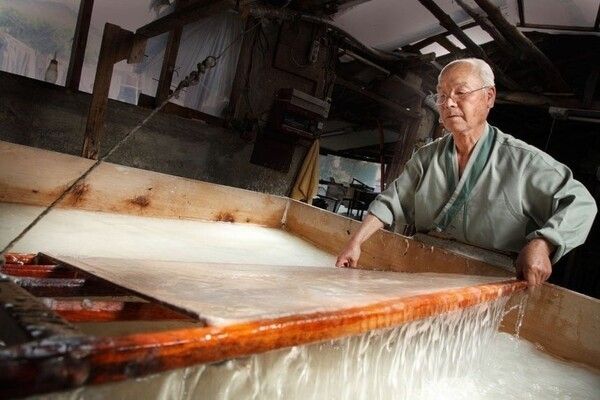
Hanji is traditionally made from fibers extracted from the inner bark of the paper mulberry tree, known in Korean as daknamu. Its production involves a series of labor-intensive steps, beginning with harvesting the raw material and continuing through steaming, stripping, boiling, cleaning, sheet formation and drying.
Each stage demands specialized knowledge. The treatment of the fibers and the techniques used to form and dry the sheets affect the paper's texture, strength and durability. These skills have been refined through generations of practice.
UNESCO's evaluation encompasses the broader cultural significance of hanji, which has long served purposes beyond writing and printing. The paper has been used in traditional crafts, household objects and everyday cultural practices, establishing a connection between papermaking and community life.
Hanji was prized for its quality as early as the Goryeo period (918–1392). In China, Korean paper was known as Goryeoji, a name associated with its reputation for fine craftsmanship. Its use in books and historical records helped establish its importance in Korea's literary and cultural history.
Over time, hanji also became a material for decorative arts, furniture and household goods.
Today, the paper is finding applications in contemporary art, design and environmentally conscious architectural materials. Its natural fibers and traditional production methods have attracted renewed interest as artists and designers explore alternatives to industrial materials.
The Craftspeople Keeping Hanji Alive
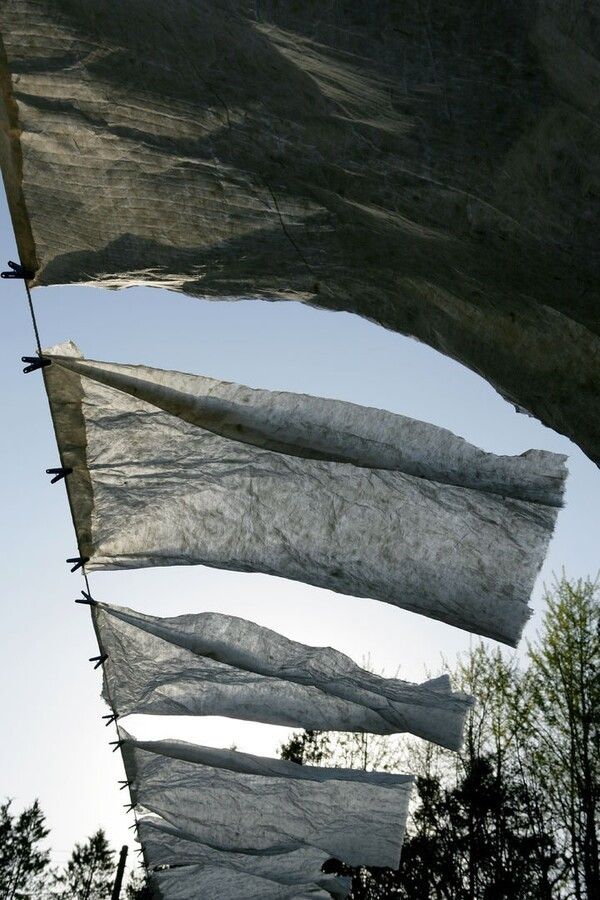
The survival of hanji depends on the craftspeople who continue to practice and teach its production methods.
Four recognized holders of South Korea's National Intangible Heritage designation for traditional papermaking, known as Hanji-jang, are Hong Chun-su of Imsil in North Jeolla Province, Kim Sam-sik of Mungyeong in North Gyeongsang Province, Shin Hyun-se of Uiryeong in South Gyeongsang Province, and An Chi-yong of Goesan in North Chungcheong Province.
Their work reflects regional traditions shaped by locally available materials and methods passed down through workshops and communities.
Papermaking requires years of training and hands-on experience. From preparing mulberry fibers to controlling moisture and drying finished sheets, artisans rely on knowledge that cannot be preserved through written instructions alone.
UNESCO recognition could help raise international awareness of these traditions and strengthen efforts to transmit them to younger generations.
Yet inscription would not, by itself, resolve the challenges facing the craft. An aging population of master artisans, a limited pool of apprentices, the availability of raw materials and the cost of maintaining traditional workshops remain significant concerns.
Ensuring that hanji survives as a living practice, rather than solely as a heritage designation, will require sustained training, viable production environments and demand for the finished paper.
UNESCO Recognition and the Challenge of Long-Term Preservation
South Korea currently has 23 elements inscribed on UNESCO's intangible cultural heritage lists. Its recognized traditions include the royal ancestral rituals and music of Jongmyo Shrine, pansori, Arirang, kimjang, the culture of Jeju's women divers and talchum, or Korean mask dance drama.
The most recent addition came in 2024, when the traditional knowledge and social practices surrounding the making of jang, Korea's fermented soybean-based condiments, were inscribed on the Representative List.
South Korea is also preparing its next nomination. In 2028, it plans to seek recognition for ginseng-related traditions, encompassing cultivation, processing techniques and the cultural practices associated with the plant.
This year's evaluation has also brought attention to another Korean cultural tradition. North Korea's nomination, officially titled Taekwon-Do, Traditional Martial Art in the Democratic People's Republic of Korea, has received a recommendation for inscription.
If approved, it would become North Korea's sixth UNESCO-listed intangible cultural heritage element, following Arirang, kimchi-making, traditional Korean wrestling, Pyongyang raengmyon customs and traditional Korean clothing practices.

North Korea submitted its nomination independently in March 2024. South Korea subsequently filed its own application in March 2026, having explored the possibility of a joint nomination.
However, the current evaluation covers only North Korea's submission. Any future effort to extend the inscription to South Korea would require further procedures and consultation with the existing State Party.
UNESCO's intangible cultural heritage system does not establish exclusive ownership of a cultural practice or determine its national origin. Instead, its purpose is to safeguard traditions, knowledge and skills maintained by communities across generations.
For hanji, the expected recognition presents both an opportunity and a responsibility. International visibility may encourage greater interest in traditional Korean paper, but its continued existence will depend on the people who make it.
Supporting apprenticeships, maintaining access to traditional materials and creating sustainable opportunities for craftspeople will be essential if hanji is to remain part of contemporary cultural and economic life.
The December decision could place Korean papermaking on UNESCO's international heritage list. The longer-term task will be ensuring that the knowledge behind each sheet continues to be practiced and passed on.
Reported by News Culture M.J._mj94070777@nc.press
Copyright ⓒ 뉴스컬처 무단 전재 및 재배포 금지


