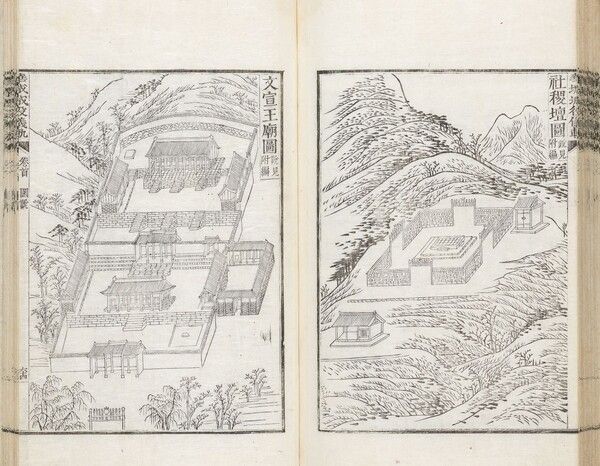
[News Culture] Much of what is known about the construction of Hwaseong Fortress in Suwon comes not from its surviving walls but from a remarkable collection of documents compiled under King Jeongjo of the Joseon Dynasty. More than two centuries after the fortress was built, those records would prove indispensable to its restoration.
Known as Hwaseong Seongyeok Uigwe, or The Construction Records of Hwaseong Fortress, the work offers an unusually comprehensive account of one of Korea's most ambitious 18th-century building projects. Its pages document architectural plans, construction methods, machinery, labor arrangements, materials and expenditures, providing a detailed picture of how the Joseon government organized and executed a major public undertaking.
The records also reveal the political ambitions behind the project. King Jeongjo, who ruled from 1776 to 1800, envisioned Suwon as a new administrative and commercial center that would strengthen royal authority. After relocating the tomb of his father, Crown Prince Sado, to the Suwon area, the king initiated an extensive urban development program that combined military defense with economic and administrative reform.
Hwaseong Fortress formed the centerpiece of that vision. Its walls, gates and defensive structures were designed to protect a growing urban center while accommodating government offices, commercial activity and royal ceremonies. Rather than simply enclosing an existing settlement, the project helped shape the development of a new city.
Construction began in January 1794 and was completed in 1796, taking approximately 32 months. The relatively short construction period reflected extensive planning, coordinated administration and the introduction of machinery intended to improve productivity.
The royal records preserve the chain of decisions behind that achievement. Orders issued by the king, official correspondence and progress reports show how construction was supervised, resources were allocated and instructions were carried out across different levels of government. They also provide evidence of the relationship between royal policy and the practical demands of a large construction site.
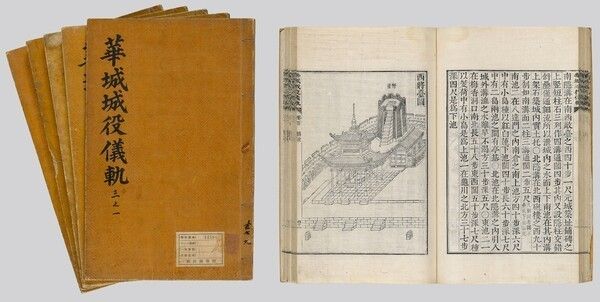
Engineering Knowledge Preserved in Drawings
One of the publication's most valuable features is its extensive collection of technical illustrations.
Detailed drawings depict the fortress walls, gates, defensive installations and surrounding structures. They also show construction equipment and explain how particular devices were assembled and operated. These illustrations complement the written records, allowing researchers to examine both the appearance of the completed structures and the methods used to build them.
Among the most significant machines documented is the geojunggi, a lifting device developed by the scholar Jeong Yak-yong.
Jeong drew on mechanical principles described in Qiqi Tushuo, a Chinese-language treatise introducing Western machinery. Using a system of pulleys, the geojunggi made it possible to lift heavy stones with substantially less physical effort, improving the handling of large building materials.
Its development illustrates how scientific knowledge circulated across cultural boundaries during the late Joseon period. Mechanical ideas originating in Europe reached Korean scholars through Chinese publications and were adapted to meet the practical needs of local construction.
The significance of the geojunggi lies not only in the device itself but also in the documentation that survives. The drawings and written explanations in the Hwaseong Seongyeok Uigwe allow historians to study how the apparatus worked and how engineering knowledge was applied on a major building site.
The publication contains ten volumes organized into introductory records, principal sections and supplementary materials. These cover construction schedules, architectural drawings, royal orders, administrative documents, personnel records and accounts of expenditure.
The supplementary sections extend beyond the fortress walls to include the construction of the royal temporary palace, government buildings, ritual facilities and pavilions. Their inclusion makes clear that Hwaseong was conceived as an integrated urban project rather than an isolated military structure.
The Workers Behind a Royal Project
The records are equally important for what they reveal about the people who built Hwaseong.
Large-scale construction required far more than royal direction and architectural planning. Stonemasons, carpenters, plasterers, metalworkers and other specialists had to coordinate their work, while officials managed supplies, payments and schedules.
The Hwaseong Seongyeok Uigwe documents the participation of these workers in considerable detail. In addition to their names and occupations, the records identify work assignments, dates and wages, providing an unusually close view of labor organization in late 18th-century Korea.
Such information helps distinguish Hwaseong from monuments whose histories are told almost exclusively through the achievements of rulers and officials. Although Jeongjo commissioned the project and senior administrators directed it, the surviving documentation also preserves evidence of the craftsmen and laborers whose work made the fortress possible.
The financial records reveal another dimension of Joseon's administrative capabilities. Materials, transportation, labor expenses and other costs were systematically documented, making it possible to examine how the government financed and managed construction on a substantial scale.
The publication therefore serves as more than an architectural manual. It provides a record of state administration, skilled labor and the economic resources required to transform royal plans into physical infrastructure.
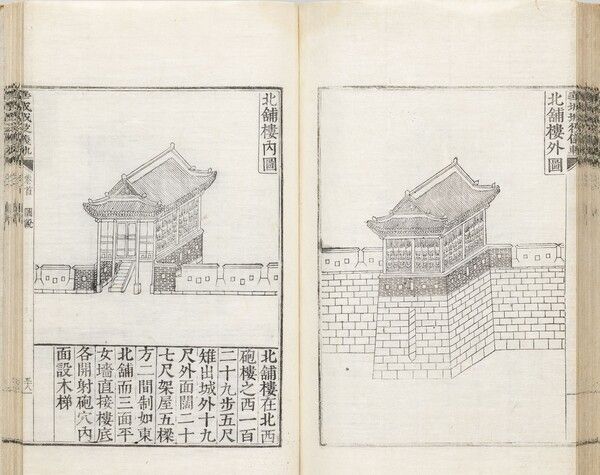
The Documents That Made Restoration Possible
The importance of the Hwaseong Seongyeok Uigwe became particularly apparent long after the original construction had ended.
Parts of Hwaseong Fortress suffered damage during the Japanese colonial period and the Korean War. Gates, defensive installations and sections of the walls were destroyed or severely damaged, leaving later generations with the challenge of reconstructing structures that no longer survived in their original form.
The detailed architectural records provided a crucial foundation for that work.
By comparing the surviving ruins with historical drawings, structural descriptions and measurements, restoration specialists could establish how damaged sections had originally been designed and assembled. The documents offered evidence that would otherwise have been difficult or impossible to recover from the physical remains alone.
Restoration work beginning in the 1960s drew extensively on these materials. Architectural illustrations helped specialists reconstruct the original layout and design of individual buildings, while accompanying descriptions clarified construction techniques and the intended relationship between different parts of the fortress.
The records did not eliminate every challenge of reconstruction, but they provided an unusually reliable historical reference. Their survival allowed conservation decisions to be grounded in contemporary documentation rather than relying solely on comparisons with other Joseon-period fortifications.
This relationship between the surviving architecture and its written record is central to Hwaseong Fortress's international significance.
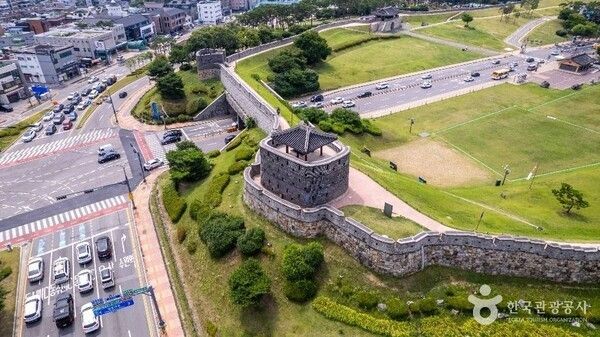
Hwaseong Fortress was inscribed on the UNESCO World Heritage List in 1997. The designation recognized its architectural and military significance, particularly its integration of engineering ideas from East Asia and Europe into a planned urban defense system.
The fortress also stands as evidence of the administrative, scientific and technological developments taking place in late Joseon society. Its surviving structures demonstrate those achievements, while the construction records explain the decisions and methods behind them.
UNESCO has specifically recognized the importance of the Hwaseong Seongyeok Uigwe in documenting the fortress's original design and supporting the authenticity of subsequent restoration work.
The book also forms part of a broader tradition of Joseon royal documentation. Known collectively as Uigwe, these illustrated records preserved the procedures, materials, personnel and expenditures associated with major royal and state undertakings.
The Royal Protocols of the Joseon Dynasty were inscribed on UNESCO's Memory of the World Register in 2007. The Hwaseong Seongyeok Uigwe was subsequently designated a nationally protected Treasure in 2016, recognizing its significance as a surviving historical document.
Although the construction records were compiled after the fortress was completed and published in 1801, their value has continued to grow. They make it possible to examine not only the physical structure of Hwaseong but also the scientific knowledge, administrative organization and human labor that shaped its construction.
They also demonstrate the enduring importance of systematic documentation in heritage conservation. Buildings can be damaged, altered or destroyed, but sufficiently detailed records can preserve the information needed to understand and, in some cases, reconstruct them.
Hwaseong Fortress remains one of the most prominent examples of late Joseon architecture. Its walls and gates offer a physical encounter with 18th-century engineering, while the Hwaseong Seongyeok Uigwe preserves the planning, calculations and people behind their construction.
Together, the fortress and its records provide two complementary accounts of the same achievement: one preserved in stone and brick, the other in the written evidence that helped secure its survival.
Reported by News Culture M.J._mj94070777@nc.press
Copyright ⓒ 뉴스컬처 무단 전재 및 재배포 금지


