[News Culture] Sound can alter the way a space feels without changing anything that can be seen.
Music in a hotel lobby, office noise or audio accompanying an exhibition all shape how people experience a place. Increasingly, that acoustic layer is being treated as something to design rather than simply something to fill, bringing soundscaping into the overlap between art, interiors and technology.
Background music was once the most familiar way commercial spaces used sound. That approach is expanding as designers consider how people move through a space, how long they stay and what kind of atmosphere a particular environment requires. Recorded nature sounds, ambient composition and multichannel audio are now being combined to create sound environments tailored to specific places.
Soundwolf, a Seoul-based soundscaping company, has explored that shift through exhibitions and interactive projects before extending the same approach into offices, hotels and wellness spaces.
Turning Literature Into Something Heard
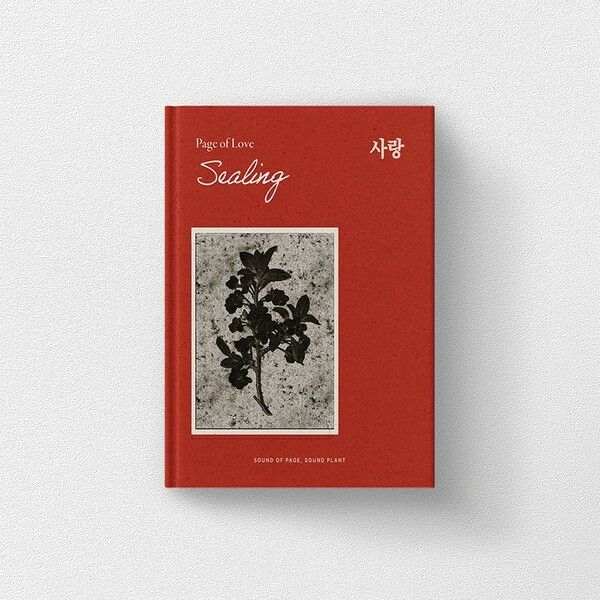
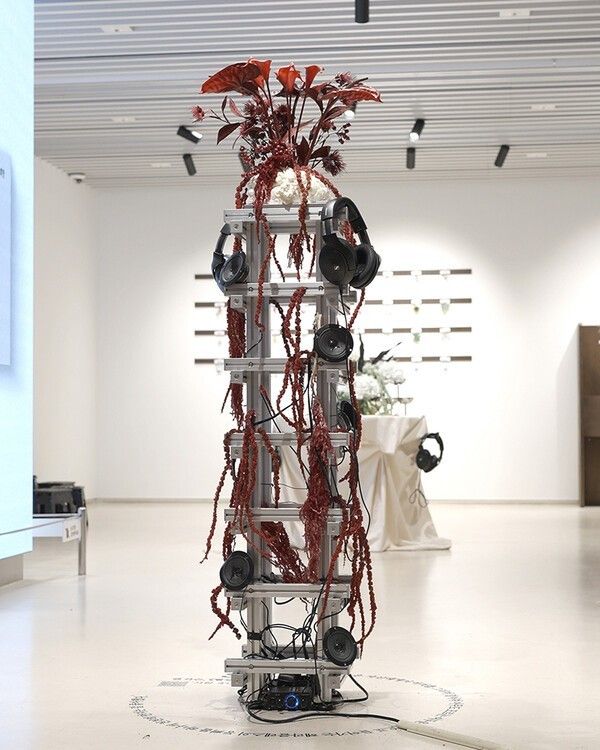
One early example was “The Sound of Page, Sound Garden,” presented at Kyobo Book Centre’s Gwanghwamun branch in 2024.
The project translated the themes and emotional atmosphere of five books into sound. Five plant-like sound installations allowed visitors to encounter literary works through listening rather than reading alone.
Among the works interpreted through sound was “Autobiography of Red” by Anne Carson, the Canadian poet, essayist and classicist who received the 2026 Nobel Prize in Literature.
The project did not attempt to narrate the books as audiobooks. Instead, it treated elements such as mood, memory and emotional tension as material that could be reconstructed acoustically.
That approach continued in other projects. Original soundtracks were created for three locations of the Seoul Outdoor Library in 2025, while a sound meditation room developed in collaboration with the Aldo Tambellini Foundation used 5.1-channel spatial audio to make sound part of the physical experience of the room.
At “A TEMPO — Backyard,” presented at KT&G Sangsangmadang Chuncheon in 2026, visitors were given more direct control.
Users selected and positioned natural sounds and music on a screen. The location and size of each icon determined where the sound came from and how loudly it played, with the finished composition reproduced through a four-channel system.
The audience was no longer simply listening to a completed soundscape. Each visitor could decide how the acoustic environment would be assembled.
Designing Sound for Places People Use Every Day
The same ideas are now moving beyond temporary exhibitions.
Soundwolf’s “Green Noise” service combines field-recorded natural sounds with original ambient music to create sound environments for places such as offices, lounges, hotels and wellness facilities.
The composition changes according to the function of the space.
In an office or lounge, sounds of wind, leaves or water can be kept at relatively low levels so they do not interfere with conversation or concentration. In hotel corridors or windowless interiors, sound can introduce a sense of an outdoor environment where there is no direct visual connection to nature.
The point is not simply to play recordings of birds or running water. The volume, placement and density of those sounds can be adjusted according to a room’s dimensions and how people use it.
A Soundscape That Changes With Time
The system can also vary what is heard according to time of day, season and environmental conditions.
Bird calls do not occur at identical intervals in nature, and the intensity of wind is never perfectly constant. Soundscape systems can reproduce some of that variation by changing combinations over time rather than repeating the same fixed playlist.
That distinction is becoming central to commercial soundscaping. Music traditionally functions as content played inside a space. In this model, sound is treated more like an environmental layer that can be continuously adjusted.
The business model reflects that shift. Soundwolf offers both subscription-based sound environments and customized production for individual brands and facilities. Instead of creating audio that disappears once an exhibition closes, the aim is to make sound part of ongoing spatial operation.
For Soundwolf CEO Park So-hyun, the starting point is the idea that hearing affects how people perceive and navigate a place. The company is now applying its library of recorded sounds, original music and spatial-audio technology to environments designed for everyday use.
What began with books translated into sound and interactive installations is therefore moving toward a broader question of spatial design: not only what a room looks like, but what people hear while they are in it.
Reported by News Culture M.J._mj94070777@nc.press
Copyright ⓒ 뉴스컬처 무단 전재 및 재배포 금지


