[News Culture] South Korean entertainment has become a global business, with streaming platforms bringing Korean dramas, films, variety shows and other content to audiences around the world. Yet behind that international success, producers are warning of declining production volumes, fewer opportunities for emerging talent and mounting financial pressure. The contradiction is becoming increasingly difficult to ignore: K-content has never been more visible internationally, but the industry responsible for creating it is struggling to sustain its production pipeline.
The concern extends beyond individual studios. Entertainment companies are searching for new business models, production professionals are questioning the industry's long-term stability, and public agencies are placing greater emphasis on commercializing intellectual property rather than simply developing or acquiring it. Together, these developments point to a structural problem. The Korean content business has expanded globally, but its ability to generate revenue consistently and reinvest that money in new productions has not necessarily kept pace.

The pressure became particularly visible on November 4, when 12 organizations, including the Korea Drama Production Association, gathered at the Korea Press Center in Seoul to call for government intervention. The groups said annual Korean drama production had fallen by approximately 30%, from 141 titles in 2022 to roughly 100 two years later. They also cited a decline in drama programming across the country's three major terrestrial broadcasters, from 91 titles in 2012 to 32 in 2023.
The organizations called for a 1 trillion won investment and support framework over five years, aimed particularly at restoring production opportunities for small and mid-budget dramas. Their proposal would involve 200 billion won annually in public support, with broadcasters and platforms contributing additional financing. Industry representatives warned that reduced production was affecting new writers and actors while driving experienced production professionals out of the business.
Although the immediate focus was television drama, the underlying concerns reach across film, webtoons, music and other content sectors. Production costs have risen, audiences have more entertainment choices, and the relationship between content ownership and commercial returns is becoming increasingly important. The decline in drama production may be one of the clearest symptoms of a broader adjustment taking place throughout the Korean entertainment economy.
Global Success Has Raised Both Content Value and Production Costs
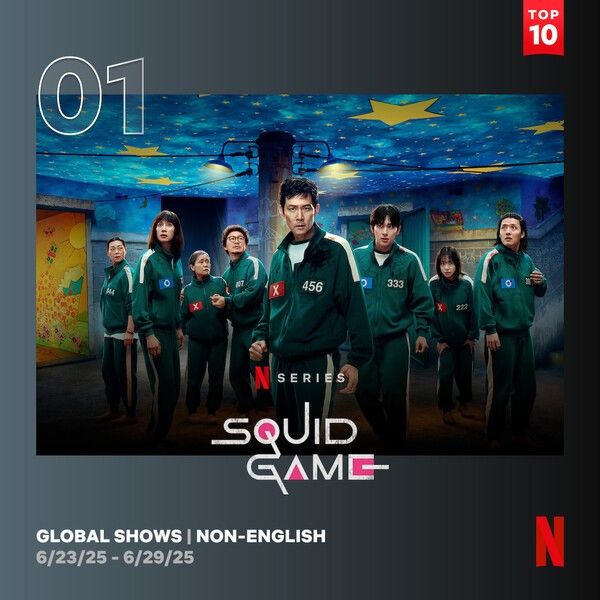
The international expansion of Korean entertainment has fundamentally changed the economics of production. Global streaming services have opened new distribution channels and made it possible for Korean productions to reach audiences well beyond the domestic broadcasting market. Studios increasingly develop projects with international viewers in mind, while competition for established writers, directors, actors and production specialists has intensified.
That expansion has also raised expectations for production quality. Larger filming operations, more elaborate sets, advanced visual effects and sophisticated postproduction have become increasingly important for premium productions competing on global platforms. Higher budgets are partly a consequence of these demands, but they also reflect the growing commercial value of Korean creative talent and intellectual property.
Some industry participants regard rising compensation as a natural consequence of Korean content's stronger international position. Writers, actors, directors and other rights holders whose work was once valued primarily against the domestic market are now participating in an industry with global commercial potential. Higher production costs can therefore reflect a broader reassessment of creative value, rather than simply an inefficient increase in spending.

The problem arises when those higher costs are not matched by reliable opportunities to recover investment. Large productions backed by major platforms or well-capitalized companies may secure substantial financing, while smaller studios face greater difficulty developing projects without comparable resources or distribution commitments. As investment becomes concentrated in fewer expensive productions, mid-budget projects and opportunities for emerging creators can become particularly vulnerable.
This creates a difficult balance for the industry. Stronger international demand has increased the value of Korean content, but it has also made production more capital-intensive and potentially more financially risky. The challenge is not necessarily to reverse rising production budgets or reduce compensation for creative professionals. It is to develop financing, distribution and revenue-sharing arrangements capable of supporting a broader range of productions at their new economic scale.
The Competition Is No Longer Just Between Shows

Production costs are only one side of the industry's problem. The other is a fundamental change in how audiences spend their time.
Traditional media businesses operated within relatively distinct distribution environments. Television programs competed for viewers within scheduled broadcasting slots, films relied heavily on theatrical exhibition, and music circulated through physical recordings and dedicated listening services. Although these sectors competed for consumer spending, their principal distribution channels and consumption patterns were comparatively well defined.
Today's audiences move between streaming services, YouTube, short-form video, webtoons, games, social media and live entertainment with little separation between formats. A viewer watching a Netflix drama may switch to YouTube, continue scrolling through short videos or spend the evening playing a game. The available supply of entertainment has expanded dramatically, but the amount of time audiences can devote to it has not.
That changes the nature of competition. A Korean drama is no longer competing only against other television series; it is competing with every digital experience capable of capturing the same viewer's attention. Films, games, music, webtoons and creator-produced videos increasingly occupy overlapping portions of the consumer's daily media habits. In this environment, producing attractive content remains essential, but securing sustained attention has become a separate commercial challenge.
The shift has consequences for revenue. Television producers traditionally relied on broadcasting arrangements, advertising and overseas rights sales, while film companies recovered investment primarily through theatrical receipts and subsequent distribution. These revenue models have not disappeared, but digital platforms have changed the timing, ownership and distribution of commercial returns.
A production can reach a substantial international audience without necessarily giving its original producer a proportional share of the longer-term value generated by that success. The outcome depends on financing agreements, distribution contracts, ownership of intellectual property and the rights retained by the companies involved.
At the same time, audiences now encounter more content across more platforms, making commercial performance less predictable. Increased production spending does not guarantee sustained engagement, and international visibility does not automatically translate into recurring revenue. The industry must therefore address not only how to attract audiences, but also how to retain value from their attention across multiple formats and business activities.
Owning IP Is Only the Beginning
The changing economics of production and consumption are pushing Korean entertainment companies to reconsider their business models. Rather than operating exclusively as producers of individual shows or films, companies are increasingly seeking to manage content as intellectual property that can generate revenue through multiple uses.
International licensing, short-form adaptations, free ad-supported streaming television (FAST) channels, character merchandising and other derivative businesses offer opportunities to extend the commercial life of existing productions. The objective is to reduce dependence on a single release or distribution agreement by developing additional ways for audiences to engage with the same underlying property.
This approach requires more than simply holding the legal rights to a successful title. Companies must identify suitable markets, negotiate licensing arrangements, develop related products and coordinate distribution across different platforms. Those activities require commercial expertise, partnerships and investment that may differ considerably from the capabilities needed to produce the original content.

The Korea Creative Content Agency (KOCCA) has also been emphasizing the importance of turning intellectual property into sustainable business opportunities. Under President Kim Yoon-ji, the agency has outlined strategies extending from IP development to commercialization and international expansion, reflecting a broader policy focus on the financial viability of content businesses.
The distinction between ownership and commercialization is increasingly important. Securing rights may give a company control over a valuable asset, but that asset does not automatically generate income. A drama, film or webtoon becomes a broader commercial opportunity only when its rights can be used effectively across distribution channels, adaptations, licensing arrangements or related products.
For smaller production companies, the challenge can be especially demanding. Even when they create a successful work, limited financing and bargaining power may restrict their ability to retain ownership or participate in subsequent revenue. The drama industry's recent demands for stronger investment support and fairer arrangements with global streaming platforms reflect concerns about whether creative success is translating into sustainable returns for domestic producers.
The industry's next competitive advantage may therefore depend less on accumulating IP for its own sake than on building the business capabilities required to turn those rights into revenue. More importantly, that revenue needs to reach the producers and creative professionals responsible for developing future projects.
Making Good Content Is Still the Foundation
None of these changes diminishes the importance of artistic quality. Drama, film, music and other forms of entertainment are not interchangeable financial products; their appeal depends on storytelling, performance, creativity and the emotional relationships they establish with audiences. A commercially sophisticated distribution strategy cannot guarantee success if the original work fails to capture interest.
But artistic excellence and economic sustainability are becoming increasingly difficult to separate. In a more fragmented media market, a successful production needs opportunities to reach audiences through appropriate distribution channels, remain commercially relevant and generate returns that can support future investment. A strong work may deserve attention on artistic grounds, yet its producer still needs a viable way to recover costs and finance what comes next.

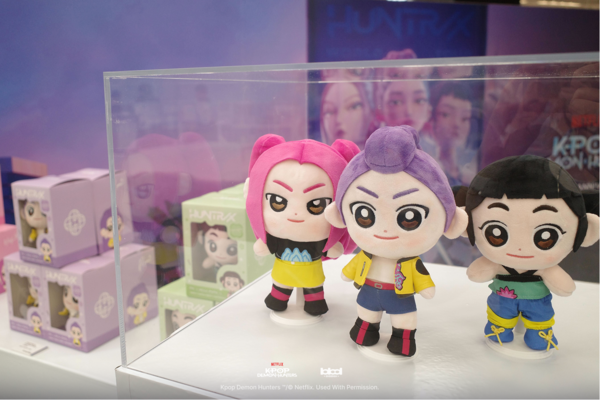
The expansion of entertainment IP into merchandise and related experiences demonstrates one way companies are attempting to develop those additional revenue opportunities. A drama may create demand for products that draw on its characters, setting or visual identity, while other properties may find new audiences through adaptations, licensing or alternative distribution formats.
Such extensions do not work equally well for every production. Some titles have strong potential for merchandise or franchise development, while others derive their value primarily from a self-contained artistic experience. Commercialization strategies therefore need to reflect the characteristics of the underlying work rather than assume that every successful title can become a multimedia franchise.
The broader principle remains the same. A healthy content industry needs to support projects that generate immediate commercial returns alongside works that develop new talent, experiment with unfamiliar formats or strengthen the industry's creative diversity. Without a sufficiently broad production pipeline, the sector risks becoming dependent on a limited number of expensive projects, reducing opportunities for the next generation of writers, directors and production professionals.
That is why the concerns raised by drama organizations, the government's growing focus on IP commercialization and the industry's search for new distribution models should not be viewed as unrelated developments. They are responses to the same economic challenge: how to sustain production when costs are increasing, audience attention is fragmented and commercial returns are distributed unevenly.
The Next Growth Model Depends on Revenue Reinvestment
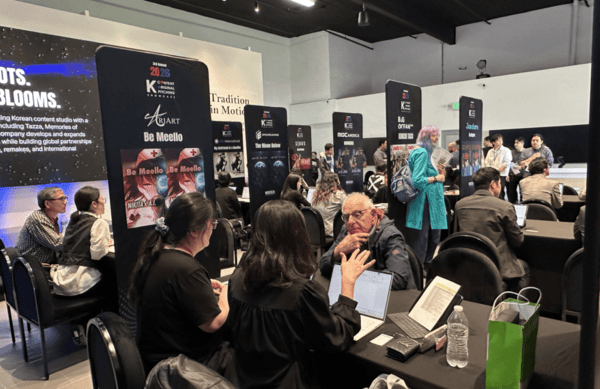
For much of its international expansion, the Korean content industry demonstrated its competitiveness by producing works capable of reaching audiences around the world. The success of Korean dramas, films, music and digital entertainment established valuable international distribution relationships and strengthened demand for Korean creative talent.
The next phase requires the industry to look beyond individual hits and consider whether those successes can consistently finance future work. That means securing appropriate rights, developing multiple revenue opportunities, improving investment recovery and ensuring that earnings can support continued production. It also means maintaining space for smaller projects and emerging creators rather than directing an increasing share of available resources toward a handful of high-budget titles.
The industry's transition is not simply from producing content to monetizing intellectual property. It is from a model centered on individual production success toward one in which revenue can circulate through development, financing, distribution and reinvestment.
The distinction matters because even a globally successful entertainment sector can struggle if the financial rewards of its most visible achievements do not sustain the wider production ecosystem. Strong creative output requires a continuing supply of skilled professionals, viable production companies and opportunities to develop new ideas. Those foundations depend on a business model that supports more than the occasional international breakthrough.
The November 4 appeal for 1 trillion won in support highlights the immediate pressure on Korea's drama industry, but public financing alone cannot resolve every structural weakness. A more sustainable market will also require commercially workable production agreements, stronger IP strategies and revenue models that provide producers with opportunities to benefit from the long-term performance of their work.
K-content has already proved that it can compete globally. The next challenge is to ensure that international success generates the resources needed to maintain its creative capacity at home.
The industry's future will depend not only on its ability to make another hit, but on whether that hit can help finance the next production, sustain the companies and professionals behind it, and create opportunities for new talent.
For K-content, the next growth engine is not simply better production. It is a revenue cycle capable of keeping good content in production.
Reported by News Culture M.J._mj94070777@nc.press
Copyright ⓒ 뉴스컬처 무단 전재 및 재배포 금지


