[News Culture] Around Seoul’s Guro Industrial Complex, rows of tiny rooms once housed young women who had traveled from across the country to work in factories. Known as “beehive houses” for the way small rooms were packed tightly together, these residences were a defining part of life around the industrial zone.
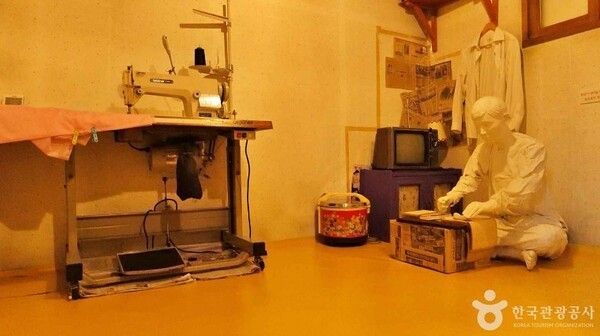
Five or six workers could share a room of barely 10 square meters. Sleeping, eating and preparing for another day at the factory all took place within that confined space.
As South Korea pursued rapid, export-led industrialization, the workers who kept its factories running often lived under conditions far removed from the prosperity their labor was helping create.
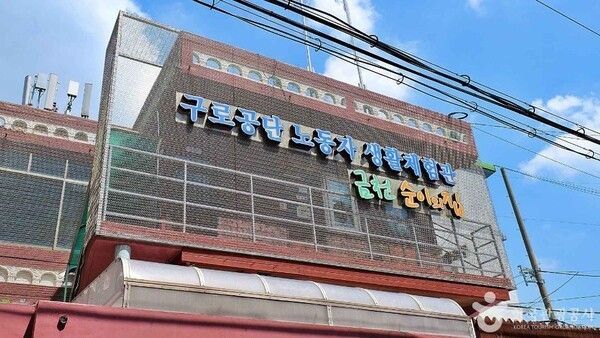
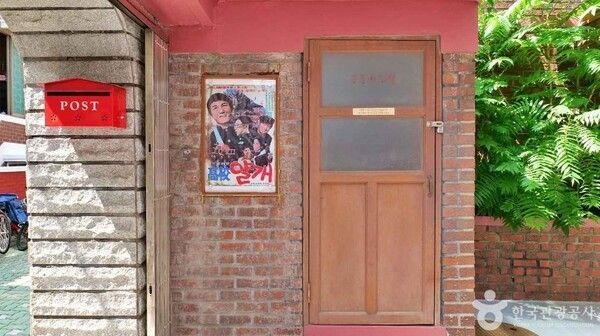
The Guro Industrial Complex Workers’ Life Experience Center, commonly known as Suni’s House, in Geumcheon-gu, Seoul, recreates those disappearing residences and preserves the everyday history of the women who lived in them.
Its focus is a side of South Korea’s industrial development that cannot be measured solely through export figures, factory output or corporate expansion. The reconstructed rooms show where workers lived, the conditions they endured and how many of them later emerged as active participants in struggles for labor rights.
The history of the Guro Industrial Complex began alongside the government’s export-oriented economic development policies of the 1960s.
As South Korea implemented its First Five-Year Economic Development Plan, the government moved to establish industrial zones dedicated to export production. Legislation for the development of export industrial complexes was enacted in 1964, construction of Guro’s first complex began the following year, and the first section was completed in 1967.
It became the country’s first inland industrial complex built specifically around export manufacturing.
Expansion followed rapidly. Guro’s second industrial complex was completed in 1968 and the third in 1973. Textile, garment, electrical and electronics companies, along with manufacturers of precision equipment, moved into the area.
Many of these industries depended on large numbers of low-wage workers. Young women arriving from rural communities became a major part of that workforce, particularly in textile and garment factories.
Employment figures illustrate the speed of the transformation. According to records held by the National Archives of Korea, the number of workers in the Guro Industrial Complex grew from 2,460 at the end of 1967 to more than 114,000 by the end of 1978 — an increase of more than 43 times in roughly a decade.
Factories expanded faster than adequate housing could be provided.
Although companies were encouraged to build dormitories and other accommodation, the supply did not keep pace with demand. Dense clusters of low-cost rooms consequently developed around the industrial complex.
The beehive houses typically divided a building into numerous tiny rooms with few private amenities. Workers often shared rooms to reduce rent.
For young women employed in the factories, these rooms were both affordable housing near the workplace and the place where what little remained of their daily lives unfolded. After long shifts and overtime, they returned to confined quarters to sleep before beginning the cycle again the following day.
The housing conditions reflected the economic realities of industrial labor at the time.
Much of Guro’s export manufacturing relied on low wages and long working hours. Workers reduced housing and living expenses, often sending money to their families or setting aside what they could save. While output and exports increased, improvements in workers’ housing and opportunities for rest lagged behind the pace of industrial growth.
Demands for better wages and conditions gradually developed into organized labor action.
Workers at Taebong Industries protested unpaid wages in 1970, while employees at companies including Crown Electronics and Korea Marvel organized unions and campaigns for improved working conditions. By 1980, disputes over wages and union organizing were continuing across the Guro industrial area.
Workers were increasingly asserting themselves not simply as factory labor but as people entitled to workplace rights.
One of the defining moments came with the Guro Solidarity Strike in June 1985.
The immediate trigger was the arrest of three union officials from Daewoo Apparel on June 22. Beginning June 24, democratic labor unions across Guro launched strikes and sit-ins in protest.
Workers at Hyosung Corporation, Garibong Electronics and Sunil Textile were among those who joined the action, while labor organizations and students supported the protests from outside the factories.
The strike continued through June 29.
According to the Korea Democracy Foundation, about 2,500 workers from 10 labor unions participated in the six-day solidarity action. The movement extended beyond demands over wages and working conditions, bringing workers from different companies together in opposition to repression of union activity.
It subsequently became an important episode in the history of South Korea’s labor movement, particularly for demonstrating solidarity across company-based unions.
The nationwide labor struggles of 1987 brought another wave of change to Guro.
Labor disputes took place at 46 companies in the industrial complex, while 95 new unions were established between August 1987 and the end of 1989. Workers demanded higher wages and better working conditions, but also greater union democracy and stronger protections for labor rights.
Guro consequently became more than a center of industrial production. It also emerged as an important landscape in the history of the labor movement and South Korea’s democratization.
The history of women workers in Guro shows why housing and labor cannot be separated.
Their working lives did not end at the factory gates. The rooms where they slept, ate and recovered were shaped by the same low wages, concentrated urban labor market and economic pressures that defined their workplaces.
Reconstructing a beehive house therefore means more than preserving an obsolete form of housing. It documents the social and economic conditions borne by the young women whose labor underpinned the country’s industrial expansion.
By the late 1980s, however, Guro’s industrial role had begun to change.
As labor-intensive manufacturing became less competitive and companies relocated production elsewhere in South Korea or overseas, the industrial structure of the district shifted. Government policy increasingly encouraged the transformation of manufacturing complexes into centers for advanced industries and services.
In 2000, the Guro Industrial Complex was renamed the Seoul Digital Industrial Complex, marking its transition from a center of export manufacturing to a hub for technology and digital industries.
The physical traces of the earlier era gradually disappeared with that transformation. Factories and workers’ housing were redeveloped or converted to other uses, leaving fewer places where the living conditions of industrial workers could be directly observed.
Suni’s House was created in response to that loss. Supported by the Seoul Metropolitan Government and operated by Geumcheon-gu, the center opened in May 2013.
The building itself is a two-story red-brick house with a basement, completed in 1985.
Officials initially sought to acquire and preserve an original beehive residence, but an agreement with the property owner could not be reached. Instead, the present building was purchased and converted into an exhibition space based on the housing once found around the industrial complex.
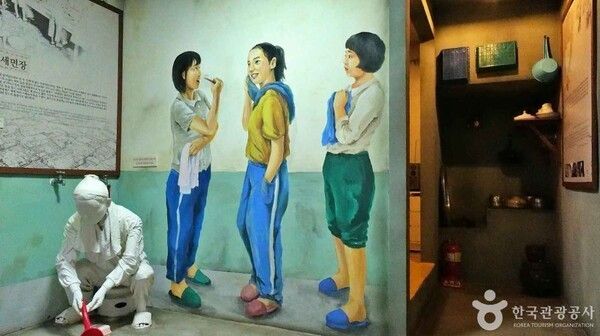
Six small rooms have been recreated inside.
They do not reproduce the full scale of some historical beehive buildings, which could contain around 50 rooms, but they provide a tangible sense of the cramped environment in which several workers often shared a single room.
The history of the Guro Industrial Complex brings together two major strands of modern South Korean history.
It was a product of the country’s drive for export-led economic growth and a workplace for tens of thousands of people who helped sustain that expansion. It was also a setting for collective struggles over wages, union rights and democratization.
Suni’s House brings that history down to the scale of everyday life.
Rather than presenting industrialization only through factories and economic statistics, its tiny rooms preserve the experience of the young women whose labor sustained production and whose lives unfolded between factory floors and crowded rented rooms.
Remembering those spaces adds the lives of the workers themselves to the story of South Korea’s economic transformation.
Reported by News Culture M.J._mj94070777@nc.press
Copyright ⓒ 뉴스컬처 무단 전재 및 재배포 금지


