The conventional theater model is built around a fixed location. Audiences travel to a venue, artists perform on its stage, and the institution selects productions to present. For decades, the circulation of live performance has largely depended on this arrangement, with theaters serving primarily as places where individual works are brought before an audience.
That model is coming under growing scrutiny as expectations surrounding performing arts venues change. The number of theaters in a community, or the size of their facilities, does not necessarily determine how accessible the arts are to local residents. Programming choices, audience relationships and an understanding of local cultural interests increasingly shape what a venue contributes to its community.
In this changing environment, theaters are being challenged to take a more active role in developing cultural experiences rather than simply presenting productions.
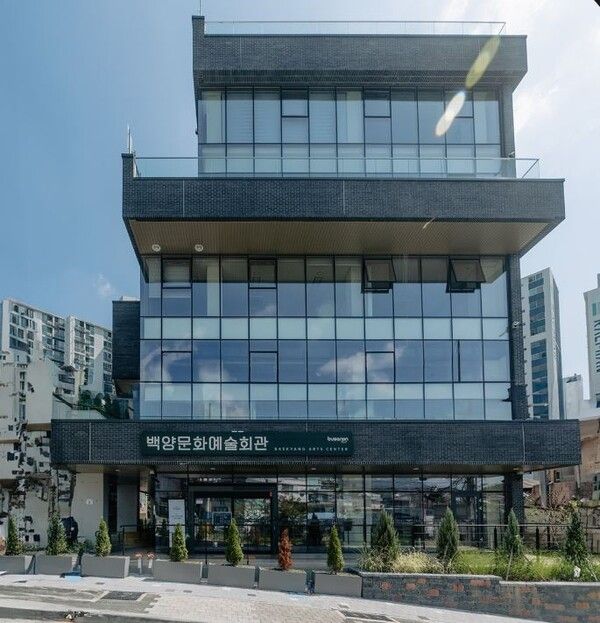
An initiative by ADAPTER.THEATER, an independent venue based in Busan's Gwangalli district, offers one approach. On November 6 and 7, the company will transform Baekyang Arts Center into a temporary extension of its own theater through the 2026 Baekyang Arts Center × ADAPTER.THEATER Pop-up Theater project.
Unlike a conventional guest engagement, the project involves more than transferring a production to another stage. ADAPTER.THEATER will bring its repertoire, workshops, participatory activities and audience engagement practices into the public venue, effectively recreating elements of its artistic and operational identity in a different setting.
Taking a Theater's Identity Beyond Its Building

A theater's identity cannot be reduced to its physical facilities. Stages, seating, lighting and sound systems provide the framework for performance, but an institution's character develops through its artistic choices, its relationship with audiences and its connections to artists and the surrounding community.
The Baekyang project puts that distinction into practice. ADAPTER.THEATER will use both the main auditorium and rehearsal rooms on the fifth and sixth floors, assigning different programs to different spaces. Live performances will run alongside workshops and participatory activities, allowing the center to function for two days as an integrated extension of the independent theater.
The distinction matters for how performing arts are presented and circulated. Touring a production delivers a particular work to a new audience. Transferring a theater's broader programming approach introduces something more extensive: its artistic priorities, educational activities and ways of engaging the public.
The planned lineup reflects that wider ambition. Stand-up comedy and improvisational performances will be accompanied by improvisation workshops for teenagers and theater-based activities for families.
Together, the programs seek to make the boundary between watching and participating less rigid. They also offer audiences opportunities to experience theater as an accessible cultural activity rather than something confined to professional performers and formal productions.
Where Public Resources Meet Independent Expertise

Public and independent theaters operate under different conditions, and those differences help explain the potential value of collaboration.
Public venues are generally expected to provide cultural access, serve local communities and make public arts infrastructure available to a broad range of residents. Independent theaters, meanwhile, depend heavily on their ability to develop distinctive programming, build audiences and experiment with artistic formats and operating methods.
Each can offer resources the other may lack. A public arts center can provide established facilities and community connections, while an independent company contributes repertoire, programming expertise and experience working directly with audiences.
Such partnerships can allow public venues to offer programs that would be difficult to develop independently. For private operators, they create opportunities to reach audiences beyond the geographical limits of their regular theaters.
The implications are particularly relevant outside South Korea's major cultural centers, where performing arts institutions face persistent challenges in securing diverse programming, attracting audiences and maintaining access to specialist expertise.
Connecting independent theaters with publicly supported cultural facilities could help address some of those gaps. Rather than relying solely on occasional touring productions, local venues could gain access to more sustained programming methods and audience development practices.
The potential benefits also extend to regional artists. Stronger relationships between public venues and independent companies could open additional opportunities to present new work and connect with audiences. If such partnerships become part of local festivals or broader performing arts networks, they could provide further channels for artistic activity and collaboration.
Those possibilities, however, depend on whether the relationships continue beyond individual events.
A Touring Model Built Around Local Needs

ADAPTER.THEATER's proposed model of modular, customized programming is intended to make the concept adaptable to different locations.
Instead of offering the same fixed package of productions and workshops everywhere, the company aims to assemble programs according to the available facilities, local characteristics and intended audiences.
This flexibility could make the model relevant to smaller cities with limited access to dedicated performance venues. Productions and educational activities could be adjusted to suit existing community spaces rather than requiring every location to meet the technical specifications of a conventional theater.
Local festivals could also incorporate multiple productions under a single theater brand, creating a coherent program without having to develop every component from scratch. Pilot projects overseas have likewise been identified as a possible avenue for expansion.
Yet portability alone will not guarantee lasting cultural value.
Bringing outside productions into a community is different from building a program that responds to local interests. Organizers must understand the characteristics of regional audiences, identify cultural needs and establish meaningful relationships with local artists and organizations.
Without those connections, a pop-up theater risks becoming another short-term cultural event in which programming is delivered to a community without substantially engaging with it.
A more sustainable approach would allow visiting artists and local cultural resources to influence one another, producing experiences that reflect both the visiting theater's expertise and the character of the host community.
The project also raises a broader question about how the performance of cultural institutions should be assessed.
Venue capacity and the ability to attract prominent productions remain relevant, but they offer only a partial measure of success. The range of artistic experiences available to residents, opportunities created for artists and the strength of a venue's community relationships may be equally important indicators.
The upcoming event at Baekyang Arts Center provides a practical test of these ideas. Rather than simply hosting an independent company's productions, the public venue will temporarily accommodate a broader theatrical model built around programming, participation and audience engagement.
Whether the experiment has a lasting impact will depend on what follows the two-day program. If the partnership develops into an ongoing network linking local audiences, regional artists and independent theater operators, it could point toward a different model for distributing live performance and a more active role for public cultural institutions.
The larger opportunity lies not simply in bringing more shows to regional stages, but in broadening what those stages can offer their communities.
Reported by News Culture M.J._mj94070777@nc.press
Copyright ⓒ 뉴스컬처 무단 전재 및 재배포 금지


