Despite the broad market downturn, DuChemBio, Yuhan Corporation and Curiox Biosystems stood out with strong performances.
|
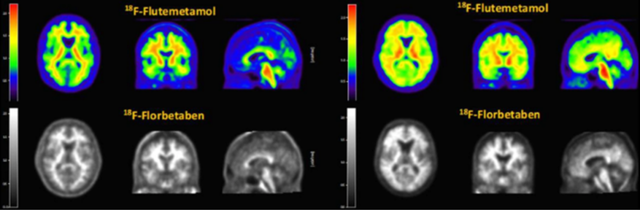
DuChemBio attracted investor interest as the anticipated Korean launch of Eli Lilly's Alzheimer's treatment Kisunla raised expectations of growing demand for amyloid PET imaging agents.
Yuhan Corporation benefited from news that global quarterly sales of the combination therapy involving its lung cancer drug Lazcluze and Johnson & Johnson's Rybrevant had surpassed $320 million.
Meanwhile, Curiox Biosystems gained momentum from increasing equipment orders from global CROs and CDMOs, alongside expectations surrounding its largest-ever sales pipeline in the fourth quarter.
◇DuChemBio, Growing Expectations for Kisunla
DuChemBio shares surged to the daily upper trading limit as investors anticipated rising demand for amyloid diagnostic agents following the expected Korean launch of Kisunla, another Alzheimer's treatment joining Leqembi in the market.
According to KG Zeroin's Market Point, DuChemBio closed at KRW 8,970, up 30.0%, or KRW 2,070, from the previous session.
The rally followed an October 13 report by Pharm Edaily titled "Kisunla Means Another Opportunity: DuChemBio Benefits from Alzheimer's Drug Competition," which highlighted the company's potential earnings growth as the market for Alzheimer's treatments expands.
DuChemBio exclusively manufactures and supplies two amyloid PET radiopharmaceuticals in South Korea: Vizamyl and Neuraceq. These diagnostic agents detect amyloid-beta accumulation in the brain and help identify patients eligible for anti-amyloid treatments such as Leqembi and Kisunla.
Demand has already increased following Leqembi's introduction. Combined revenue from Vizamyl and Neuraceq rose approximately 47%, from KRW 5.1 billion in 2024 to KRW 7.5 billion in 2025. Revenue reached KRW 4.55 billion in the first half of 2026, representing year-on-year growth of 38.2%.
The company also holds a dominant position in the domestic market. South Korea's production value of radiopharmaceuticals used to diagnose Alzheimer's disease reached KRW 12.27 billion in 2025, an increase of approximately 53% from the previous year. DuChemBio's Vizamyl and Neuraceq accounted for KRW 11.81 billion, giving the company a 96.3% market share based on production value.
Investors are now focusing on Kisunla as another potential growth driver.
Unlike Leqembi, Kisunla allows clinicians to consider discontinuing treatment once amyloid plaques have fallen below a specified threshold. Under the US prescribing information, PET imaging can be used to assess whether this threshold has been reached.
If Kisunla receives approval in South Korea under similar conditions, demand for PET imaging could increase not only for initial patient screening but also for monitoring treatment progress.
To prepare for increasing demand, DuChemBio is pursuing investments in a manufacturing facility at Hanyang University Hospital and a production facility in Jeongeup, North Jeolla Province. The company also plans to expand output by increasing production frequency at existing manufacturing centers.
Kim Seung-woo, Executive Vice President and Head of Growth Strategy at DuChemBio, said, "We typically conduct three production runs during an eight-hour working day, but some of our busier manufacturing centers now operate up to five runs. By increasing production frequency, we can respond to additional demand while meeting hospitals' preferred delivery schedules."
◇Yuhan, Lazcluze Sales Top $300M
Yuhan Corporation shares advanced nearly 4% after quarterly global sales of the combination therapy involving its lung cancer drug Lazcluze (lazertinib) surpassed $300 million for the first time, raising expectations of higher royalty income.
The company's shares closed at KRW 75,600, up 3.99%, or KRW 2,900, from the previous trading session.
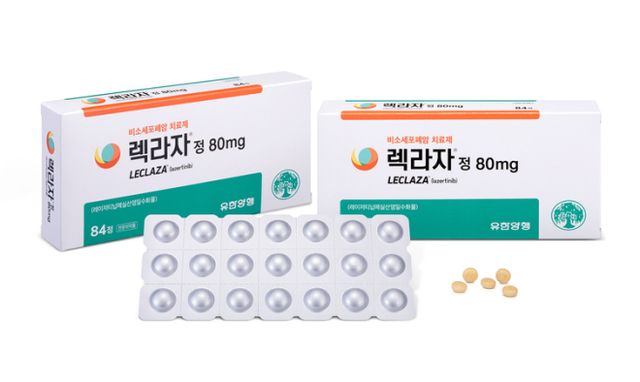
Investor sentiment improved following strong sales growth for Lazcluze, marketed in South Korea as Leclaza, in combination with Johnson & Johnson's Rybrevant (amivantamab) in the global non-small cell lung cancer market.
According to Johnson & Johnson's third-quarter earnings released on October 13, global sales of the Lazcluze-Rybrevant combination reached $320 million, approximately KRW 430 billion, representing a 62.3% increase from the same period last year.
|
Sales also increased 10.7% compared with the second quarter's $289 million.
Growth outside the United States was particularly strong. US sales reached $201 million, up 47.9% year on year, while sales in markets outside the United States jumped 94.5% to $119 million.
Cumulative global sales for the first three quarters of 2026 reached $866 million, approximately KRW 1.16 trillion, representing a 67.4% increase from the same period in 2025.
The strong performance reflects broader regulatory approvals and improvements in the prescribing environment.
The introduction of a subcutaneous formulation of Rybrevant and its inclusion as a preferred treatment in the National Comprehensive Cancer Network (NCCN) guidelines have helped support adoption.
In particular, the assignment of a reimbursement J-code for the subcutaneous formulation in the United States has reduced administrative burdens for healthcare providers.
Investors are increasingly focusing on the implications for Yuhan's royalty income.
As Yuhan licensed Lazcluze to Johnson & Johnson, expanding global sales are expected to generate higher recurring royalties.
Looking ahead, long-term overall survival data from the global Phase 3 MARIPOSA trial are expected to be a major factor influencing the company's earnings outlook and market valuation.
If the combination demonstrates a clearer survival advantage over competing therapies, it could further strengthen its position in the global first-line lung cancer treatment market.
Lee Ji-won, an analyst at Heungkuk Securities, said, "If the expected overall survival in MARIPOSA proves substantially higher than that of competing treatments, Lazcluze prescriptions could enter a steep J-curve growth phase. We remain positive about Yuhan's earnings growth potential driven by increasing Lazcluze prescriptions."
◇Curiox, Expanding Orders and Record Sales Pipeline
Curiox Biosystems shares surged nearly 8% as the company reported multiple equipment orders every month during the third quarter and announced that it had entered the fourth quarter with the largest sales pipeline in its history.
Shares closed at KRW 57,000, up 7.95%, or KRW 4,200, from the previous session.
Investor optimism was supported by increasing adoption of the company's automated cell analysis preparation systems among major global contract research organizations (CROs) and contract development and manufacturing organizations (CDMOs).
In its October investor relations letter, Curiox stated that it had secured multiple equipment orders each month from July through September.
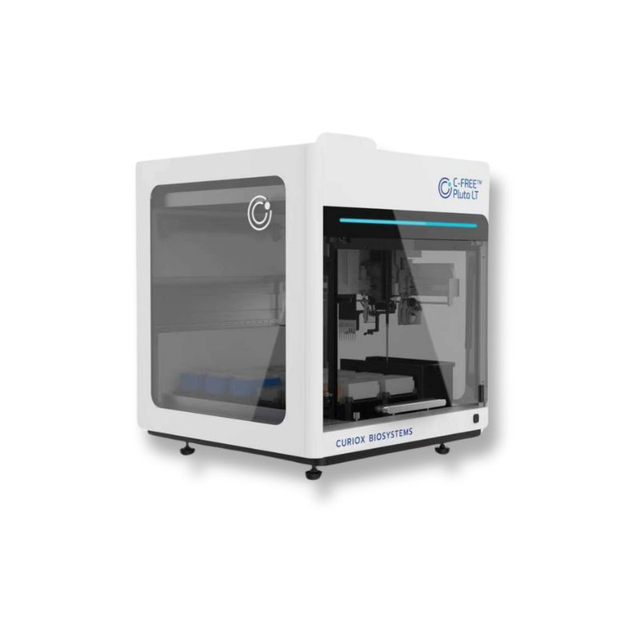
"In September, we received an order worth approximately KRW 700 million for multiple Pluto HT automated cell preparation systems from one of the world's top five CROs," the company said.
|
Additional orders are also anticipated.
According to Curiox, the quality control department of a leading global CDMO specializing in cell and gene therapies has decided to adopt its Pluto Workstation and plans to place an initial order during the fourth quarter.
"The decision by the quality control department of a highly conservative, top-tier CDMO demonstrates that our technology has successfully passed rigorous validation requirements," the company explained.
Curiox emphasized that it entered the fourth quarter with its largest-ever sales pipeline.
The company said that more than 70% of orders received since June had been related to achieving consistent analytical results across multiple facilities.
"These initial purchases were made with the possibility of deployment across multiple sites in mind, meaning subsequent orders could be larger than the initial purchases," Curiox stated.
The company is also expanding its presence in China.
A research-focused Chinese university is replacing some of its existing centrifuges with Curiox's Pluto ALPHA systems. The institution is preparing to purchase 10 units in October, with a goal of installing one or two systems in approximately 50 biology laboratories by 2027.
Another potential growth catalyst is a cell analysis standardization research project involving the US National Institute of Standards and Technology (NIST).
The first research paper was published in Frontiers in Immunology on September 28.
Curiox said it understands that the final results of the second study are nearing completion and expects its company and product names to appear in the publication.
The company also reported progress in a joint artificial intelligence and machine learning research initiative, with negotiations over detailed terms completed and only administrative procedures remaining.
Copyright ⓒ 이데일리 무단 전재 및 재배포 금지


