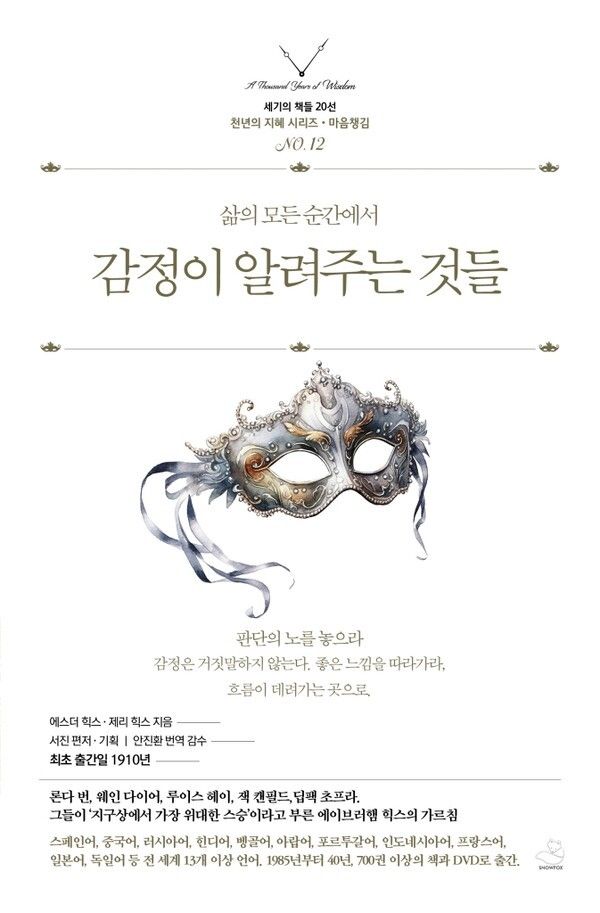
[News Culture] When life becomes difficult, trying harder can feel like the only reasonable response. In “The Astonishing Power of Emotions,” Esther and Jerry Hicks question that instinct, arguing that the effort to force a solution can leave people more deeply caught in worry, resentment and fear.
Published in Korean by Snowfox Books, the spiritual self-help book draws on teachings the authors attribute to Abraham. Its central image is a canoe on a river: a person can paddle furiously against the current or put down the oars and allow the water to carry them downstream.
In the authors’ account, the things people seek—health, prosperity, peace and love—lie downstream. Anxiety, blame and self-reproach represent the exhausting work of paddling in the opposite direction. Emotions serve as a guide to that movement: unease signals resistance, while relief suggests a change of course.
The metaphor rests on a broader spiritual belief. The Hickses describe human beings as expressions of a source energy, entering physical life to experience joy and expansion but often losing touch with their inner selves amid everyday pressures. Letting go of resistance, they argue, offers a way to restore that connection.
The book brings this worldview into familiar situations through 32 examples, including health worries, conflict with children, financial strain and dissatisfaction at work. Each returns to the same question: what thought might make this moment feel a little less burdensome?
Rather than dwell on why resistance has arisen or turn that inquiry into another occasion for self-blame, the authors encourage readers to look for an immediate sense of relief. The proposed shift begins with how a problem is approached, loosening the grip of anxious thoughts that have come to dominate the reader’s attention.
That is where the canoe image does most of its work. A reader may have little control over a difficult situation yet still recognize the strain of mentally struggling against it. Putting down the oars becomes the book’s shorthand for easing that struggle and allowing a different response to emerge.
Its appeal rests on the simplicity of this recurring image, which carries an abstract spiritual argument into the pressures of daily life. Across its examples, “The Astonishing Power of Emotions” asks readers to notice where their thoughts are taking them—and whether the next step might begin with relief rather than greater effort.
Reported by News Culture M.J._mj94070777@nc.press
Copyright ⓒ 뉴스컬처 무단 전재 및 재배포 금지


