[NewsCulture] At the court of Louis XIV, making art also meant navigating power.
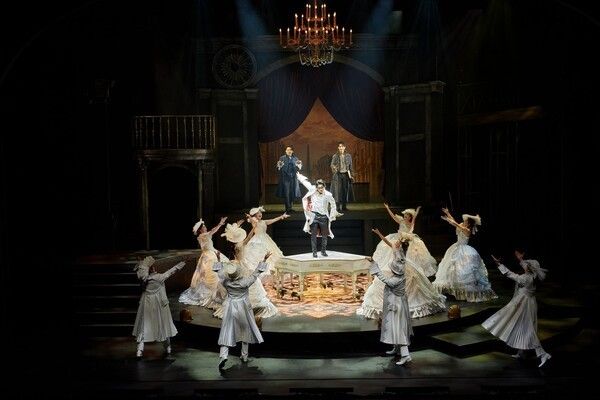
The new Korean musical “Opera” takes that premise into 17th-century France, bringing together the Sun King, composer Jean-Baptiste Lully and playwright Molière at a moment when court entertainment was becoming inseparable from royal spectacle.
Their alliance is initially a productive one. Louis needs art capable of projecting the image of a powerful monarch. Lully, an Italian-born musician building a career in France, finds in the royal court both an audience and a route to influence. Molière arrives with a very different instinct, using comedy and satire to expose vanity, hypocrisy and social pretension.
Together, they create. But the same court that gives their work scale and visibility eventually puts pressure on what each man wants from art.
That shift is the dramatic engine of “Opera.”
As Louis grows from a young king into an absolute monarch, performance becomes increasingly useful to him as an expression of order and authority. Dance, in particular, is woven into his public image, turning the king’s body itself into part of the spectacle of rule.
Lully’s path is less straightforward. His music flourishes under royal patronage, but greater access to power also raises the stakes of remaining in favor. The production follows him as artistic ambition and court survival become harder to separate.
Molière stands at the other end of that tension. His theater depends on the freedom to observe, mock and question. Plays within the play allow his satirical voice to surface even as he works close to the center of royal power.
Rather than reducing the story to a clash between an authoritarian king and rebellious artists, “Opera” is more interested in the unstable bargain between patronage and independence.
The court gives artists money, prestige and a stage. It also asks something in return.
That idea shapes the production’s hybrid form. Musical-theater numbers sit alongside operatic arias, spoken drama and dance, with each discipline tied to a different aspect of the characters and their changing relationship.
Louis’ movement carries the discipline and symmetry of court ritual. Lully’s music charts his ascent and growing dependence on royal approval. Molière’s theater opens a space for irony and resistance.
The result is less a historical pageant than a three-way study of ambition.
Tae-yu Moon and Byung-gyu Jo alternate as Louis XIV, portraying the shift from an untested young monarch to a ruler who understands how effectively spectacle can serve authority.
In-tae Baek and Hwan-ji Jo share the role of Lully, whose rise at court is driven as much by calculation as by talent. His success gives him artistic reach, but it also binds him more tightly to the system that made it possible.
Gang-seong Lim and Jeong-woo Kang play Molière, whose wit and refusal to give up his own point of view place him increasingly at odds with the world around him.
The production is written and directed by Jeong-hwa Choo, with music by Soo-hyun Heo and choreography by Byung-jin Kim.
Choo builds the drama around the gradual reordering of the three men’s relationship rather than a single rupture. Heo gives each figure a distinct musical profile, while Kim uses movement to make the hierarchy of the royal court visible onstage.
The visual scale has also drawn attention, particularly the costumes, sets and lighting, while audience responses have noted the way the score works with the central relationship among the three men. The limited run has prompted some disappointment as well as calls for the production to return in a further-developed form.
What gives “Opera” its contemporary edge is the question underneath its historical setting.
How much freedom can an artist retain when power is also the patron? How much does patronage make possible — and at what cost?
Louis XIV, Lully and Molière do not begin the story on opposite sides. They begin by needing one another.
“Opera” is most compelling when it stays with that contradiction: the same relationship that allows art to flourish can also become the force that reshapes it.
The musical runs through Oct. 18 at Ewha Womans University Samsung Hall in Seoul.
Reported by News Culture M.J._mj94070777@nc.press
Copyright ⓒ 뉴스컬처 무단 전재 및 재배포 금지


