[News Culture] More than two centuries after King Jeongjo made one of the most celebrated royal journeys of the Joseon Dynasty, the route will once again fill with horses, musicians, performers and thousands of participants.
The 2026 “King Jeongjo’s Royal Parade” takes place Oct. 4, tracing 31.8 kilometers from Gyeongbokgung Palace in Seoul through Suwon to Yungneung Royal Tomb in Hwaseong. More than 4,000 people and 108 horses are expected to join the event, with performances and public programs unfolding along the way.
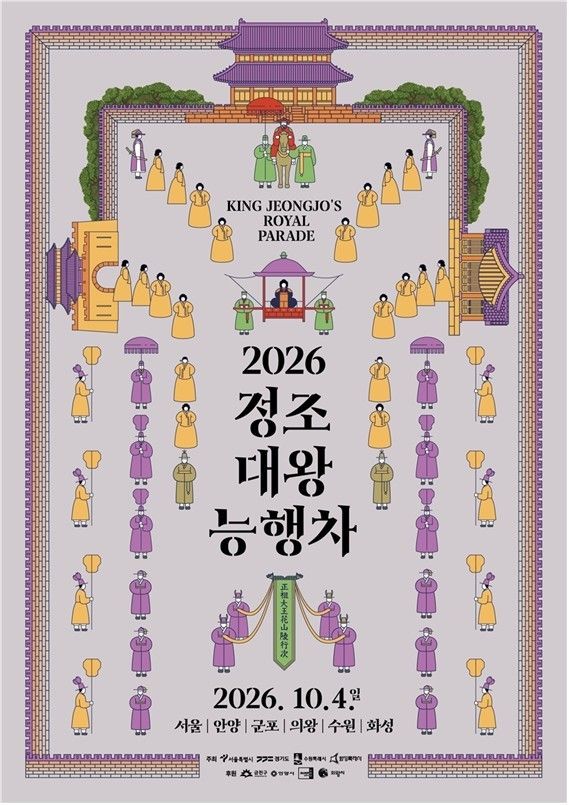
The parade looks back to 1795, when Jeongjo traveled with his mother, Lady Hyegyeong, to Hwaseong and the tomb of his father, Crown Prince Sado.
The journey coincided with Lady Hyegyeong’s 60th birthday and became far more than a royal visit. Officials, soldiers, musicians and members of the royal household joined the procession, while ceremonies and celebrations were held around Hwaseong Haenggung Palace.
Known as the Eulmyo Wonhaeng, the journey remains one of the most extensively documented royal events of late Joseon Korea. The modern parade draws on that record while reshaping the route as a large-scale public event.
The day begins at 8:30 a.m. with a departure ceremony at Gyeongbokgung Palace.
About 700 preregistered participants will walk the Seoul section of the route toward Nodeul Island. Along the way, a Bongsan Mask Dance street performance will greet the procession between Sookmyung Women’s University Station and Yongsan Station.
Nodeul Island will host a history concert led by historian Choi Tae-sung and an original musical inspired by Jeongjo.
At Nodeul Naru Park, another performance will recreate a scene in which the king serves a light meal to his mother. The program also revisits gyeokjaeng, a Joseon-era practice that allowed ordinary people to bring grievances directly before the monarch.
Parts of the event will be livestreamed.
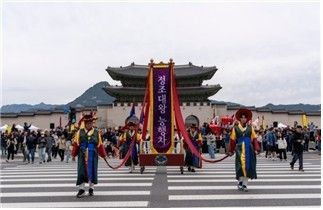
In Geumcheon District, the focus shifts to Siheung Haenggung and the idea of yeomin dongnak, broadly meaning “sharing joy with the people.”
Traditional performance is reworked in contemporary forms through “Siheung Haenggung Night,” while a musical interpretation of gyeokjaeng, folk performances and participatory programs expand the historical material beyond the procession itself.
Suwon will host the largest segment of the day.
About 2,200 participants and 80 horses will take part in the procession from Anyang into Suwon. Around Suwon Hwaseong Fortress, a robot performance and appearances by artists from Suwon’s international sister cities will be followed by a civic parade involving roughly 1,200 residents.
A separate historical procession of about 1,000 participants will then move through the fortress area.
At Hwaseong Haenggung Palace, performers portraying Jeongjo and Lady Hyegyeong will recreate their arrival. The Suwon program closes with “Jeongjo Fantasy,” combining band music, dance and a large communal performance.
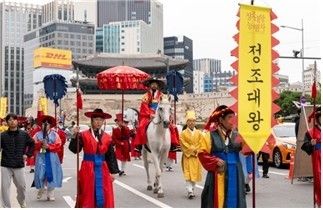
Hwaseong provides the final stretch of the journey.
The local route is divided into three sections: a “traditional” course from Hwanggye-dong to Hyeonchung Park, a “modern” course from Dongtan Central Park to Hyeonchung Park and a “future” course continuing from the park to Yungneung.
After reaching Jeongjo Hyo Park, a ceremonial royal procession will continue to Yungneung for a memorial rite honoring Crown Prince Sado.
The rite will also be broadcast live at Jeongjo Hyo Park. Rice cakes used in the ceremony will be shared with visitors afterward.
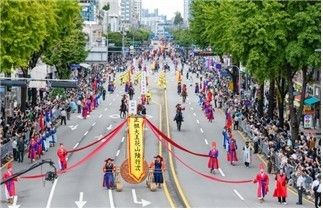
The modern event does more than reproduce the visual scale of a royal procession. Its route links the central episodes of Jeongjo’s 1795 journey: the departure from the royal capital, the king’s political and architectural legacy in Suwon, and the family history embodied by Yungneung.
Contemporary performances and civic participation add another layer, turning that historical route into a one-day festival shared across three cities.
Traffic restrictions will be introduced in stages as the parade moves south.
In Seoul, portions of the route between the Gwanghwamun intersection near Gyeongbokgung and Nodeul Naru Park will face temporary restrictions from 8:30 a.m. to 12:30 p.m. Additional controls are scheduled in Geumcheon later in the day, while temporary road closures and lane reductions are also planned in Suwon and Hwaseong.
Visitors traveling near the route are advised to check local traffic information in advance and use public transportation where possible.
Reported by News Culture M.J._mj94070777@nc.press
Copyright ⓒ 뉴스컬처 무단 전재 및 재배포 금지


