[News Culture] On Feb. 20, 1444, a dispute over Hunminjeongeum pushed King Sejong into an unusually direct confrontation with his own court.
Officials had submitted a memorial opposing the new script, arguing that it threatened established learning and order. Sejong responded angrily, and seven officials were sent to Uigeumbu, the royal judicial authority.
EBS1’s “AI Drama – Resurrection Class” returns to that night in its Oct. 4 episode, “King Sejong Yi Do,” using the clash over Hunminjeongeum to look beyond the familiar image of Sejong as a revered monarch and toward the political resistance surrounding one of his defining projects.
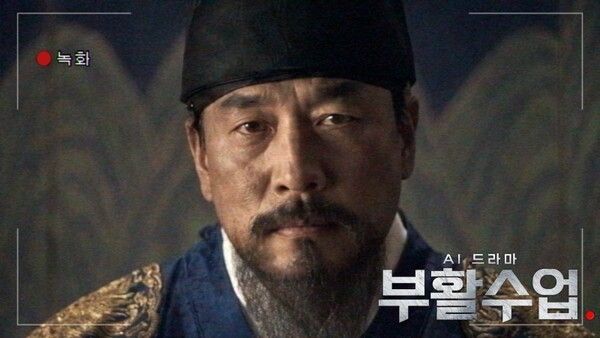
The episode begins after the public argument has ended.
Sejong is alone at Gangnyeongjeon, looking back on a day in which senior officials challenged a project he believed had a clear purpose. The drama uses that setting to frame a larger question: why was the king willing to push the new script forward despite such fierce opposition?
For Sejong, the problem was rooted in everyday communication.
Many people could not read the written language used for laws, government policy and formal documents. That gap made it difficult for ordinary people to understand rules that affected them or to put their own grievances into writing.
The king had already confronted the limits of that system through works such as “Samgang Haengsildo,” which used illustrations to communicate moral teachings more broadly. But pictures alone could not solve the larger problem of literacy.
Hunminjeongeum was intended to address that barrier.
The new script would allow people to record everyday speech without first mastering difficult Chinese characters. In the drama’s telling, that practical purpose becomes Sejong’s central defense of the project.
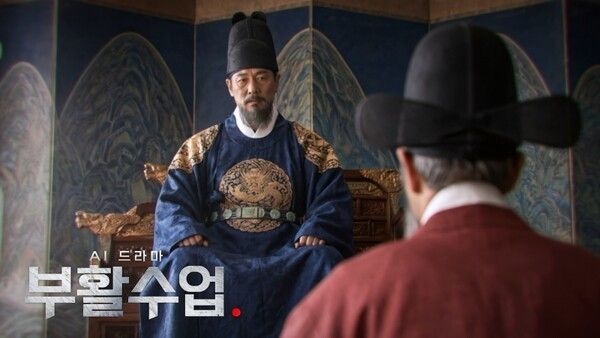
The opposition, however, was not treated as a minor obstacle.
Vice Minister Choe Man-ri and other officials strongly criticized the creation of the new script. To them, it represented a break with long-established scholarly and cultural practices, and the fact that the king himself had taken such an active role only heightened the tension.
The confrontation eventually moved beyond debate.
Sejong had the protesting officials detained, turning an argument over writing into a test of royal authority and the limits of dissent inside the court.
That moment gives “Resurrection Class” its dramatic focus. The episode does not present Sejong only as the calm and benevolent figure familiar from later memory. It places him in a moment of anger, resistance and political isolation, when the outcome of his project was far from settled.
At the same time, the program connects that anger to a longer concern: the distance between written knowledge and people who had little access to it.

The episode’s subtitle, “Sejong, Do You Understand the Correct Sounds?,” points directly to that clash.
Rather than treating Hunminjeongeum as a finished achievement whose historical importance is already known, the drama returns to the point when it was still controversial — a new system facing resistance from some of the most educated men in the kingdom.
That perspective changes the shape of the story.
The question is not simply how Sejong created a new script, but why he continued to defend it when the political cost became clear. The king’s answer, as reconstructed by the program, lies in his belief that written communication should not remain limited to those with years of formal education.
The result is a more conflicted portrait of the ruler behind Hunminjeongeum: a king capable of punishing opponents, yet unwilling to abandon a project he believed could narrow the distance between the state and its people.
“AI Drama – Resurrection Class” builds the episode from records surrounding the 1444 opposition memorial, the creation of Hunminjeongeum and Sejong’s earlier efforts to communicate ideas more widely through “Samgang Haengsildo.”
As with the series’ other historical subjects, AI is used to place the figure before the camera and construct a dramatic first-person account around surviving records.
That means the private thoughts assigned to Sejong belong to the drama’s reconstruction. What the historical record preserves is the conflict itself: resistance from court officials, the king’s anger and the determination to continue with the new script.
More than five centuries later, Hunminjeongeum is inseparable from Sejong’s historical legacy. “Resurrection Class,” however, returns to a moment before that legacy was secure, when the project was still being challenged inside the palace and its creator had to defend why it should exist at all.
EBS1’s “AI Drama – Resurrection Class,” featuring King Sejong Yi Do, airs Sunday, Oct. 4 at 11 p.m. KST.
Reported by News Culture M.J._mj94070777@nc.press
Copyright ⓒ 뉴스컬처 무단 전재 및 재배포 금지


