[News Culture] The Arts Council Korea (ARKO) is continuing a four-year effort to make public theater more accessible to children and families by combining live performance with hands-on arts activities in spaces designed for flexible participation.
“Picnic with Art 2026 — Autumn,” taking place this month in Seoul’s Daehangno district and Naju, South Jeolla Province, brings together marionette theater, classical music storytelling, musical and bubble performance, traditional Korean puppetry and a range of creative workshops.
The program differs from a conventional family performance series in one important respect. Children are not expected simply to watch. They can handle puppets, make prints, draw, practice calligraphy and work with wood, moving between spectatorship and participation within the same visit.
For a public arts institution, that format also expands the function of the theater itself. Courtyards, lobbies and other shared spaces become part of the programming rather than serving only as areas surrounding the auditorium.
Making the theater easier to enter
For families with young children, access to the performing arts involves more than ticket availability.
A fixed running time, assigned seating and the expectation that children remain quiet can make a first theater visit difficult. Outdoor and drop-in programming offers a different entry point.
At ARKO Arts Theater in Daehangno, families can watch a performance, spend time at an activity booth and return to another program later in the day. People passing through the neighborhood can also encounter the event without having planned a theater visit in advance.
The Seoul performances begin at 1 p.m. and 3 p.m., leaving time between shows for workshops and other activities. All performances and programs are free.
The arrangement reflects a broader approach to audience development: reducing the practical barriers surrounding attendance while giving children several ways to engage with the arts.
Different forms of performance for young audiences
The Seoul program avoids building the series around a single genre.
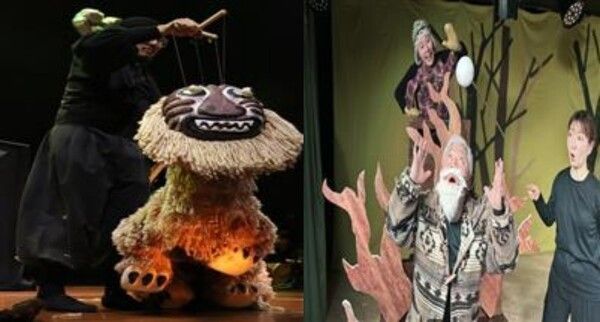
On Oct. 10, arts collective Haesl presents the marionette production “Wooden Puppet Festival,” which introduces elements of Korean madang theater, traditional vocal music and mask dance through wooden puppets.
On Oct. 17, theater company Mujigaero Yeokda presents “Wolf, Let’s Be Friends!,” a children’s adaptation of Sergei Prokofiev’s “Peter and the Wolf.” Puppets, actors and music are used to tell the story of Peter setting out to rescue a duck taken by the wolf.
The Seoul schedule concludes on Oct. 31 with “Bubble Salon” by theater company Jeulgyeochatgi. The production combines songs, dance and narrative with a bubble performance in a family-oriented musical format.
Taken together, the three works expose children to puppetry, classical music theater and musical performance rather than repeating one familiar format throughout the season.
That variety is central to the program’s educational approach. Instead of defining theater for young audiences through a single genre, ARKO gives children opportunities to experience how different forms use movement, sound, objects and storytelling.
Participation after performance
The workshops extend that approach beyond the stage.
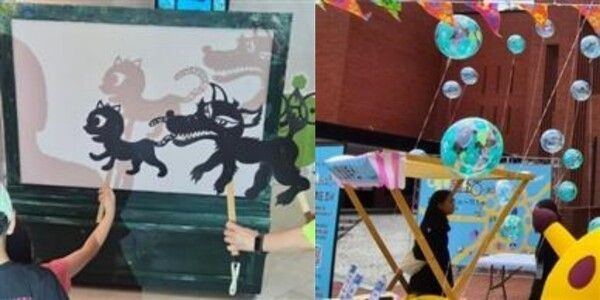
At the puppet activity area, children can operate hand puppets and shadow puppets and create short scenes of their own. The activity gives them a chance to work directly with a form they may have just encountered in performance.
Other programs broaden the range of materials and methods.
A balloon activity emphasizes physical movement, while the “Hello, Planet Earth?” silk-screen workshop allows participants to create postcards using text and images connected to environmental themes.
A coloring program in the lobby invites children to display their finished work at the venue. On Oct. 31, the calligraphy workshop “Make My Name Tag” will allow participants to work with a professional artist to develop an individual piece using lettering, color and illustration.
The structure keeps the distance between viewing and making relatively short. Children can encounter an artistic form onstage and then approach creative activity through their own hands and bodies rather than through formal instruction alone.
Naju adopts a one-day format
The Naju program on Oct. 24 uses a more concentrated schedule.
While the Seoul edition distributes performances across three dates, Naju brings several productions and workshops together in a single day.
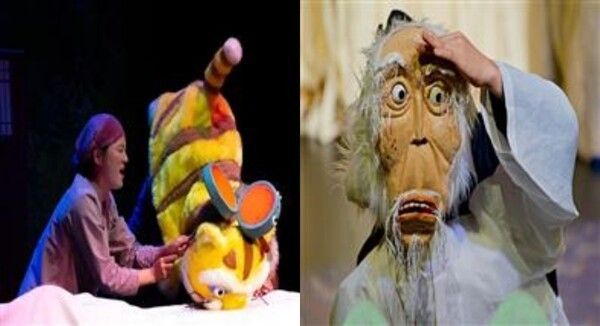
At 1 p.m., White Cat Theatre Company presents “Red Bean Porridge Granny and the Tiger,” a puppet production based on a Korean folktale. The work combines traditional Korean music with the familiar story of a grandmother and the everyday objects that help her confront a tiger.
At 3 p.m., Yeonhui Workshop EumMaGaengGgaeng presents “EumMaGaengGgaeng Puppet Theater,” an omnibus production incorporating samulnori rhythms, beona plate spinning, comic dialogue and puppet performance.
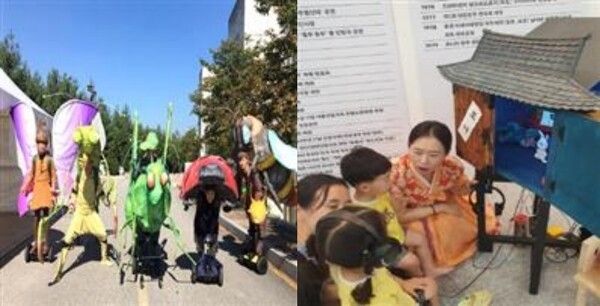
Two additional programs will run from 2 p.m. to 4 p.m. Theater Namu presents the street performance “Harmony in Honey,” while Kim Yun-hee stages “Rabbit,” a miniature puppet version of the pansori narrative “Sugungga” with a running time of about five minutes.
The accompanying workshops include puppetry, calligraphy, balloon play, silk-screen printing, wooden trivet making, coloring and block activities.
The wooden trivet workshop is limited to 40 participants, with registration beginning on site at 12:30 p.m.
The compact format gives regional families access to several genres in a single visit, although it also places greater importance on crowd management and waiting times when popular activities overlap.
Access extends beyond admission price
ARKO has also built operational considerations into the program.
All performances and workshops are free, but cost is only one factor in whether families can participate comfortably. Weather, waiting times, program length, rest areas and the ability to move between activities can be equally important when young children are involved.
If it rains, the Seoul event will move indoors to Theater Square on the first floor of Daehangno Arts Theater. The Naju program will be relocated to the Arts Council Korea headquarters building.
The schedule also mixes indoor and outdoor activities, reducing the amount of time children need to remain in one setting.
ARKO has noted that waiting times may increase when activity booths become crowded, making visitor flow and session management important to the overall experience.
The project is being developed with ASSITEJ Korea, which brings experience in theater for children and young people to the arts participation programs. ARKO’s employee volunteer group will assist with on-site operations, while the Daehangno Arts Theater citizen journalism group “Performance Rider” will support promotion and documentation.
The collaboration reflects the program’s broader institutional purpose. Developing future audiences is not limited to presenting children with simplified versions of adult theater. It also involves creating conditions in which families can approach a cultural venue without significant financial or practical barriers.
After four years, “Picnic with Art” has become one example of how a public theater can use its spaces differently. Performance remains at the center, but workshops, open courtyards and flexible participation extend the experience beyond the auditorium.
For ARKO, the long-term question is not simply how many children attend an event. It is whether repeated, low-barrier encounters with performance and creative work can make the theater a more familiar part of their cultural lives.
Reported by News Culture M.J._mj94070777@nc.press
Copyright ⓒ 뉴스컬처 무단 전재 및 재배포 금지


