[News Culture] Virtual artists have emerged as one of K-pop’s most closely watched growth markets, combining music, character IP and real-time production technology. But as the sector moves beyond its experimental phase, an old entertainment-industry problem is resurfacing in a form that could be particularly costly: tampering, or third-party contact with artists before their exclusive contracts expire.
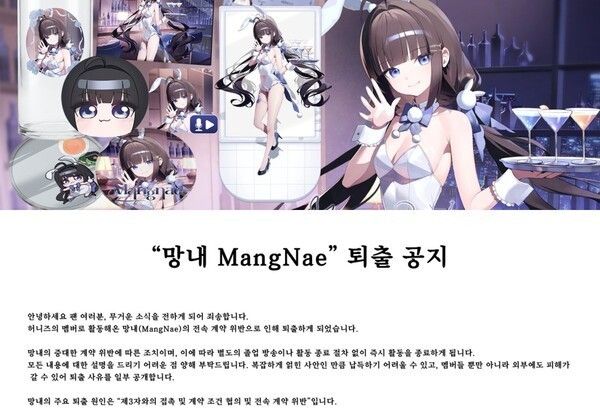
The issue has gained fresh attention following the contractual dispute involving MangNae, formerly of virtual group Honeyz. Project I said it terminated the performer’s exclusive contract over what it described as serious violations, including unauthorized discussions with outside companies and the disclosure of nonpublic information.
The case has pushed a long-running structural concern in the virtual sector into the open. Unlike conventional artists, virtual performers operate through intellectual property that can be separated from the people behind it. That division can make departures easier to disguise, but it also means that when a performer leaves, the company may be left holding an avatar, production pipeline and fan-facing IP whose value depended heavily on that individual.
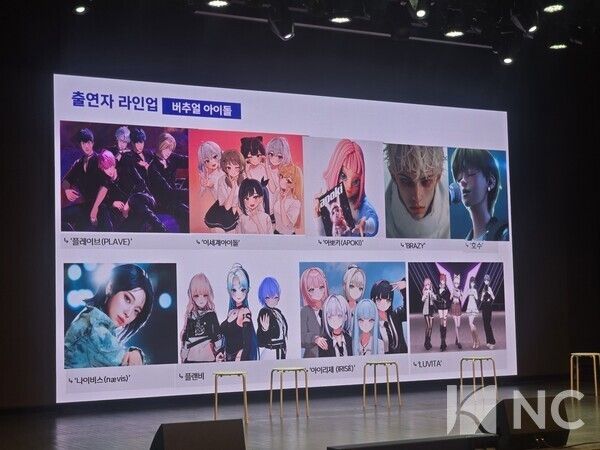
The Honeyz Case Brings a Long-Simmering Risk Into View
The MangNae dispute has become a visible flash point, but performer departures and conflicts over post-agency activity have been part of the VTuber and virtual-creator economy since its early days.
When small creator networks and multi-channel networks dominated the market, disputes involving platform changes, contract terminations or new identities were often treated as isolated problems within online streaming culture. The economics are different now. Virtual entertainment companies are building idol groups, proprietary technology stacks and global fan businesses that require substantially more capital.
The culture of “reincarnation,” in which a performer returns under a new avatar and identity after leaving a previous project, adds another layer. Reincarnation itself is not evidence of contractual wrongdoing, and former talents can legitimately resume their careers after leaving an agency. The commercial problem arises when outside contact, preparation for a new project or transfer negotiations allegedly take place while an existing exclusive agreement remains in force.
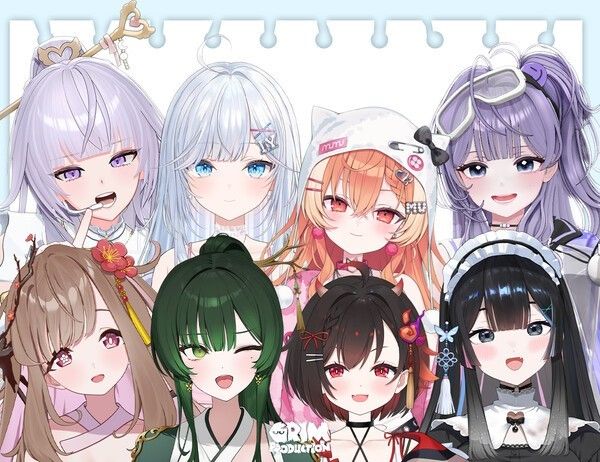
Several high-profile departures overseas have also demonstrated how quickly audiences can reconnect a performer with a new virtual identity. Former NIJISANJI talents have reappeared elsewhere under new characters, including at VShojo, sometimes retaining large portions of their previous audiences. Such cases have fueled industry debate over talent mobility and the durability of agency-owned IP, although a rapid redebut alone does not establish tampering.
The 2022 termination of Hololive talent Uruha Rushia, meanwhile, highlighted a different but related vulnerability. COVER said at the time that it had ended the contract over information leaks and other contractual violations. The case was not a tampering dispute, but it underscored how heavily virtual businesses depend on trust between the company, the performer and the character presented to fans.
Together, such cases point to a problem the industry can no longer treat as a niche creator-management issue. As virtual entertainment becomes more capital-intensive, performer instability increasingly translates into financial risk.
When the Performer Leaves, the IP Can Become a Stranded Asset
The risk is magnified by the unusual ownership structure of virtual entertainment.
A conventional artist cannot simply replace their face and name when changing agencies. A virtual performer can, at least technically, leave one avatar behind and return through another. That makes the relationship between corporate IP and performer identity far more complicated.
For agencies, the distinction matters because much of the investment is made before the business has proven its earning power. High-end 3D modeling and rigging can cost tens of millions of won per member, while dedicated motion-capture facilities can require investments ranging from hundreds of millions to billions of won. Premium music videos, livestream infrastructure and recurring virtual content add further production costs.
If the performer at the center of that system leaves, the company may retain legal ownership of the avatar while losing the human performance that gave it commercial meaning. An asset built for continued monetization can effectively become stranded overnight.

That possibility matters increasingly to investors.
Japan’s VTuber market expanded from roughly ¥80 billion in fiscal 2023 to an estimated ¥105 billion in fiscal 2024, reflecting the rapid commercialization of merchandise, streaming, live events and licensing. Korea has also seen a growing flow of venture capital into companies combining entertainment IP with virtual-production technology.
Recent examples include a KRW 6.9 billion seed round for AllMyAnicDots, the company behind virtual girl group OWIS; a KRW 4 billion Series A for virtual-entertainment startup 23rd Century Kids; and a KRW 2 billion pre-Series A round for Accord Entertainment, which operates virtual boy group MY.
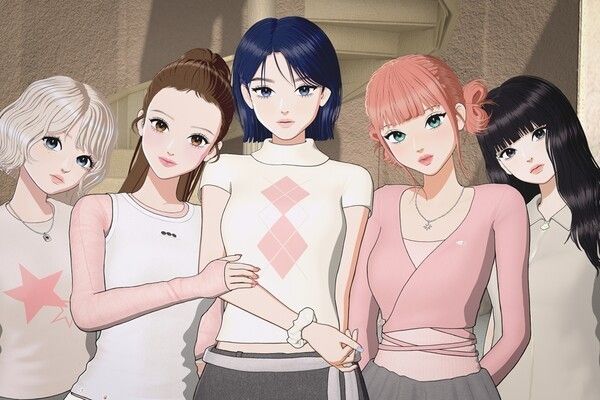
Those investments are built on the assumption that virtual IP can be developed over time across music, live performance, merchandise, licensing and fan platforms. A recurring risk that the core performer can depart while the company remains responsible for the sunk production costs complicates that investment thesis.
Replacing the performer is not necessarily an easy solution. In businesses where fans identify the voice, behavior and live interaction of a specific performer with a specific avatar, substitution can alter the perceived identity of the character itself and jeopardize the fandom that created the IP’s value in the first place.
The distinction between “character” and “performer,” once treated as one of the advantages of virtual entertainment, can therefore become one of its largest balance-sheet vulnerabilities.
A Court Ruling Changes the Conversation, but Contracts Still Have to Catch Up
A recent Korean court ruling involving PLAVE has added another dimension to the debate.
In a damages case brought by the performers behind the virtual group against an online user, the Goyang Branch of the Uijeongbu District Court rejected the argument that insults directed at an avatar were entirely separate from the real person operating it. The court found that an avatar can function as a means of self-expression, identity and social communication, allowing attacks on the avatar in certain circumstances to constitute harm to the performer.

The decision was issued in a defamation-related dispute, not a contractual or tampering case, so its implications for exclusive agreements remain to be tested. Still, it is significant for an industry whose business model has often relied on maintaining a sharp conceptual distinction between the company-owned character and the performer behind it.
If courts increasingly recognize a meaningful legal connection between the avatar and its human performer, virtual-entertainment contracts may need to define that relationship far more precisely.
That includes the scope and duration of non-compete provisions, ownership of character-related goodwill, rules governing outside contact during an exclusive term, confidentiality obligations and the treatment of new identities created immediately after a contract ends. Any restrictions would also need to remain consistent with existing limits on the enforceability of non-compete clauses and damages under Korean law.
Contractual protection alone, however, addresses only one side of the problem.
Virtual artists may appear on screen as digital characters, but the people operating them remain performers working under the pressures of live entertainment. As the industry professionalizes, agencies are likely to face greater expectations around revenue sharing, workload, mental-health support and participation in the long-term value created by an IP.
That shifts the management question away from simply preventing talent from leaving. The more durable challenge is creating an economic structure in which the performer has sufficient reason to remain.
A revenue-sharing system that improves as an IP grows, clearer accounting rules and formal support protocols could become as important to retention as restrictive contract language. In that sense, the strongest defense against external poaching may ultimately be a more balanced internal partnership.
The Korea Virtual Human Industry Association has also identified industry standards as a growing priority. Co-chair Guk-han Seo said virtual artists should be understood as a new form of K-content IP in which the character and performer are closely connected, arguing that unauthorized approaches exploiting anonymity and reincarnation culture could damage confidence across the broader ecosystem.
He said the association plans to pursue guidelines covering non-compete provisions and partnership structures aimed at creating a more predictable environment for both companies and investors.
The virtual sector has spent years proving that digital performers can attract real audiences, generate real revenue and sustain real fandoms. Its next test is institutional rather than technological.
If virtual entertainment is to become a durable extension of the K-pop business rather than a series of high-cost experiments, the industry will need rules capable of protecting capital without treating performers as replaceable components. The companies that solve that balance first may define the commercial architecture of the next phase of virtual K-pop.
Reported by News Culture M.J._mj94070777@nc.press
Copyright ⓒ 뉴스컬처 무단 전재 및 재배포 금지


