[News Culture] Gyeongbokgung Palace is an obvious stop for travelers exploring Korean history in Seoul. But just beyond the palace grounds is another way into the country’s past — one built not around kings and court politics, but around the lives of ordinary people.
The National Folk Museum of Korea looks at what people ate, wore and made; how they worked and organized their homes; and how birth, marriage, family and death were understood across generations. Its focus on everyday life offers international visitors a side of Korean history that monumental architecture alone cannot provide.
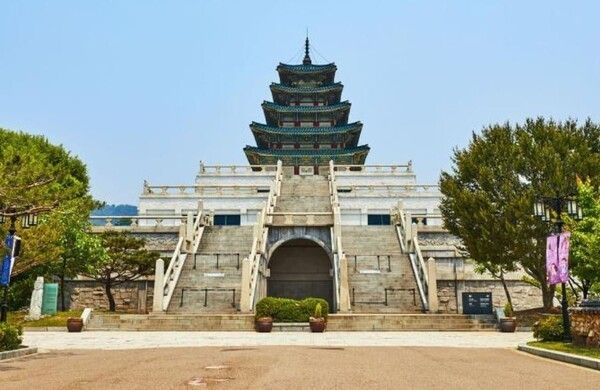
The museum’s permanent galleries approach that history through three broad themes: the cultural foundations behind contemporary Korea, the seasonal rhythms that once structured daily life and the customs surrounding the stages of a person’s life.
The Beginning of K-Culture considers the longer cultural roots behind the “K” now associated worldwide with music, television, film, fashion and food. Traditional objects and practices are presented not simply as remnants of the past, but as part of the cultural environment from which contemporary Korean life developed.
Objects such as the jige, an A-frame carrier, the homi hand hoe, onggi earthenware and hanji paper illustrate how practicality, climate, labor and community shaped material culture. Seen in that context, familiar elements of traditional Korea become part of a much longer story extending into the present.
A Year in Korea turns to the annual cycle of life. Structured around the seasons and the traditional calendar, the gallery traces farming, clothing, food, household routines and seasonal customs from the 19th into the 20th century.
Lunar New Year traditions lead into spring agricultural work, the material culture of summer, autumn harvests and preparations for winter. Rather than displaying individual customs in isolation, the exhibition places them within the climate and agricultural rhythms that once determined much of everyday life.
Korean Life Passages follows a different clock: the course of a human life. Birth, education, adulthood, marriage, family formation, work, death and ancestral rites reveal how personal milestones were embedded within larger relationships among households, relatives and communities.
The gallery also makes visible how customs have changed. Formal traditions surrounding marriage, adulthood and ancestral rites have evolved substantially, while certain practices connected with childbirth, family gatherings and remembrance continue in altered forms today.
For international visitors, this perspective offers a useful counterpart to Gyeongbokgung. The palace presents the architecture, institutions and ceremonial world of the Joseon court. The folk museum turns the lens toward the people who lived outside it.
Seen together, the two sites offer contrasting views of the same society within a remarkably short walking distance.
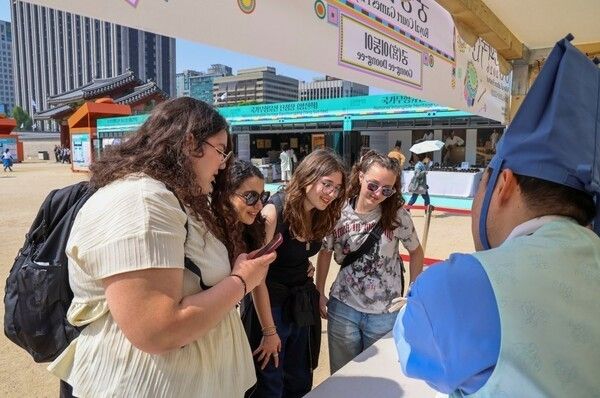
The museum’s growing international audience reflects that appeal. In 2025, it recorded 1,354,066 foreign visitors, representing about 59 percent of total attendance. The number of international visitors was reported to have risen 103 percent from the previous year.
The increase also suggests a shift in how travelers engage with Korea. A trip once centered primarily on major landmarks can now extend into questions about how Koreans lived: what they ate, how they dressed, what they produced, how families were organized and how communities marked important moments in life.
Interest in K-pop, television dramas and Korean films has widened the entry points into the country. For some visitors, contemporary popular culture becomes the beginning rather than the end of their curiosity, leading toward food, housing, clothing, crafts and traditional social customs.
The museum is particularly well placed to meet that interest because of its location beside Gyeongbokgung. Visitors can move directly from royal architecture into exhibitions on ordinary households without crossing the city or planning a separate excursion.
The contrast is part of the experience. One site explains how the state and royal court represented power and order; the other shows how people built homes, cultivated land, prepared food and organized family life.
The National Folk Museum’s role also extends beyond its permanent exhibitions. Educational programs have included traditional crafts and knot-making as well as professional training for museum workers, allowing visitors and specialists to engage with culture through practice rather than observation alone.
Outreach programs have likewise brought museum education to people unable to visit the institution directly. These initiatives reflect a broader understanding of folk culture as something that survives through participation, transmission and continued use, not simply through the preservation of objects.
The institution itself has undergone several transformations. Its history reaches back to the National Museum of Ethnology, established in 1946. After later institutional changes and reorganizations, it took its current name in 1979 and moved into its present building on the eastern side of Gyeongbokgung in 1993.
Its operations expanded again in 2021 with the opening of the National Folk Museum of Korea Paju in Gyeonggi Province. The facility increased the museum’s capacity to preserve, manage and make use of its extensive collection.
As of January 2025, the museum held 175,236 objects. They range from clothing and household utensils to materials connected with agriculture, crafts and other forms of livelihood.
The scale of the collection underscores the museum’s function beyond its public galleries. It is also an archive of Korean social history, documenting everyday work, domestic life and cultural practices through the objects people once used.
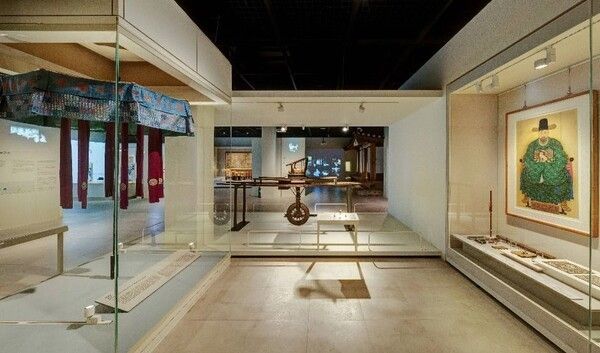
The museum is also preparing to broaden its scope further. Plans for future exhibitions include greater attention to cultures beyond Korea as well as migration and diaspora, placing Korean folk life within a wider discussion of how communities preserve, adapt and transform their traditions.
That direction reflects the changing audience arriving at Korean cultural institutions. As more overseas visitors come to Korea through contemporary entertainment, museums face a growing opportunity to connect that interest with deeper questions about daily life and social history.
A visitor who first encountered Korea through a song, drama or film may eventually become curious about the country’s food, housing, clothing, family customs or traditional crafts. The National Folk Museum sits at precisely that intersection.
Its exhibitions are therefore less about old objects than about the lives that gave those objects meaning. A farming tool points to labor and the agricultural calendar. A vessel reveals habits of cooking and storage. Clothing reflects climate, status and social convention. Ritual objects show how communities understood family and remembrance.
That context is what gives the museum its particular value.
For travelers already heading to Gyeongbokgung, the National Folk Museum is not simply another attraction to add to the itinerary. Within a few minutes, the perspective shifts from rulers to households, from palace ceremonies to daily routines and from dynastic history to the cultural habits that continue to shape Korea today.
The Korea found beside the palace walls is ultimately built from the stories of people eating, working, making clothes, raising families, celebrating the seasons and passing familiar practices to another generation.
At the National Folk Museum of Korea, those ordinary lives become the main story.
Reported by News Culture M.J._mj94070777@nc.press
Copyright ⓒ 뉴스컬처 무단 전재 및 재배포 금지


