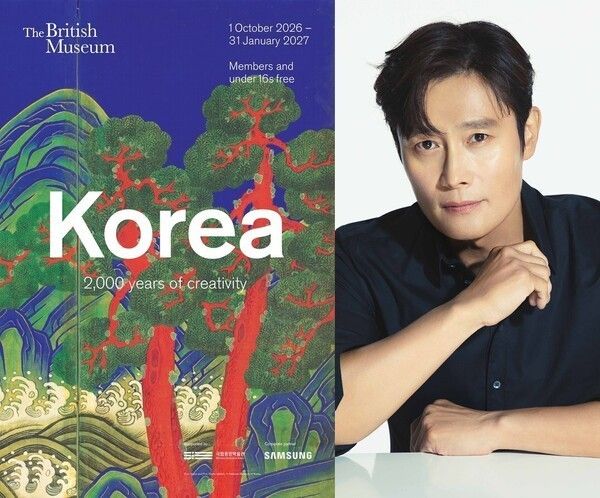
[News Culture] Long before K-pop, Korean drama and cinema became global cultural forces, generations of Korean artists and craftspeople were absorbing ideas from beyond the peninsula, reshaping them and developing forms distinctly their own. A major exhibition opening at the British Museum this fall places today’s K-culture within that much longer history of adaptation and reinvention.
The National Museum of Korea and the National Museum of Modern and Contemporary Art, Korea, will present Korea: 2,000 years of creativity at the British Museum’s Joseph Hotung Great Court Gallery, Room 35, from Oct. 1 through Jan. 31, 2027. Jointly organized with the British Museum, the exhibition brings the overseas tour of works from the late Samsung Chairman Lee Kun-hee’s collection to its final stop.
The project grew out of A Collector’s Invitation, the 2022 exhibition organized following the landmark 2021 donation made to the Korean nation by Lee’s family. The collection has since traveled to the United States, appearing at the Smithsonian’s National Museum of Asian Art in Washington, D.C., in Korean Treasures: Collected, Cherished, Shared, before moving to the Art Institute of Chicago for Korean National Treasures: 2,000 Years of Art. London marks the third and concluding stage of the international tour.
The British Museum exhibition brings together 100 catalogue entries encompassing 185 objects. They include 79 entries comprising 164 objects from the National Museum of Korea, 15 works from the National Museum of Modern and Contemporary Art, Korea, and six works from the British Museum. Among the Korean loans are 10 National Treasures and 13 Treasures, including National Treasure bronze artifacts excavated at Bisan-dong in Daegu, which are being introduced in this tour for the first time.
Rather than presenting Korean masterpieces as a sequence of isolated national icons, the exhibition asks how Korean creativity developed over two millennia. Its central argument lies in a recurring process: artists and craftspeople encountered religions, technologies, materials and visual languages from elsewhere, but rarely reproduced them unchanged. They adapted those influences to local conditions, aesthetics and cultural values, repeatedly generating new forms.
That process unfolds chronologically across ancient Korea, Unified Silla, Goryeo, Joseon and the modern and contemporary periods. Early ritual bronzes sit within the same historical arc as lacquerware, ceramics, painting, sculpture and contemporary multimedia work, allowing visitors to follow both continuity and rupture across different eras of Korean visual culture.
The perspective also places the international rise of Korean popular culture within a deeper cultural history. K-pop, Korean television and film are not treated as developments detached from the past, but as recent expressions of a much older capacity to absorb outside influences and recast them through distinctly Korean forms of production and storytelling.
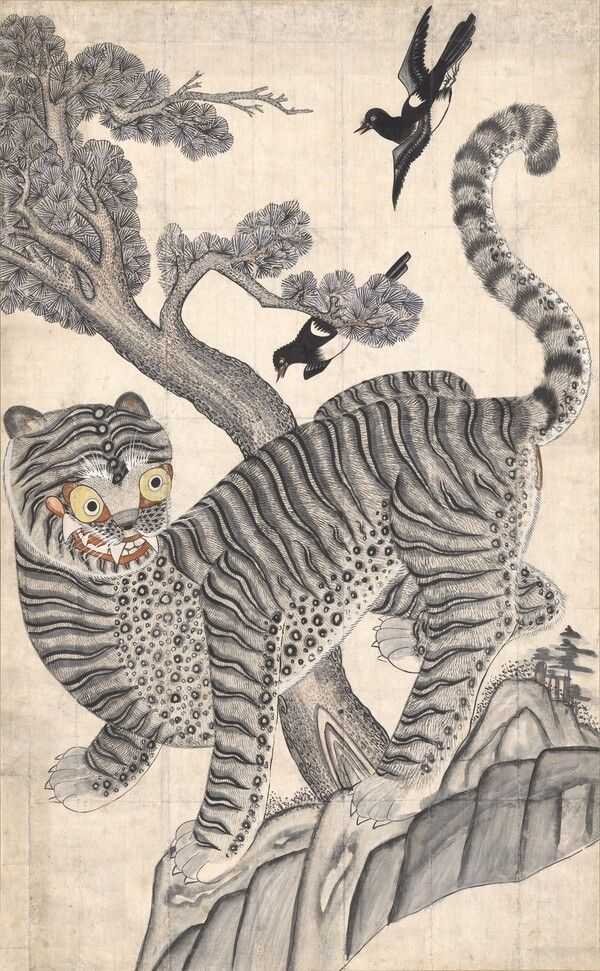
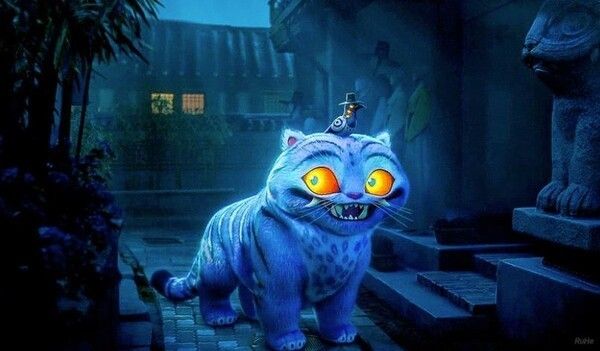
That connection takes on a particularly recognizable form in Magpie and Tiger, a Korean folk painting associated with imagery that has gained renewed global attention through Netflix’s animated film KPop Demon Hunters. The juxtaposition illustrates how motifs rooted in traditional Korean visual culture can acquire new meanings and audiences through contemporary popular media.
Actor Lee Byung-hun will provide narration for the exhibition, lending one of Korean cinema’s most internationally recognizable voices to its presentation of Korean art and cultural history. His measured delivery will guide visitors through individual works while helping connect the objects to the broader historical narrative developed across the galleries.
Lee has increasingly extended his voice work beyond live-action performance. He voiced the demon king Gwi-Ma in Netflix’s KPop Demon Hunters and previously recorded an audio guide for From Impressionism to Early Modernism: Collectors of Light, an exhibition jointly presented by the National Museum of Korea and New York’s Metropolitan Museum of Art. For that project, he narrated 30 major works and took part closely in refining the wording and pronunciation used in the recordings.
At the British Museum, that experience will now be applied to a story centered on Korea itself. With objects ranging from ancient ritual art to modern and contemporary works, Korea: 2,000 years of creativity sets out to show that the global visibility of Korean culture today is not an abrupt phenomenon, but the latest chapter in a creative history shaped over centuries by exchange, adaptation and reinvention.
Korea: 2,000 years of creativity runs from Oct. 1, 2026, through Jan. 31, 2027, at the British Museum in London.
Reported by News Culture M.J._mj94070777@nc.press
Copyright ⓒ 뉴스컬처 무단 전재 및 재배포 금지


