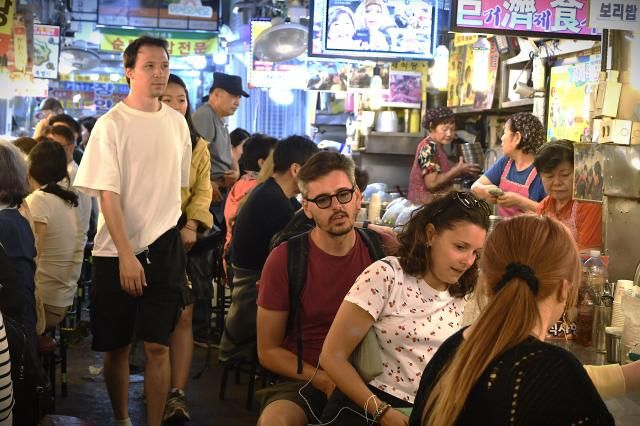
SEOUL, September 22 (AJP) — Not long ago, a Lonely Planet guidebook was a staple for travelers venturing abroad. Today, a guide is at their fingertips — sometimes recommending places before they even think to look.
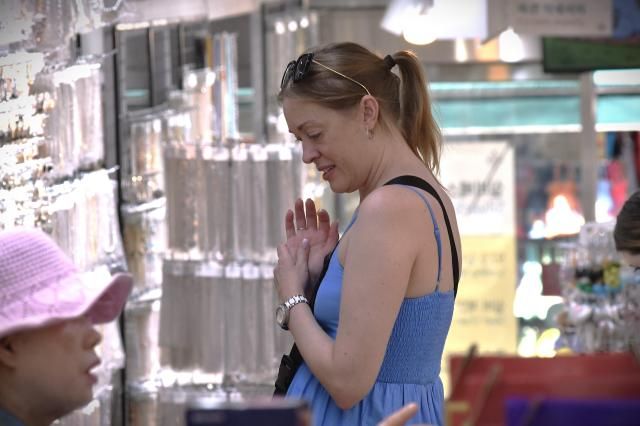
Tallia Romanez, a 46-year-old American visiting South Korea, did not find most of the places on her itinerary in a guidebook.
Instagram found them for her.
“All the places I want to go are on the Instagram,” Romanez said. “I see a lot of Reels because I’m interested in K-pop.”
She follows all seven members of BTS as well as major entertainment companies, frequently liking their posts and short videos. Over time, restaurants and places to visit in Korea began appearing alongside the K-pop content.
“I think that’s how my algorithm got mixed into all of this,” she said.
Her husband’s feed took a different route.
“My husband loves food, especially Asian food, so his Instagram suggestions tend to focus more on food,” Romanez said. “For our trip, my husband looked for places to eat, while I looked for places we could visit and things we could do.”
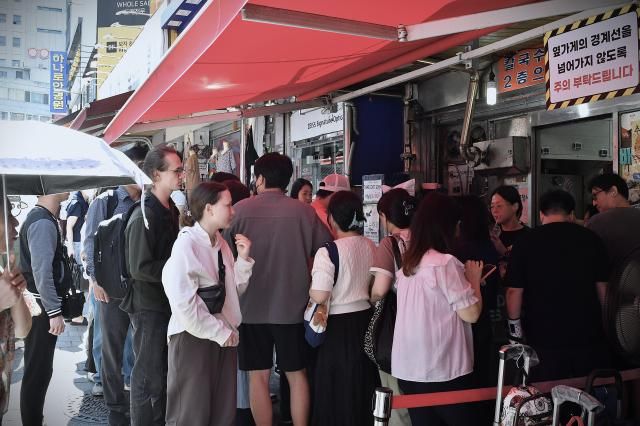
The couple saves those discoveries on Google Maps and downloads maps to navigate offline while in Korea.
Their itinerary takes shape through repeated encounters with food, music and everyday scenes on a screen. By the time they arrive, a neighborhood restaurant or convenience-store snack can feel as familiar — and worth seeking out — as a landmark.
For some visitors, finding a place is also the beginning of another recommendation.
Miko, a 23-year-old model from Thailand, sought out a restaurant specializing in chadol baegi, thinly sliced beef brisket, tucked into Seoul’s Seorae neighborhood. She had seen it in a social-media post before traveling to the city with friends.
“I come to Korea twice a year, and I try to discover new places to share on my Instagram,” she said and beamed excitingly upon learning of a new place famous for gopchang, or grilled beef intestines from this reporter.
Such discoveries are multiplying as South Korea welcomes more visitors and their spending spreads across a wider range of businesses.
The country received 10.71 million foreign visitors in the first half of 2026, up 21 percent from a year earlier. Seoul received 8.23 million, up 21.3 percent.
Foreign tourists made 5.62 trillion won ( billion) in card purchases in the capital during the period, a 56.8 percent increase. Average card spending per visitor rose 29.3 percent from about 530,000 won to 680,000 won.
Shopping remained the largest category, accounting for 46.4 percent of spending. But restaurant purchases jumped 54.5 percent to 584.3 billion won.
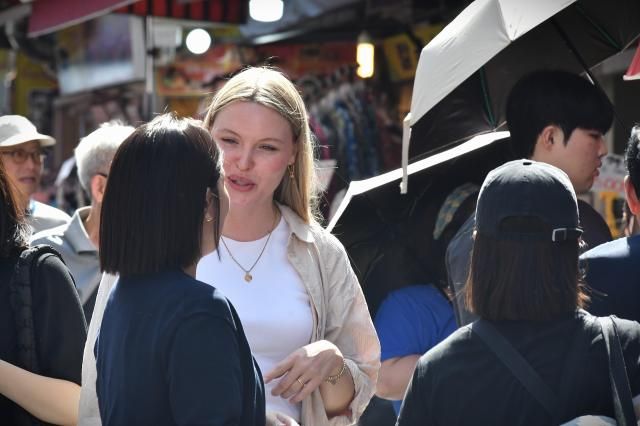
Payment data from WOWPASS, a prepaid payment service for foreign visitors, offers another indication that spending is becoming less concentrated.
The service recorded 1.97 million users in 2025, up 33 percent, with 20.2 million payments worth 447.7 billion won. Yet the share of spending at its 100 largest merchants fell from 34 percent to 27 percent.
Seoul’s share of WOWPASS spending slipped from 89 percent in 2023 to 83 percent in 2025, while the share outside the capital rose from 11 percent to 17 percent. Within Seoul, spending in Seongdong District, which includes Seongsu-dong, jumped 118 percent last year.
Those figures do not establish that social media caused the shift, nor do they suggest visitors are abandoning established shopping destinations. Spending at large shopping malls in Seoul rose 73.2 percent in the first half of this year.
But alongside those purchases, visitors are making room for smaller transactions and experiences drawn from everyday Korean life.
For Jacob Hunt’s family, the interest began with his daughter, a BTS fan.
“Our daughter is a big ARMY,” Hunt said with a laugh, using the name of the group’s fandom. “She went to a BTS concert recently and emptied out her bank account.”
She also repeatedly watches older BTS livestreams in which the members eat and talk about their daily lives.
“She learned a lot about Korean food and food hacks,” Hunt said.
Two days after arriving in Korea, the family visited a nearby CU convenience store to try combinations they had seen online.
“We tried a lot of interesting food combinations and we loved it,” Hunt said. “Especially the black coffee with banana milk. That was super awesome.”
Hunt had also watched YouTube videos about Korean food before the trip.
“Instagram and YouTube do most of the jobs when it comes to finding Korean food joints,” he said.
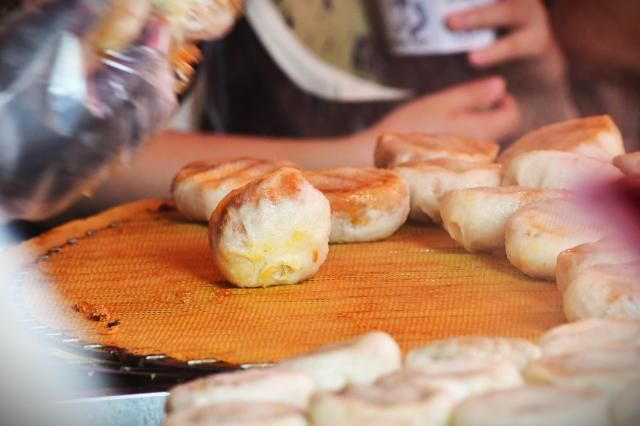
The noodles and mandu, or Korean dumplings, he was eating that day were another discovery from a video.
Across the tourism market, those seemingly modest purchases add up.
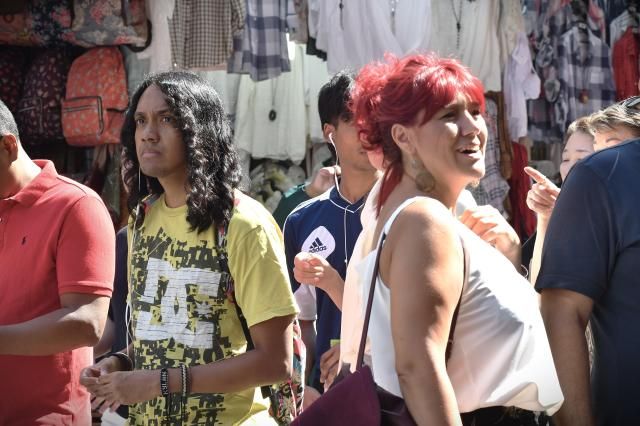
A Korea Tourism Organization analysis of foreign credit-card transactions between 2018 and July 2025 found average annual spending growth of 35 percent for ice cream and 34 percent for convenience-store food.
From January through July 2025, foreign visitors made 8.9 million payments at cafés, 3 million at bakeries and 2.3 million for hamburgers.
The transaction counts rose 29.5 percent, 36.2 percent and 38.2 percent, respectively, from a year earlier.
A KTO survey of potential visitors also found food tours were the most desired activity in Korea, cited by 15.7 percent of respondents.
Researchers are examining how years of watching entertainment content can turn that interest into travel.
A 2026 study in the Asia Pacific Journal of Tourism Research explored how BTS shaped perceptions of South Korea among Gen Z women.
Based on two small focus groups, it found that placing BTS in tourism advertisements had limited additional impact. Among fans, the stronger influence came from sustained exposure to the members’ music, personalities and everyday content.
The researchers linked the attachment to “parasocial relationships,” the one-sided sense of familiarity audiences develop with media figures.
Hunt’s account illustrates how that familiarity can work. His daughter did not need BTS to recommend a particular convenience store.
Watching the members eat had already given ordinary Korean food a personal connection.
Recommendations from other travelers can then build on that interest. A separate 2024 experiment involving 700 Instagram users found that posts influenced intentions to visit destinations. Influencer posts about iconic locations generated stronger visit intentions than comparable posts by peers, although the effect varied with the destination and the viewer’s fear of missing out.
For travelers, those streams of content increasingly lead to a saved location on a map.
Naver said the number of people using Naver Map in foreign-language settings rose 16.4 percent between September 2025 and April this year. Its latest “BE LOCAL” campaign featured about 300 restaurants and other destinations in Seoul and Busan.
Visitor data also points to growing interest beyond the traditional tourist circuit.
The Seoul AI Foundation, using SK Telecom foot-traffic data and foreign-language Google Maps reviews, found that Myeong-dong remained the city’s largest foreign tourist destination, with about 100,910 visitors a day.
Foreign foot traffic also rose 10.1 percent at Seoul Forest and Seongsu, 10.4 percent at Gwangjang Market, 11.8 percent at Achasan Mountain and 10 percent at Gwanaksan Mountain.
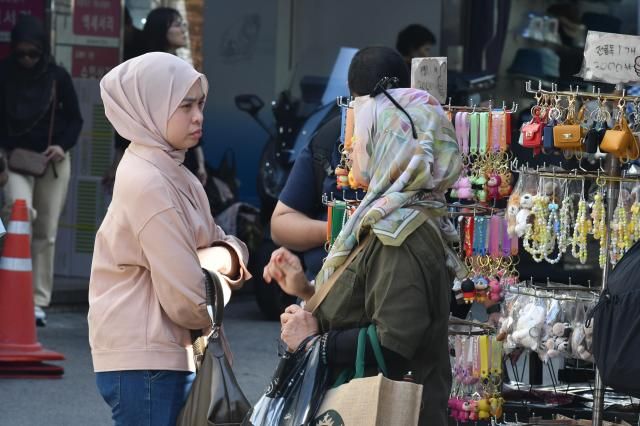
The online routes to those destinations vary by country.
In KTO research, social-media and video-platform searches were the most commonly cited initial source influencing a decision to visit Korea, at 16.9 percent, ahead of recommendations from acquaintances at 14.7 percent and online travel sites at 13.6 percent.
Among potential U.S. visitors, YouTube ranked first at 21 percent, while Instagram and TikTok each accounted for 10.9 percent. Chinese travelers relied more heavily on platforms including Douyin, Xiaohongshu and Bilibili.
A trip can now take shape across all those encounters: a livestream introduces a snack, a short video makes a restaurant worth saving, and a map supplies the final directions. The traveler may remember the discovery more clearly than the person who recommended it.
“I don’t remember whose video it was,” Hunt said. “But it looked super good, so we are here to try them with some mandu.”
AJP Takeaways
- Social media is increasingly shaping foreign tourists’ itineraries in Korea, with Instagram, YouTube and other platforms steering visitors toward neighborhood restaurants, convenience stores and everyday local experiences.
- Foreign tourist card spending in Seoul jumped 56.8 percent in the first half of 2026, far outpacing the 21.3 percent rise in visitor numbers, while restaurant spending surged 54.5 percent.
- WOWPASS data shows spending is becoming less concentrated, with the share going to its 100 largest merchants falling from 34 percent to 27 percent as purchases spread to smaller businesses and areas beyond traditional tourist hubs.
Copyright ⓒ Aju Business Daily 무단 전재 및 재배포 금지


