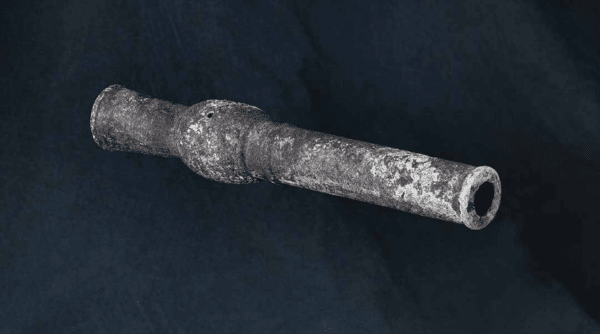
[News Culture]A firearm unearthed almost by accident on a mountain in southwestern Korea is giving researchers an unusually precise look at how the country’s earliest gunpowder weapons were produced.
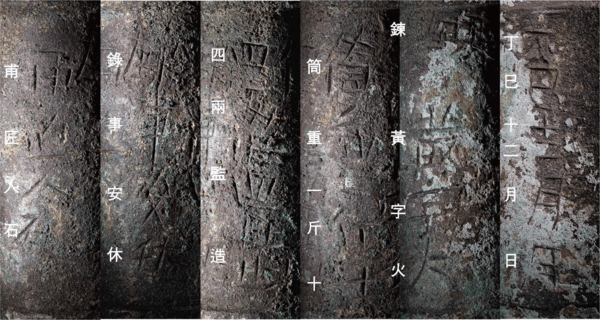
Known as the Hwangja Hwatong, the bronze weapon carries just 28 engraved characters. Yet those few lines record a striking amount of information: the weapon’s name, its weight, the official who supervised its production and even the craftsman who made it.
The Naju National Research Institute of Cultural Heritage, part of the Korea Heritage Service, presented the results of a three-year study on Sept. 21 at the National Palace Museum of Korea in Seoul. Scientific testing, inscription analysis and historical review have placed the weapon in the transitional period between late Goryeo and early Joseon, when gunpowder technology was becoming part of state military production.
Measuring 23.75 centimeters long with a bore diameter of 1.66 centimeters, the Hwangja Hwatong weighs 1,032 grams. Its compact scale suggests a weapon intended to be carried and fired by an individual soldier rather than operated as a larger artillery piece.
Hwatong was an early Korean term for gunpowder weapons capable of launching arrows or other projectiles. The terminology later shifted toward chongtong as firearm technology developed during the Joseon Dynasty.
The weapon might never have come to scholarly attention without an unrelated military survey.
It was discovered in November 2023 on Geumseongsan Mountain in Naju while crews were checking the area for land mines ahead of trail construction. Previous accidents and local accounts had led the site to be managed as an area where unexploded or unidentified mines could remain. Instead, the survey turned up a centuries-old firearm.
The most important evidence was already written on the object itself.
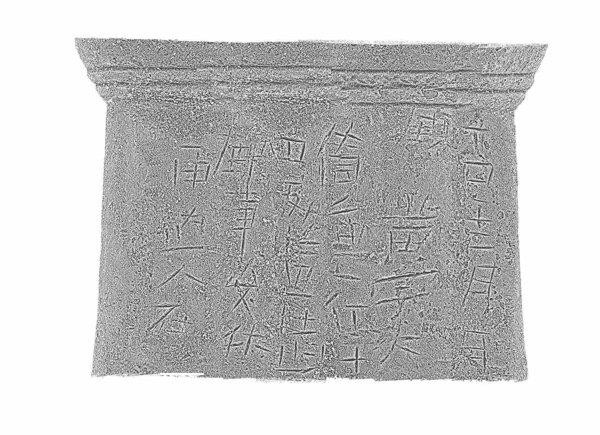
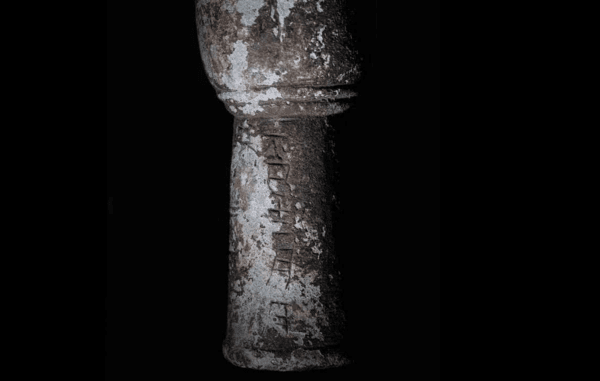
Twenty-seven characters appear in six vertical lines around the socket where a handle would have been fitted, with one additional character on the muzzle. The inscription records that the Hwangja Hwatong was made in the 12th month of a jeongsa year, weighed 1 geun and 14 nyang, and was produced under the supervision of an official named An Hyubo by a craftsman identified as Seok.
A separate character meaning “eight” appears on the muzzle. Researchers believe it may have marked the weapon’s place in a production sequence or served as an inventory number.
That record is significant because it goes beyond identifying the object. It captures part of the administrative system behind weapons production.
An Hyubo is identified as a noksa, an official involved in practical administrative work, while the inscription uses the term gamjo for supervision of manufacture. The wording points to a production process in which weapons were not simply made by individual artisans but monitored within an organized state system.
The name Hwangja also appears to reflect a classification method based on the sequence of characters in the Thousand Character Classic, a system widely used in premodern East Asia for ordering and labeling objects.
One question remains unresolved: exactly when was it made?
The cyclical date jeongsa recurs every 60 years. After comparing the inscription with historical records and the development of Korean firearms, researchers have focused on two possible years—1377 and 1437.
The earlier date carries particular historical weight. In 1377, during the reign of King U of Goryeo, state-backed production of gunpowder weapons expanded following Choe Museon’s efforts to establish a government institution devoted to firearms.
The second possibility, 1437, falls during the reign of King Sejong, when Joseon was actively refining gunpowder weapons.
The Hwangja Hwatong’s internal construction, however, appears closer to an earlier stage of firearm development.
Its powder chamber has a rounded configuration associated with early weapons in which gunpowder and the projectile were loaded in a relatively simple arrangement. Later firearms developed under King Sejong increasingly incorporated a wooden plug between the powder charge and projectile to transfer explosive force more efficiently. No such structure has been identified in the Hwangja Hwatong.
That absence has strengthened the argument that the weapon predates those later technological refinements.
The metal itself provides another line of evidence.
Analysis found that the Hwangja Hwatong was cast in bronze composed primarily of copper, tin and lead, with tin kept below 10 percent by weight. The composition appears to have been selected to balance structural strength with enough flexibility to withstand the pressure created by gunpowder ignition.
Microscopic analysis also detected traces of sulfur, silicon and silver, offering additional evidence of the refining and casting techniques available to metalworkers at the time.
Taken together, the inscription, construction and alloy composition make the Hwangja Hwatong an exceptional record of early Korean firearms technology.
It is considered the earliest known gunpowder weapon of its kind identified in Korea. More importantly for researchers, its archaeological context is known and its body preserves production information rarely found together on a surviving weapon.
Instead of leaving historians to reconstruct its origins from later documents alone, the artifact carries part of its own manufacturing record.
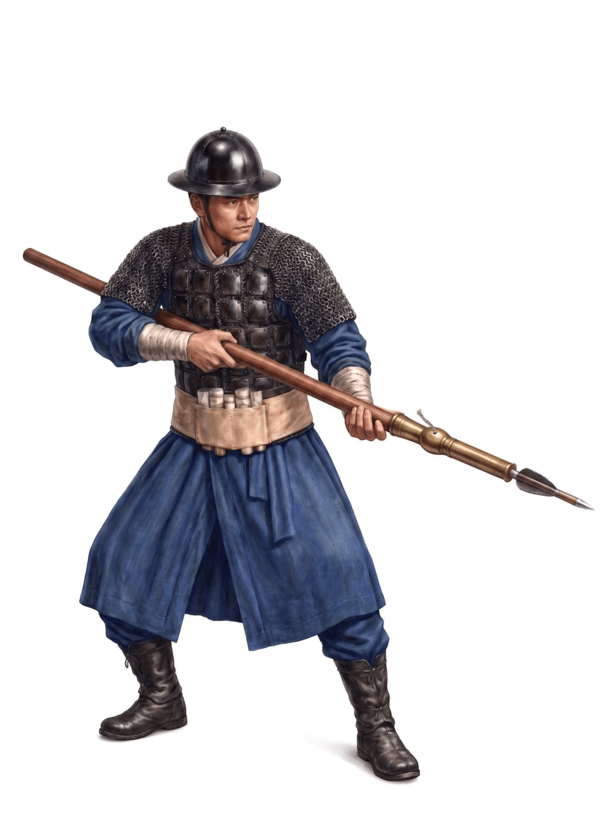
The original weapon will go on public display at the National Palace Museum of Korea from Sept. 23 through Nov. 22 in a special exhibition organized by the Naju National Research Institute of Cultural Heritage.
The exhibition will also present the inscription study, scientific analysis and competing dates proposed for one of Korea’s earliest surviving firearms.
Reported by News Culture M.J._mj94070777@nc.press
Copyright ⓒ 뉴스컬처 무단 전재 및 재배포 금지


