[News Culture] Travel far enough north in India and many of the country’s most familiar images begin to fall away.
The dense cities and tropical heat give way to glaciers, wind-scoured plateaus and mountain passes rising above 5,000 meters. Sikh communities gather around a sacred kitchen in Punjab, Tibetan Buddhist monasteries cling to cliffs in Zanskar, Muslim pastoralists move with their herds through the Suru Valley, and villages near the Pakistan border carry memories of wars that changed not only territory but citizenship and family life.
That lesser-seen India is the focus of EBS1’s “World Theme Travel” in a four-part series airing Sept. 21-24. Writer and longtime India traveler Jeon Myung-yoon, who first visited the country in 1996, leads the journey through Punjab, Kashmir and Ladakh, treating the region less as a collection of remote destinations than as a crossroads where altitude, religion and political borders have shaped distinct ways of life.
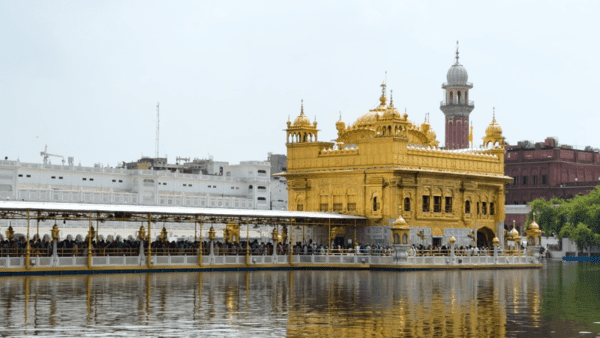
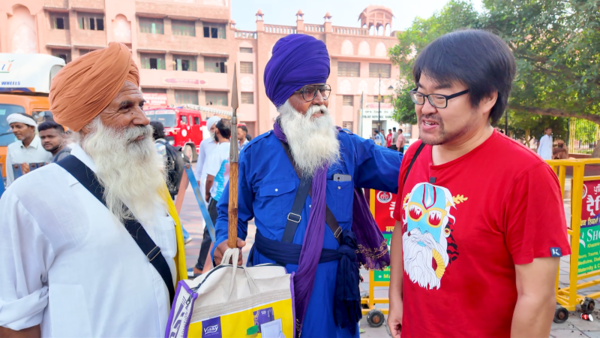
The trip begins in Amritsar, where Sikh identity is immediately visible in everyday life. At the Golden Temple, however, faith is expressed as much through service as architecture. The complex operates guru ka langar, a community kitchen where people eat together regardless of religion or social background. Jeon joins the preparation, experiencing firsthand the scale of a tradition built around equality, hospitality and shared labor.
That atmosphere changes sharply at the Attari-Wagah border. Each evening, Indian and Pakistani soldiers stage an elaborate flag-lowering ceremony marked by high kicks, sharp gestures and roaring crowds on both sides. The performance is theatrical, but its setting is not. Decades of conflict and partition remain embedded in the frontier, giving the spectacle an uneasy tension between rivalry, ritual and coexistence.
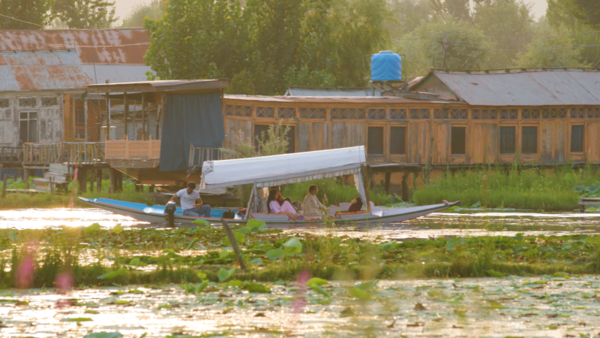
From Punjab, the series moves into Kashmir, where Srinagar’s Dal Lake functions almost like a city built on water. Traditional shikaras carry residents and visitors across the lake, floating vegetable markets assemble before sunrise, and cultivated plots rise directly from the water. Houseboats preserve local traditions of carved wood and papier-mâché craft, while foods such as kulfi and wazwan open another route into Kashmiri culture.
Farther east, the landscape grows more severe.
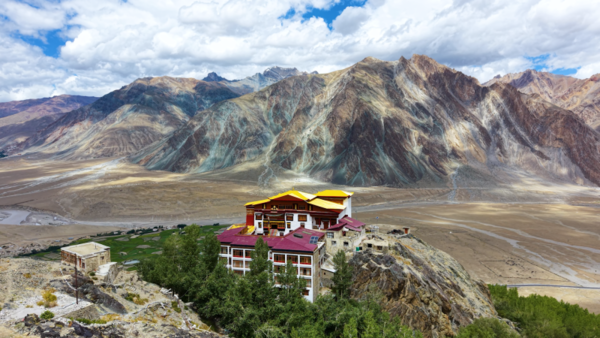
Reaching Zanskar from Leh requires hours of travel through a world of steep valleys and high mountain roads. At Stongdey Monastery, perched around 3,800 meters above sea level, Tibetan Buddhist practice has continued for centuries. The program joins monks as their day begins with low-pitched chanting and a communal meal, presenting the monastery not as a monument suspended in history but as a working religious community.
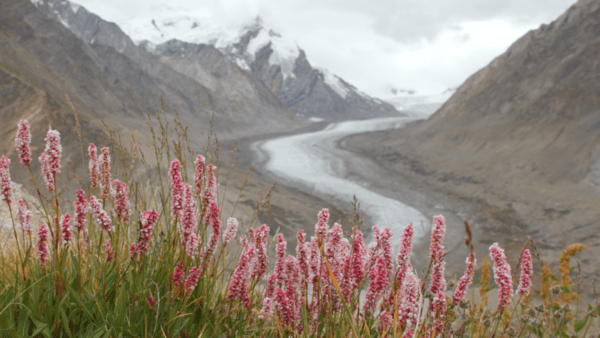
The route continues toward the Drang-Drung Glacier and Phugtal Monastery, built into a cliffside cave in one of Zanskar’s most isolated valleys. Once accessible only after days on foot from Padum, the monastery embodies the physical remoteness that long helped preserve monastic life in the region.
Yet high-altitude life is not defined by isolation alone. Around Sani Lake and the surrounding summer pastures, residents move with the season, building temporary shelters for livestock and making butter with water-powered devices before mixing it into traditional gur-gur tea. The practices are practical responses to altitude and climate, shaped by the short period each year when highland grazing becomes possible.
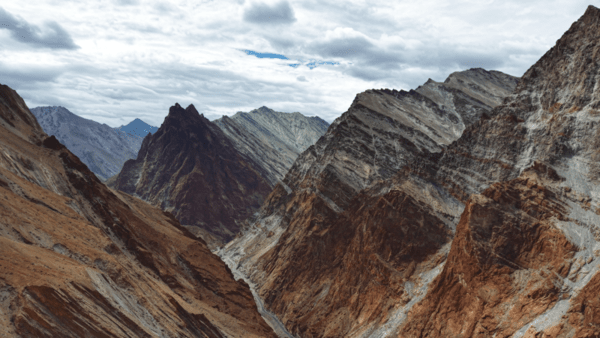
The cultural landscape shifts again through the Suru Valley, where Tibetan Buddhist communities give way increasingly to Muslim ones.
Here, the series encounters Bakarwal pastoralists, whose livelihoods follow goats, sheep and seasonal grazing routes. Wool, milk and mobility remain central to their economy, while communal customs such as sadaqah reveal another side of local life: food is prepared and shared to mark good fortune and strengthen ties among neighbors.
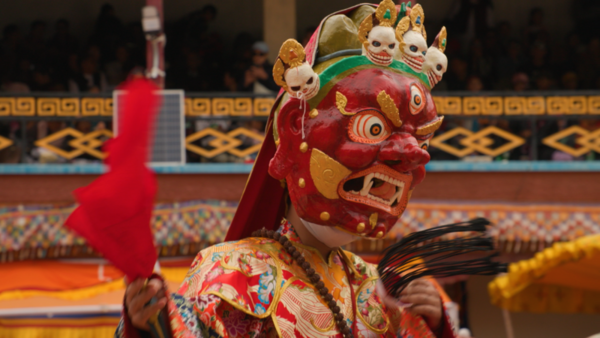
That movement between religious worlds becomes one of the series’ defining features. In Ladakh, Takthok Monastery hosts the annual Takthok Tsechu, where masked monastic dances unfold to ritual music. Villagers gather for ceremonies intended to dispel harmful forces and invite peace and prosperity, placing Buddhist devotion and local festival culture on the same stage.
From there, the journey climbs toward Khardung La at roughly 5,300 meters. Snow-covered peaks dominate the road, and motorcyclists push across thin air before descending into the Nubra Valley, where the geography takes another unexpected turn.
At Hunder, sand dunes spread beneath the Himalayas and Karakoram, with double-humped Bactrian camels recalling the region’s older role along Silk Road trade routes. Snow mountains and desert occupy the same frame, making Nubra one of the clearest examples of how dramatically northern India resists a single visual identity.
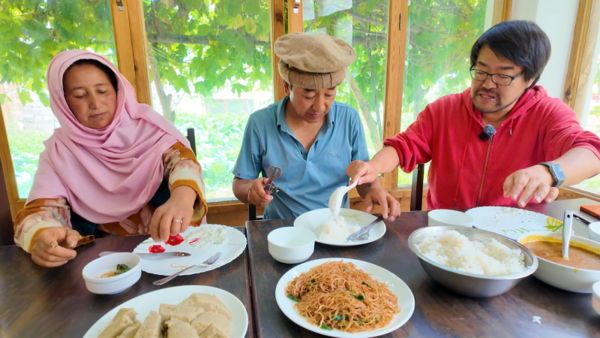
Near Ladakh’s northern edge, Turtuk brings politics and history directly into village life.
The community became part of India after the 1971 Indo-Pakistani War and retains a strong Balti cultural identity. Jeon visits descendants of the former Yabgo dynasty, hears stories tied to the old royal household and joins local residents in the fields, where several crops are grown together in the same plots.
Food becomes a point of exchange as well. After tasting local chemmik, an herb-based yogurt preparation made from ingredients grown in the village, Jeon prepares Korean food in return, turning a borderland story into a smaller moment of cultural reciprocity.
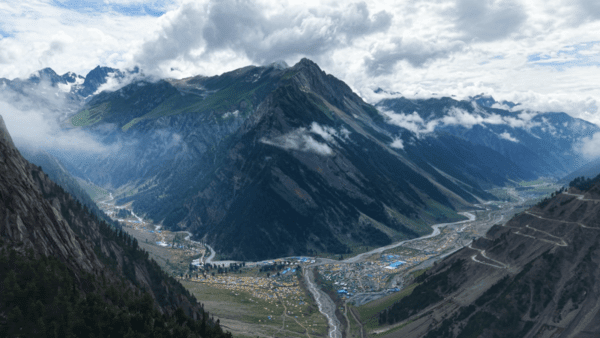
The final leg follows the road linking Kashmir and Ladakh, where the landscape alternates between green meadows and stark high-altitude terrain. Sonamarg, whose name evokes a “meadow of gold,” contrasts sharply with the arid plateaus farther east, while nearby Baltal fills with pilgrims traveling toward the sacred Amarnath Cave.
Religion here is inseparable from geography. Pilgrims move through difficult mountain terrain because the destination itself is sacred, while local communities organize temporary camps and services around the seasonal flow of worshippers.
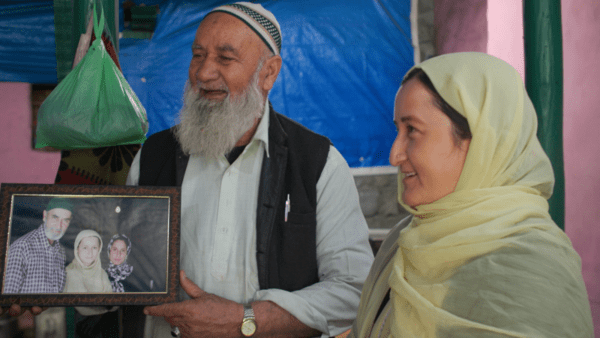
At Dras, one of the region’s coldest inhabited areas, residents use the brief summer to grow barley and prepare for the long winter. For Jeon, the stop is also personal. He returns carrying a photograph he failed to deliver during a journey 15 years earlier, searching for someone he once met and giving the episode a quieter meditation on what travelers leave behind — and what can still be recovered years later.
The borderlands become more tangible on the road toward Kargil.
In Hunderman, a small museum preserves homes, everyday objects and letters from families whose lives were divided as frontiers shifted between India and Pakistan. Here, war is not presented through maps or military statistics but through people who found their nationality changed, relatives placed across a border and familiar homes transformed into evidence of a larger political conflict.
That human scale gives the journey much of its weight. The border is not simply where one country ends and another begins; it is something that has altered marriages, inheritance, memory and belonging.
The final stops return the series to Ladakh’s older cultural crossroads. At Mulbekh, a monumental Maitreya figure carved into rock carries artistic influences associated with multiple traditions, reflecting centuries of exchange across the region. Lamayuru, set among eroded formations often compared to a lunar landscape, closes the journey with another image of Buddhist life embedded directly into an extreme environment.
Across four episodes, “World Theme Travel” resists reducing northern India to a Himalayan adventure route. The snow passes and glaciers are spectacular, but the series is more interested in how people have learned to live around them — by moving livestock with the season, sharing food, preserving ritual, adapting agriculture to altitude and carrying memories across borders that were drawn long after many of these communities first took shape.
The result is an India defined less by a single national image than by overlapping worlds: Sikh Punjab, Muslim Kashmir, Tibetan Buddhist Ladakh and Balti border villages, all connected by roads that wind through some of Asia’s most demanding terrain.
EBS1’s “World Theme Travel: Another India — Land of Wind and Prayer” airs Monday through Thursday, Sept. 21-24, at 8:40 p.m. KST.
Reported by News Culture M.J._mj94070777@nc.press
Copyright ⓒ 뉴스컬처 무단 전재 및 재배포 금지


