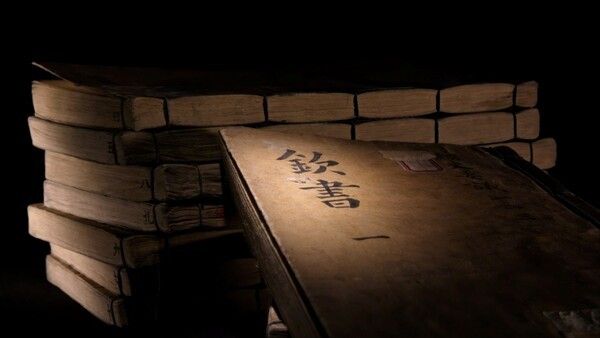
[News Culture] Jeong Yak-yong is best known for writing about government, public administration and the responsibilities of officials. But among the Joseon scholar’s works is a very different kind of book — one concerned with suspicious deaths, conflicting testimony and the difficult question of how an official could determine what actually happened.
KBS1’s “History Special – Time Traveler” turns to that work, “Heumheumsinseo,” for the first installment of its three-part series on books that changed Joseon. Airing Sept. 20, the episode follows Jeong through criminal cases and judicial records to examine a central concern running through the text: when a person’s life depended on a ruling, suspicion and confession alone were not enough.
Written roughly two centuries ago, “Heumheumsinseo” brought together legal precedents, investigative procedures and practical guidance for officials handling serious crimes. Its title itself reflects Jeong’s insistence on caution, carrying the sense of examining a matter carefully and then examining it again.
That principle mattered because criminal investigations in Joseon could place enormous weight on confessions. Jeong was wary of reaching conclusions too quickly and stressed the need to compare statements with physical circumstances and other available evidence.
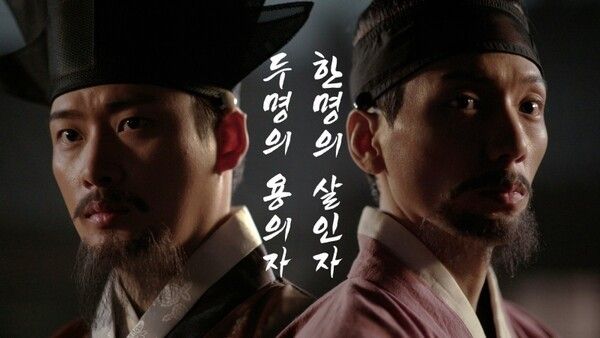
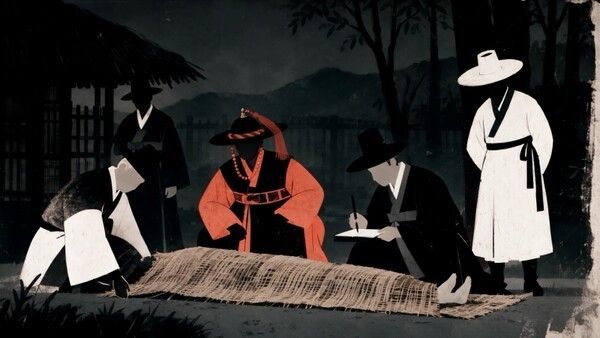
One of the practices at the center of the book is geomheom, the official examination of a body to determine the circumstances and possible cause of death.
It would be misleading to equate the procedure directly with modern forensic pathology. The knowledge, methods and institutions were fundamentally different. Yet the surviving records show a serious attempt to make observations about the body part of the evidentiary process rather than allowing a criminal judgment to rest entirely on testimony.
“Heumheumsinseo” repeatedly returns to that problem through individual cases. Officials confront suspects giving contradictory accounts, deaths whose circumstances are uncertain and accusations of homicide that require more than an initial appearance of guilt.
The point was not simply to collect unusual cases. Jeong used them to ask how evidence should be weighed, how inconsistencies should be tested and how an official could avoid turning an uncertain conclusion into an irreversible punishment.
That concern gives the book much of its significance. In cases involving a human life, Jeong argued for restraint at precisely the moment when pressure to reach a verdict could be greatest.
The work also belongs to a turbulent period in Jeong’s own life.
After the death of King Jeongjo, Jeong was sent into exile in 1801 and spent years producing some of the writings for which he is now best known. His interests ranged across government, economics and administration, but “Heumheumsinseo” reveals how closely those larger questions of good governance could intersect with the practical realities of criminal justice.
The completed work runs to 30 volumes in 10 books and draws extensively on criminal precedents from both China and Joseon. Rather than functioning simply as a compilation, it was intended to help officials think through the process of investigating and adjudicating serious crimes.
“History Special – Time Traveler” returns to several of those cases to reconstruct the reasoning behind Jeong’s conclusions. The episode looks at what officials could observe, which accounts they could trust and how competing pieces of information were brought together before a judgment was made.
In doing so, the program avoids treating “Heumheumsinseo” as a modern criminal-investigation manual transplanted into the 19th century. Its methods belonged firmly to Joseon. What remains striking is the problem Jeong was trying to solve: how to reduce the possibility that an official’s assumptions, an unreliable confession or an incomplete investigation could cost an innocent person their life.
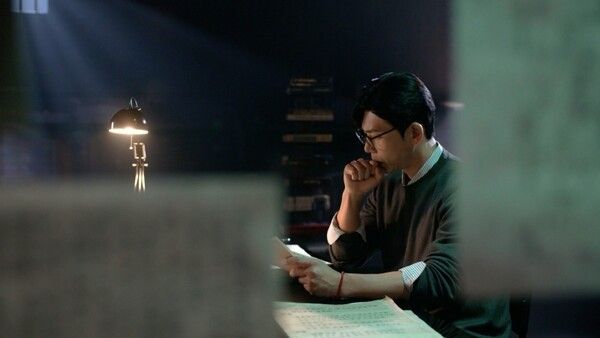
That makes “Heumheumsinseo” an important companion to Jeong’s better-known writings on government.
His interest in criminal justice was not separate from his ideas about public service. A magistrate responsible for governing people was also responsible for judging them, and a careless decision in a murder case carried consequences that could not be undone.
The book therefore reveals a more practical side of Jeong Yak-yong. He was not only asking what a better system of government should look like, but how an individual official should act when confronted with incomplete evidence, conflicting testimony and the possibility of a fatal error.
Two centuries later, the investigative technology has changed beyond recognition. The underlying question has not: how much evidence is enough before the state decides what happened — and who is responsible.
KBS1’s “History Special – Time Traveler,” episode 38, “Tracking the Truth: Jeong Yak-yong’s Heumheumsinseo,” airs Sunday, Sept. 20 at 9:30 p.m. KST. The schedule is subject to change depending on Asian Games coverage.
Reported by News Culture M.J._mj94070777@nc.press
Copyright ⓒ 뉴스컬처 무단 전재 및 재배포 금지


