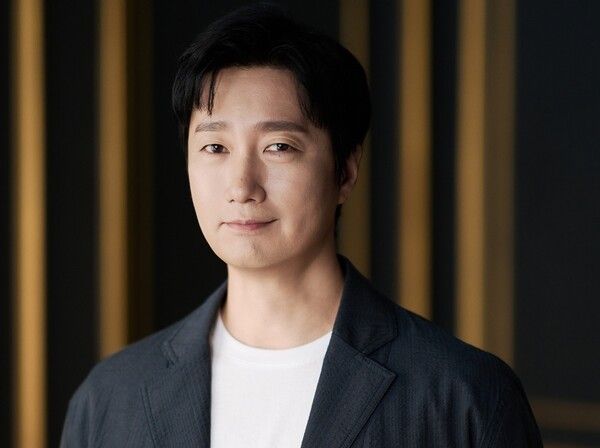
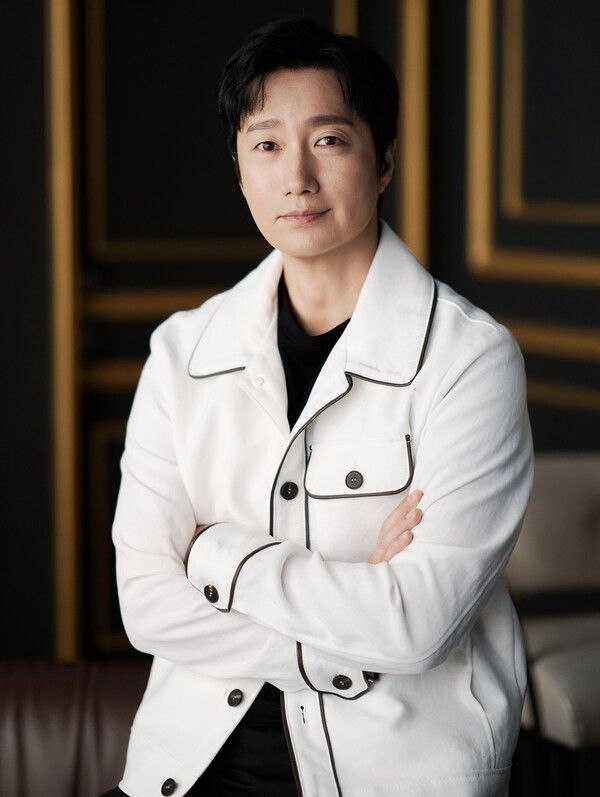
[News Culture] Park Hae-il has never considered himself an actor with an endless supply of tricks.
“I don’t think I have that much to draw from,” Park said. “Whenever I take on a project, I pull together everything I have and pour it into the role. Whether the result is good or bad, I need time to find my way out afterward.”
That process has shaped a 26-year career spanning “Memories of Murder,” “The Host,” “War of the Arrows,” “Eungyo,” “The Last Princess” and “Decision to Leave.” It has also contributed to the long gaps between his films.
Park now returns to theaters for the first time in four years with Hur Jin-ho’s “The Assassin(s),” a mystery thriller that revisits the attempted assassination of South Korea’s first lady on Aug. 15, 1974. The film follows a group of police officers and journalists as they challenge censorship, official pressure and a widening cover-up.
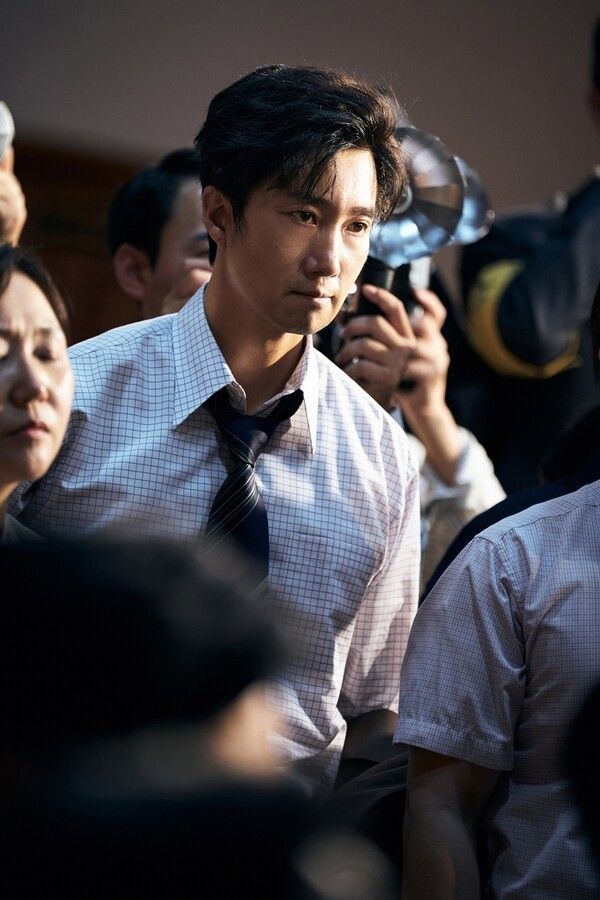
Park plays Jae-hwan, the city desk editor of a newspaper who refuses to abandon the case despite repeated efforts to silence his team. It is the first time he has played a journalist, a surprising gap for an actor who has spent more than two decades speaking with reporters.
“I debuted in 2000,” Park said during an interview at a café in Seoul’s Samcheong-dong neighborhood. “Even if I met journalists for only one project a year, that would still be at least 26 encounters. When this role came to me, I became curious. I thought, ‘I should do this,’ and I genuinely wanted to do it well.”
The title attached to the character created a different kind of pressure. “Playing a department head felt intimidating,” he said with a laugh. “At the same time, I realized that I had reached the age when people would cast me as one.”
Park first watched the completed film at its press screening. Like many actors, he found it difficult to take in the full story while seeing his own performance for the first time.
“This stage is always embarrassing,” he said. “Whether I did well or poorly, I end up watching only myself.”
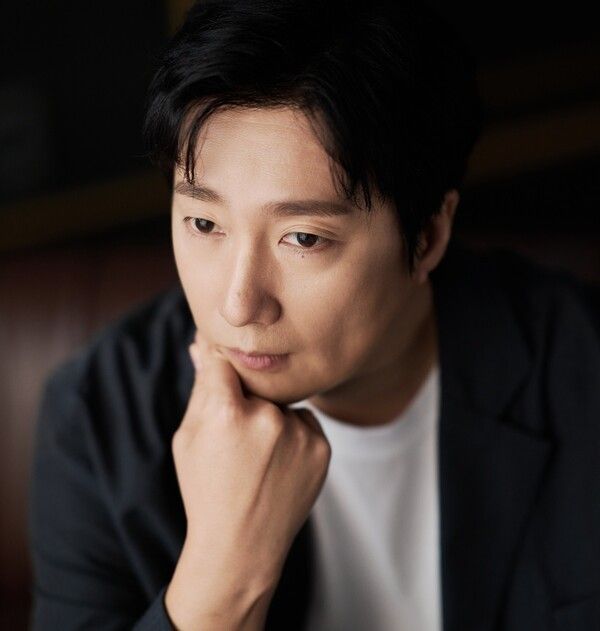
To build Jae-hwan, Park and Hur discussed details that never appear in the screenplay. They considered his earlier career, whether he had married and what kind of life he might have led before the shooting pulled his newsroom into danger.
“Actors have to move through many characters and emotions, so I try not to lock myself into one fixed standard,” Park said. “The director and I gradually built Jae-hwan through those conversations. He wanted the character to remain focused on the assassination attempt, and I began to think that if Jae-hwan had a family, it would be the reporters on his team.”
That idea became crucial in one of the film’s defining scenes, when Jae-hwan reads a declaration defending press freedom. Park marks several passages in every screenplay according to their degree of difficulty. This film had four or five, and the declaration ranked among the hardest.
“The bond between the actors playing the journalists formed naturally in that room,” he said. “It felt as if those people had already spent years together. When we delivered the declaration, their emotional temperature felt even hotter than mine.”
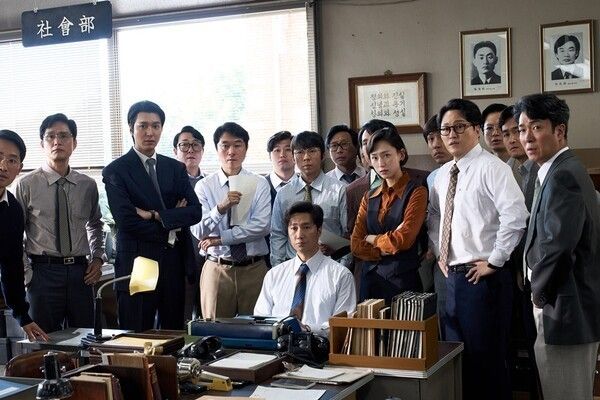
Park approached the scene like a surfer waiting for a wave whose size could not be predicted.
“I decided not to fight its nature and simply ride it,” he said. “I ended up stumbling over part of the speech, but the director thought it felt natural and wanted to keep it. It was not a scene that could be performed exactly according to calculation.”
That willingness to respond in the moment was supported by extensive preparation. Hur previously revealed that Park came to the set even when he had no scenes to film, helping his co-stars with their reactions. Park described it less as generosity than as a method that makes his own work easier.
“I have always liked visiting the set in advance,” he said. “Lee Min-ho’s telephone booth scene was the first day of filming. His character calls the newsroom, and Jae-hwan answers, so I knew I would eventually have to film the other side. I went along and treated it like a rehearsal. It also gave me a chance to see how Lee had prepared and how he approached the scene.”
Park added that Lee did the same for his co-stars. “He probably felt too embarrassed to mention it, but he also came to the set on days when he was not filming,” Park said. “You could see how badly he wanted to become part of the film and his character.”
The newsroom was constructed on an open set in Jeonju. Park visited when it was about 70 to 80 percent complete, believing Jae-hwan needed to move through the space as if he had worked there for years.
“I walked around, sat at his desk and tried using the typewriter,” he said. “A city editor would have spent a long time producing stories in that newsroom, so the space had to feel familiar. I knew everything would become hectic once filming began, so I wanted to experience it beforehand.”
Park’s return follows one of the most celebrated periods of his career. In 2022, “Decision to Leave” earned him best actor honors from the Blue Dragon Film Awards, the Chunsa International Film Festival, the Buil Film Awards and the Grand Bell Awards. Yet rather than follow that success with another quick project, he stepped away from the screen.
“I use everything I have when I work,” Park said. “Afterward, I have always needed time to recover and separate myself from the role.”
Now, however, that rhythm has begun to concern him.
“I’m not getting any younger,” he said. “I started to feel a sense of urgency and wondered whether I could continue working that way. I want to change my default setting so I can keep moving and use my energy without taking such long breaks. I have always been slow about most things.”
That caution has also kept Park closely tied to theatrical cinema. He has appeared in only four television dramas, including two cameos, and has yet to work on a Netflix or Disney+ series.
“I know there are many platforms beyond theatrical films,” he said. “The acting may be the same, but the length of the storytelling and the way each medium works are different. I felt as though I would have to begin again from the ground up, and that made me hesitate.”
He spent years wondering whether to stay with film, work across different formats or venture into streaming before returning to the screen. His instinct had always been to concentrate on what he already knew.
“I used to think, ‘Just try to do what you already do well,’” Park said. “Only now am I beginning to think, ‘Maybe it’s time I started running.’”
That does not mean he is leaving theaters behind. It means he is no longer determined to protect one format at the expense of every other possibility.
“I think I will work on a streaming project someday,” he said with a smile. “I don’t intend to hold on only to what I have now.”
“The Assassin(s)” opens in Korean theaters on Sept. 23.
Reported by News Culture M.J._mj94070777@nc.press
Copyright ⓒ 뉴스컬처 무단 전재 및 재배포 금지


