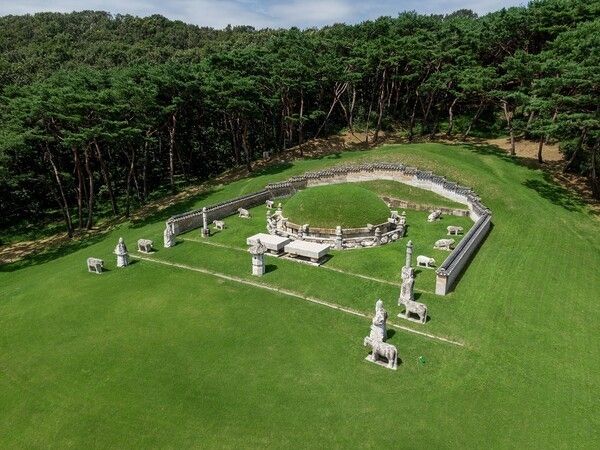
[News Culture] Jangneung in Galhyeon-ri, Tanhyeon-myeon, Paju, Gyeonggi Province, is the joint tomb of King Injo, the 16th monarch of Joseon, and his first queen, Queen Inyeol of the Han clan. Their coffins rest beneath a single burial mound, while two spirit tables placed before it signal that the king and queen were interred together. The site is framed by an imposing array of stonework, including retaining stones, railings, stone lanterns, civil and military officials, horses, sheep and tigers.
What makes Jangneung particularly unusual is that it preserves the physical traces of three major royal burial projects: Queen Inyeol’s interment in 1636, King Injo’s funeral in 1649 and the relocation of both coffins to a new site in 1731. Seventeenth-century stone monuments stand alongside pieces carved nearly a century later, turning the tomb into a condensed record of changing Joseon burial customs and court funerary practice.
A reign born in a coup
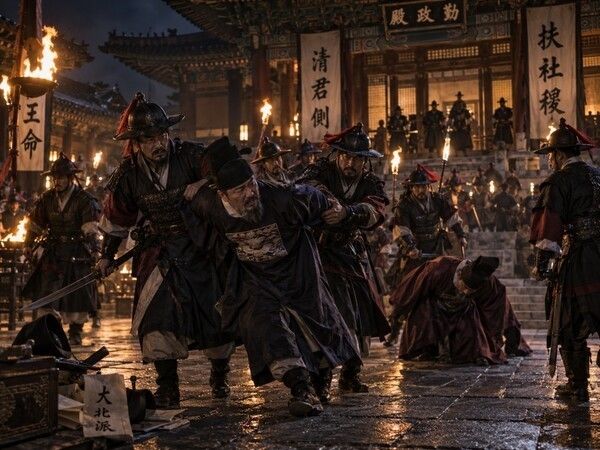
Injo was born in Haeju, Hwanghae Province, in 1595 as the eldest son of Prince Jeongwon and a grandson of King Seonjo. Known as Prince Neungyang before his accession, he took the throne in 1623 with the backing of the Westerners faction in the coup now known as the Injo Restoration. The new regime removed Gwanghaegun from power and carried out sweeping purges against senior figures from the Daebuk faction, while Westerners and Southerners were brought into government to reshape the political order.
That new order remained unstable. In 1624, General Yi Gwal, angered by the distribution of rewards following the coup, launched a rebellion that briefly captured the capital and forced the king to flee to Gongju. Injo later sought to curb the growing influence of merit elites by bringing non-merit officials and Confucian scholars into government, while his effort to elevate his biological father, Prince Jeongwon, posthumously to royal status as King Wonjong provoked fierce resistance from Neo-Confucian scholars.
Foreign policy brought even greater upheaval. Injo’s pro-Ming and anti-Later Jin stance contributed to the First Manchu Invasion of 1627 and the far more devastating Second Manchu Invasion of 1636. After 59 days of isolation at Namhansanseong Fortress, the king surrendered to the Qing at Samjeondo in an episode remembered as one of the most humiliating moments in Joseon history. The shock was especially profound for a political elite that regarded Joseon as the rightful heir to orthodox Chinese civilization.
In the years that followed, the court attempted to restore military capacity and royal authority. New military commands helped lay the foundations of the Five Military Camps system, while fiscal and economic measures, including the expansion of the Daedong tax system and fixed-rate land taxation, sought to rebuild state finances and stabilize civilian life.
Jangneung’s story began with a queen
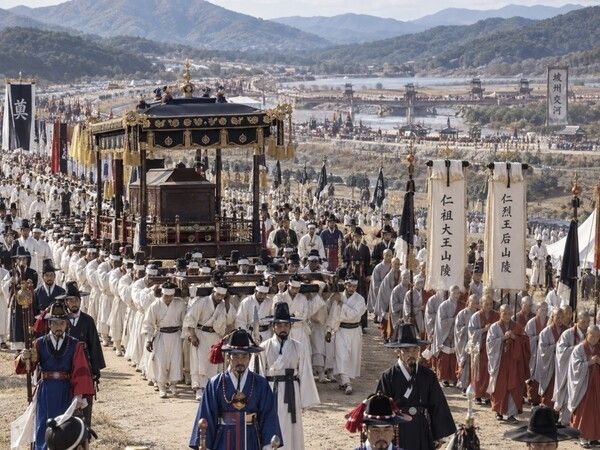
The history of Jangneung began not with Injo, but with Queen Inyeol, who died 14 years before him. She died in late 1635 following childbirth, and after officials considered sites in Yangju, Yongin and Gimpo, the court selected an area known as Bukuncheon-ri in Paju. Construction of her tomb began in February 1636.
The project was planned with the expectation that Injo would eventually be buried beside her. Structures including the enclosing wall, stone lantern, ritual facilities and shrine buildings were arranged so that the site could later accommodate the king with minimal additional construction. In other words, the twin-tomb arrangement had been anticipated from the time of Queen Inyeol’s burial.
When Injo died at Daejojeon Hall in Changdeokgung Palace in 1649, however, controversy erupted almost immediately over the geomantic quality of the site. Senior officials, citing the opinions of geomancers, repeatedly warned King Hyojong that the existing location was inauspicious, but Hyojong refused to move his father’s intended burial place and insisted on honoring the late king’s wishes.
The court instead scaled back the burial works. A planned workforce of 4,000 military laborers and 1,000 monk laborers was cut substantially, while stonework and structures prepared during Queen Inyeol’s funeral were reused wherever possible. By September 1649, the old Jangneung had been completed as a twin-tomb complex.
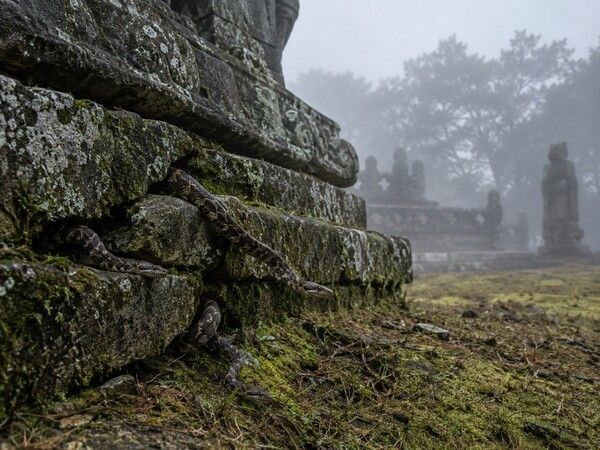
Doubts about the site never fully disappeared. Beginning in 1686, during King Sukjong’s reign, petitions once again raised concerns over its geomantic defects, but Sukjong declined to relocate the tomb, citing the enormous cost to the treasury and the burden such a project would impose on the population. Four decades later, however, reports of an unexplained fire within the tomb precinct and repeated sightings of snakes around the burial mound changed the mood at court.
In 1731, King Yeongjo dispatched senior ministers, officials from the Ministry of Rites and geomancers to inspect the site. Accumulated concerns over geomancy, fire damage, snake sightings and the court’s own inspection finally tipped the balance. Jangneung would be moved.
A new tomb, and a new burial design
The new location was chosen in the Gyoha area of present-day Galhyeon-ri, Paju. In May 1731, Chief State Funeral Commissioner Hong Chi-jung and other officials proposed using the burial system of King Sejong’s Yeongneung as a model, arguing that a simplified design would reduce both construction work and the burden on local residents.
The new Jangneung abandoned the earlier twin-tomb arrangement. Instead, the coffins of Injo and Queen Inyeol were placed side by side beneath a single mound. Construction began in June, and on Aug. 30, the two coffins were placed in the new burial chamber, 95 years after Queen Inyeol had first been laid to rest.
The relocation did not mean discarding everything from the old tomb. Many stone elements—including railings, spirit tables, stone lanterns, stone pillars and statues of civil and military officials—were moved to the new site. Other parts had to be remade because the new joint-mound format no longer matched the dimensions of the earlier twin-tomb structure.
The result is rare among Joseon royal tombs. Stonework created in 1636 now stands beside sculpture produced in 1731, allowing two different periods of royal funerary design to coexist within a single burial complex.
Flowers replace zodiac guardians
The new retaining stones also marked a notable departure in Joseon royal tomb design. Hong Chi-jung argued that the traditional zodiac guardians and cloud motifs carried lingering Buddhist associations, and with Yeongjo’s approval, floral decoration was introduced instead.
Fully opened peonies were carved onto the main panels, while lotus flowers appeared on the corner stones. Characters representing the 12 earthly branches were inscribed on the upper stones, while the supporting stones incorporated the 10 heavenly stems and the Eight Trigrams. Stone elements shaped to resemble tiled eaves were placed around the mound, creating a highly distinctive visual program.
The carving was overseen by Choe Cheon-yak, one of the leading royal stone craftsmen of the period, and reflects the technical refinement of 18th-century court craftsmanship. The mound measures about 11 meters in diameter and roughly 4.5 meters in height from the base stone, while an octagonal stone lantern measuring 2.89 meters stands at the center of the intermediate terrace, decorated with bands resembling the bracket structures of wooden architecture.
The statues of civil and military officials, standing 2.32 meters and 2.47 meters tall respectively, preserve the robust proportions and finely rendered armor associated with elite 17th-century stone carving. Their presence alongside later 18th-century works further reinforces Jangneung’s character as a layered archive of Joseon stone sculpture.
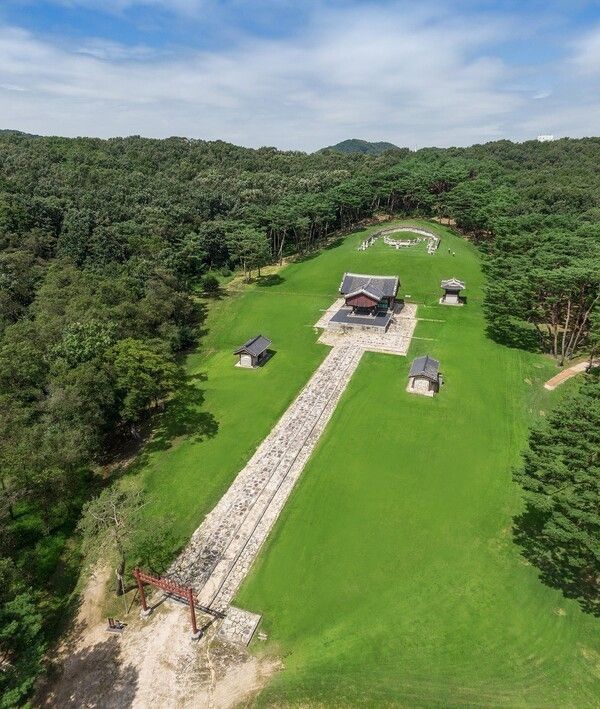
Visitors approaching the tomb first pass the royal caretaker’s residence and Geumcheongyo Bridge before reaching the red-spiked ceremonial gate. The ritual path then leads toward a T-shaped jeongjagak shrine, three bays wide across its front, while beyond the shrine and the spirit bridge, the burial mound rises on higher ground.
That carefully controlled sequence of spaces separates the world of ritual from the realm of the dead. Yet beneath Jangneung’s lawn lies a story very different from the rebellions and foreign invasions that defined Injo’s reign. It is a century-long history of royal wills, geomantic disputes, efforts to reduce forced labor, the reuse of costly stone monuments and changing concepts of how Joseon kings and queens should be buried.
Those layers now meet in a single mound in Galhyeon-ri.
Reported by News Culture M.J._mj94070777@nc.press
Copyright ⓒ 뉴스컬처 무단 전재 및 재배포 금지


