[News Culture] The title of this year's Gwangju Biennale arrives with unusual force: You Must Change Your Life.
Borrowed from Rainer Maria Rilke, the phrase could easily have become the kind of oversized statement international exhibitions like to place above an entrance. The 16th Gwangju Biennale, however, takes a less declarative route. Rather than telling visitors what needs to change, it builds an exhibition around the less comfortable question of how change begins in the first place.
The answer offered across the Biennale is not political instruction or a neatly packaged curatorial thesis. It is attention.
Running from Sept. 5 through Nov. 15, the exhibition brings together 43 artists and groups whose work ranges from the microscopic world of atoms and molecules to questions of personal memory, social history, planetary life and the cosmos. The subjects are vast, but the exhibition itself is deliberately less crowded than many large-scale international art events.
That choice shapes nearly everything that follows.
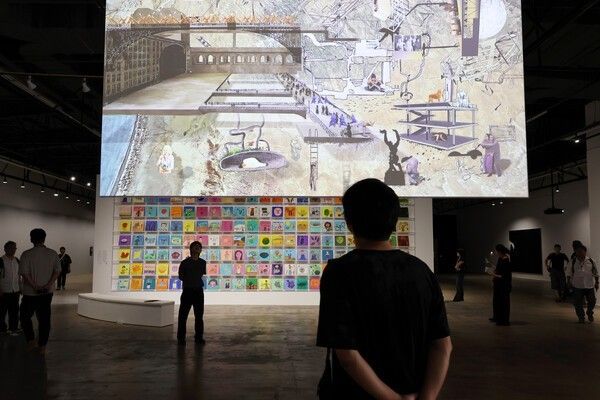
A biennale built around staying, not rushing
Large international exhibitions often overwhelm by design. Hundreds of works compete for attention, visitors move quickly from room to room, and individual practices can disappear inside the scale of the event.
Gwangju has chosen a different rhythm this year.
Artistic director Ho Tzu Nyen has reduced the number of participants and given more space to individual artists, often presenting several works rather than a single representative piece. The result is an exhibition that asks viewers to spend time with a practice rather than simply register its presence.
That difference is significant.
Seeing several works by one artist makes it possible to follow recurring materials, images and ideas. What may appear opaque in one work can become clearer beside another. Connections emerge gradually, and the exhibition rewards visitors who resist the temptation to treat a biennale as something to complete.
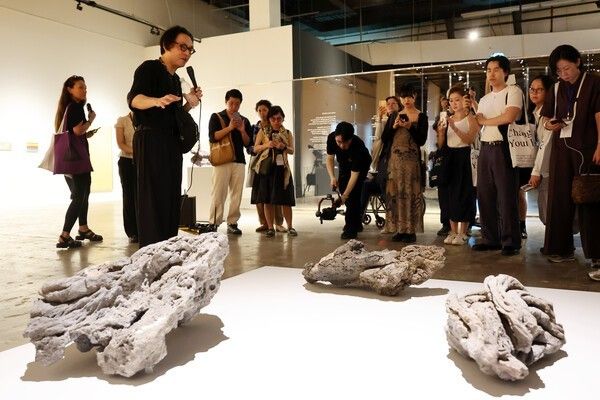
This slower structure also changes the role of the audience.
Visitors are not simply moving through a survey of current global art. They are being asked to remain with uncertainty for longer than contemporary viewing habits usually allow.
That may be the exhibition's most practical interpretation of its Rilkean title. Change does not arrive as revelation. It begins with spending enough time with something for an initial judgment to become unstable.
Human life is only one scale among many
The Biennale's scope stretches unusually far.
Works move between molecular systems, individual bodies, inherited memories, political histories and environments that exceed human lifetimes. Instead of organizing these subjects into separate thematic compartments, the exhibition lets them collide.
The effect is to make the human scale feel less secure.
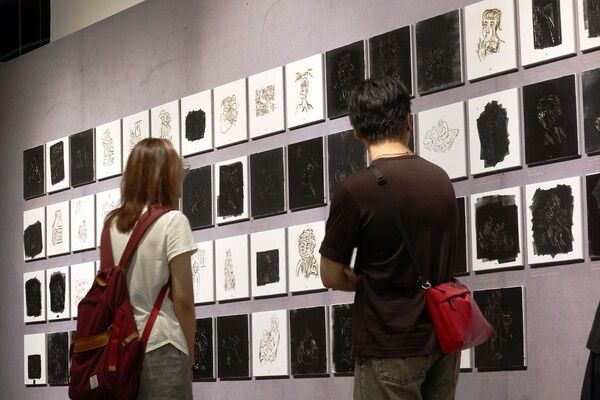
A molecule can matter as much as a monument. A private memory can carry the weight of collective history. Social structures that appear permanent can look temporary when placed beside geological or cosmic time.
This movement between scales allows the exhibition to approach familiar contemporary concerns without turning them into slogans. Ecology, violence, inequality and historical trauma are present, but often through material, sensory or spatial experiences rather than explanatory statements.
The works do not simply illustrate the problems of the present. They alter the frame through which those problems are encountered.
That distinction matters in an exhibition that places so much emphasis on perception.
The world may not change because a visitor has looked at an artwork. But the relationship between viewer and world can become less automatic.
In Gwangju, history is already inside the exhibition
No Gwangju Biennale exists independently of the city in which it takes place.
Gwangju's modern identity remains inseparable from the history of the May 18 Democratic Uprising and from wider struggles over democracy, state violence and human rights in South Korea. Since its launch in 1995, the Biennale has repeatedly drawn authority from that history while also confronting the difficulty of carrying it into new generations.
This year's edition does not turn the city into historical scenery.
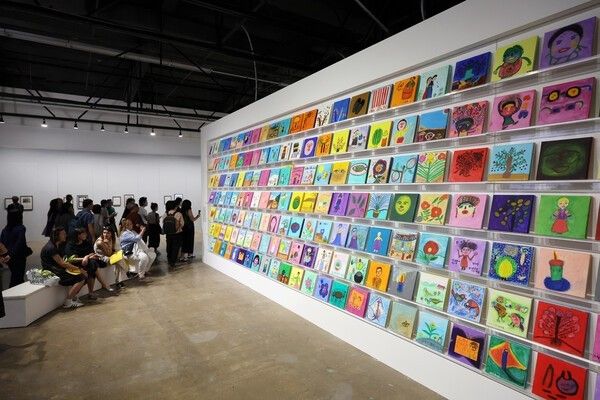
Instead, the exhibition allows local memory to sit alongside much wider questions about bodies, societies, ecosystems and time. Gwangju becomes one point within a larger field rather than a closed historical subject.
That approach keeps the Biennale from becoming commemorative in a narrow sense.
Memory here remains active because it continues to encounter new artistic languages. A history that has been told many times can still look different when placed beside unfamiliar materials, technologies, images or ways of thinking about the human.
The city's past is therefore not background context. It changes how the exhibition is read.
Rilke's command becomes an open question
"You Must Change Your Life" is a dangerous title for an exhibition because it risks promising more than art can reasonably deliver.
The Biennale largely avoids that trap.
It does not suggest that a few hours in a gallery will transform anyone, nor does it define what a changed life should look like. Its ambition is smaller and more credible: to interrupt habitual ways of seeing.
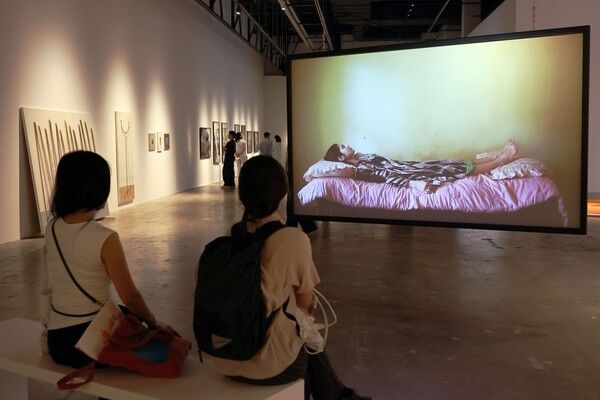
That interruption may come through scale, through unfamiliar materials, through historical memory or simply through the experience of standing before something that refuses immediate explanation.
The exhibition is strongest when it allows that uncertainty to remain unresolved.
Contemporary audiences are accustomed to receiving information quickly. Images are scanned, meanings identified and opinions formed almost instantly. This Biennale repeatedly frustrates that pace.
Its works often require a second look, and its curatorial structure gives that second look room to happen.
In that sense, Rilke's sentence changes function once it enters the exhibition. It no longer sounds like an instruction handed down to the viewer. It becomes a question directed back at them.
What would have to shift before a life could actually change?
The answer may begin with something as minor as noticing differently.
What the visitor carries outside
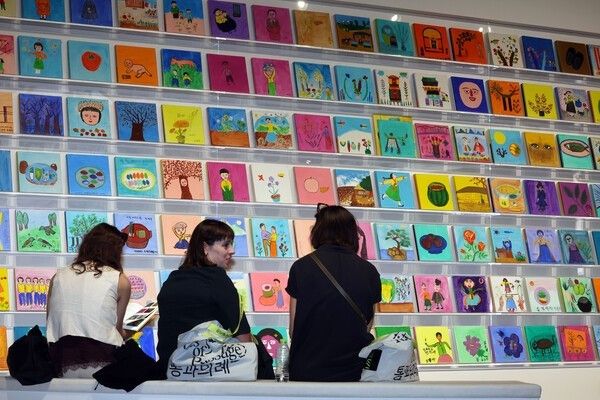
The most convincing exhibitions rarely end when the visitor leaves the venue.
Their real afterlife begins later, when an image resurfaces unexpectedly or when something ordinary acquires a new association because of what was seen in the gallery.
The 16th Gwangju Biennale is structured around that kind of delayed effect.
Its 43 participating artists and groups do not collectively deliver a single argument about humanity or the future. Instead, they create multiple shifts in scale and perspective, moving between matter, memory, history and worlds far larger than the individual.
The exhibition's achievement will therefore be difficult to measure on site.
Its title may sound monumental, but the change it proposes is almost modest: look longer, assume less, and allow the familiar to become uncertain.
If that altered attention follows visitors back into ordinary life, the Biennale will have done what its title asks without ever having to issue an order.
Reported by News Culture M.J._mj94070777@nc.press
Copyright ⓒ 뉴스컬처 무단 전재 및 재배포 금지


