[News Culture] When Woo Jang-choon stepped off a ship in Busan on March 8, 1950, he could not speak Korean. He had never lived in the country, and his wife and children remained in Japan.
Within nine years, however, the internationally renowned plant breeder would help lay the scientific foundation for South Korea’s seed industry.
Episode 34 of KBS 1TV’s “History Special – Time Traveler,” titled “Woo Jang-choon: A Life Between Worlds,” revisits the personal and national forces behind that decision. His story spans post-liberation hunger, discrimination in Japan and a troubled family legacy tied to the assassination of Empress Myeongseong.
A nation without enough food—or seeds
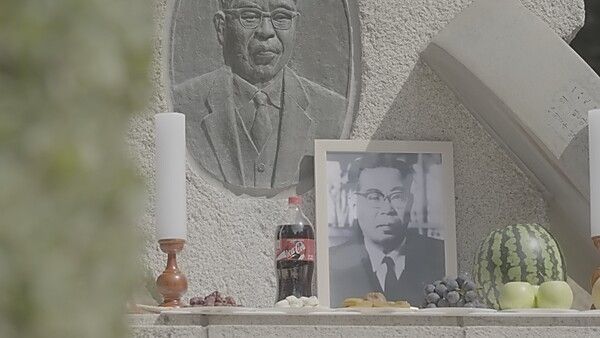
Liberation from Japanese colonial rule in 1945 did not bring immediate stability to the Korean Peninsula. Agricultural production had been disrupted, food was scarce and ordinary households struggled with rapidly rising prices.
After the U.S. military government liberalized the rice market, prices climbed roughly 12.7-fold within a year. The crisis exposed another weakness: Korean agriculture remained heavily dependent on imported seeds and foreign crop varieties.
Kim Jong-eun, then head of South Gyeongsang Province’s agricultural bureau, began searching for a scientist capable of helping the country produce its own seeds. His attention turned to Woo, who had already earned an international reputation for his work in plant genetics and breeding in Japan.
Woo accepted the invitation despite having no experience of life in Korea and no command of the language.
A Korean name shadowed by his father’s past
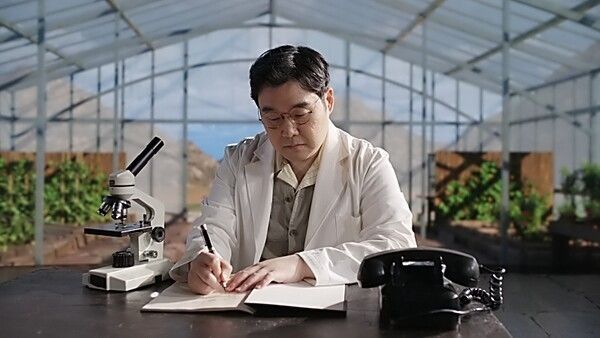
Woo was born and raised in Japan. His father, Woo Beom-seon, had been associated with pro-Japanese forces and implicated in the 1895 assassination of Empress Myeongseong before fleeing to Japan.
That history followed his son. Woo grew up carrying both the stigma of his father’s actions and the prejudice directed at Koreans in Japanese society.
He retained his Korean family name and established himself as a gifted researcher, but professional recognition did not remove the barriers surrounding his background. Despite his scientific achievements, discrimination limited his opportunities for advancement.
Woo eventually earned a doctorate for his theory on the synthesis of plant species, a major contribution to the study of plant evolution and the formation of new species. He became a scientist of international standing without ever being fully accepted by the society in which he had been raised.
The episode also draws on memories from the family he left in Japan, revealing the private cost behind his public legacy.
Nine years that reshaped Korean agriculture
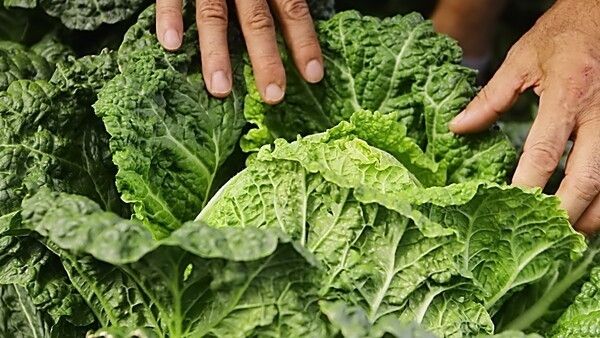
Woo arrived in Korea with an urgent assignment: develop dependable seeds suited to the country’s climate and soil.
The Korean War began only months after his arrival, but his work continued. He visited agricultural communities around the country and directed research into crops ranging from napa cabbage and potatoes to citrus fruit.
One of his most influential achievements was “Wonye No. 1,” a heading napa cabbage variety that helped farmers produce more uniform and dependable harvests. The variety also became an important starting point for the growth of Korea’s domestic vegetable-breeding industry.
Woo’s work extended beyond individual crops. He trained researchers, created a scientific base for developing local varieties and helped reduce the country’s reliance on imported seeds.
By 1955, South Korea had begun establishing the foundation for domestic seed self-sufficiency. The research infrastructure Woo built was passed on to a new generation of breeders and continued to expand after his death.
The episode connects that early work to a country that has since filed more than 14,000 applications for new plant varieties.
The homeland he chose rather than inherited
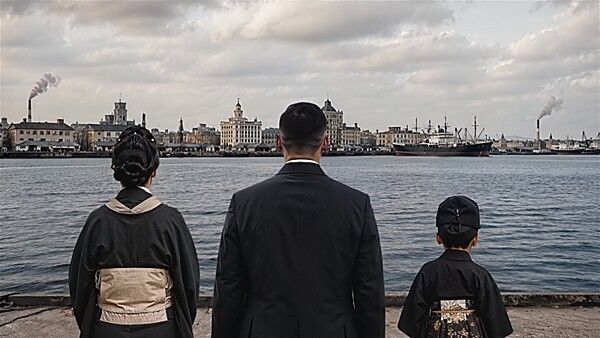
Korea was Woo’s ancestral homeland, but it was not a place he knew. He had grown up in Japan, spoke Japanese and had built both his career and family there.
His father’s past further complicated any simple idea of belonging. Yet Woo chose to leave his established life behind and direct his scientific knowledge toward Korea’s immediate struggle with hunger and agricultural dependence.
He once expressed his determination to remain in the country for the rest of his life. He kept that promise, devoting his final years to Korean agriculture and dying on the land he had chosen as home.
“History Special – Time Traveler” presents Woo’s life as more than a record of scientific achievement. It is also a story about inherited guilt, divided identity and a choice that helped transform the future of Korean farming.
The episode airs Aug. 23 at 9:30 p.m. on KBS 1TV.
Reported by News Culture M.J._mj94070777@nc.press
Copyright ⓒ 뉴스컬처 무단 전재 및 재배포 금지


