[News Culture] India’s corporate incentive travel market is beginning to redraw Korea’s inbound tourism map.
Europe and Southeast Asia have traditionally dominated overseas reward trips organized by Indian companies. Korea, however, is breaking into the mix. In September, 1,865 participants traveling with Herbalife and Birla Opus will visit Seoul, Gyeonggi and Gangwon. The significance lies not only in the size of the groups, but in the reason they are coming: Korea was selected as a company-sponsored reward destination.
The economics of incentive travel differ sharply from those of conventional tourism. Companies often cover accommodation, dining, transportation and scheduled activities for the entire group. According to the Korea Tourism Organization, or KTO, foreign incentive travelers spend an average of $2,710 per person in Korea, roughly 1.5 times the $1,801 spent by the average international visitor.
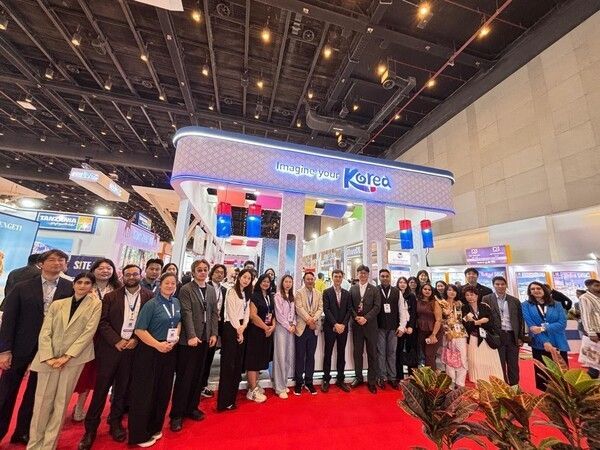
A major corporate group therefore generates far more than additional arrivals. Demand spreads across hotel rooms, banquets, restaurants, charter buses, attractions, performances and hands-on cultural programs. That broad spending footprint is what allows the MICE industry to deliver economic benefits well beyond the tourism sector itself.
The September visits illustrate that potential. About 1,400 Herbalife India participants will travel in three groups to Seoul and Gangwon between Sept. 6 and 11. Another 465 employees from Birla Opus, an Indian paint manufacturer and distributor, will visit Seoul and Gyeonggi from Sept. 1 to 7.
The Birla Opus program is particularly notable because the group expanded after Korea was selected. Initially planned for about 300 participants, the trip grew to 465 following a site inspection. The increase suggests that confidence in the itinerary and Korea’s ability to manage a large group can directly affect corporate participation.
Site inspections are a critical part of the incentive travel business. Moving hundreds—or even more than 1,000—participants at once requires more than appealing attractions. Organizers must confirm hotel capacity, travel times, dining arrangements, event venues and the feasibility of running group activities at scale.
Herbalife did not begin with Korea as its preferred destination. Georgia had been under serious consideration before a June site inspection persuaded the company to choose Korea. The decision shows that destination competition depends as much on infrastructure and operational reliability as it does on cultural appeal.
K-culture has helped bring Korea into the conversation. Interest in K-pop, television dramas and Korean food has raised the country’s profile among Indian consumers. The challenge for Korea’s MICE industry is turning that cultural curiosity into measurable corporate spending.
A country that appeals to independent travelers does not automatically work as an incentive destination. Corporate groups require hotels, venues, restaurants and transportation capable of handling large numbers simultaneously. Programs must also be broad enough to satisfy participants with different interests. Popularity alone will not move an entire company across borders.
India represents a compelling opportunity in that respect. The country is home to numerous large employers, and overseas travel is widely used as part of corporate recognition and reward programs. Europe and Southeast Asia remain established choices, but Korea’s rising visibility is giving companies another option.
Korea is already seeing repeat demand from the market. In May, 650 employees of Indian financial company HDFC visited the country. With another 1,865 Herbalife and Birla Opus participants arriving in September, Indian corporate incentive groups will have entered Korea in several major waves this year.
The KTO expects to have directly attracted or supported 4,075 Indian incentive travelers through the third quarter of 2026, up 279 percent from the same period last year. Additional midsize and large groups are scheduled for the fourth quarter, putting the annual total on course to exceed 10,000.
Those figures alone, however, do not prove that Korea has secured a lasting position in the market. Corporate incentive travel is highly competitive, and one successful visit does not guarantee repeat business. Korea must continue competing with destinations in Europe and Southeast Asia while meeting corporate expectations on price, service and execution.
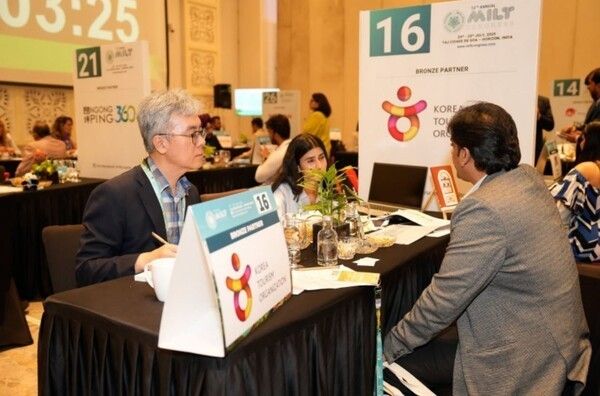
What happens after a group is secured may matter even more than the initial bid. The experience delivered in Korea can influence whether the same company returns—and whether other Indian businesses follow. Hotels, travel operators, regional tourism organizations and cultural businesses will need to work together to create programs tailored to each company rather than selling disconnected services.
Regional tourism is another test. If large incentive groups remain in Seoul, most of the economic benefit will stay concentrated in the capital. Itineraries that extend into Gangwon and Gyeonggi can channel corporate demand toward regional hotels, restaurants and attractions.
Transportation will be central to that effort. When hundreds of participants must move at the same time, long transfers can quickly undermine an otherwise attractive program. Regions hoping to compete for incentive groups need sufficient accommodation, dining, transportation and event capacity within practical travel distances.
Korea must also learn to package K-culture as a corporate travel product. Taking K-pop fans to a concert is not the same as designing an exclusive cultural experience around a company’s reward objectives. Food, traditional culture, entertainment and regional attractions must be combined into programs that participants cannot replicate elsewhere.
Companies want to offer employees a memorable reward, but they also expect the entire itinerary to run smoothly. Korea’s value as an incentive destination will therefore depend less on how many famous attractions it can include than on whether it can deliver distinctive experiences without compromising large-group logistics.
The arrival of these Indian groups points to a high-value market that could complement Korea’s broader strategy of increasing international visitor numbers. Because incentive travelers spend considerably more than ordinary tourists, a single corporate group can create a chain of demand across accommodation, dining, transportation and cultural services.
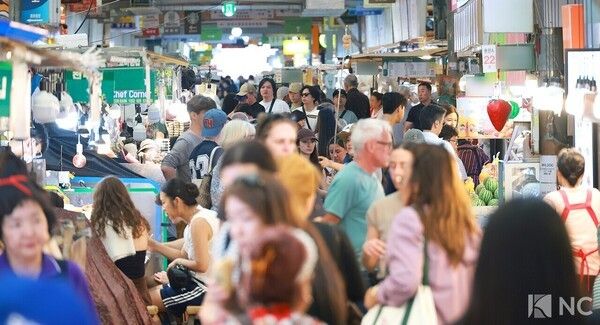
The KTO has played a role in developing that market. Its New Delhi office began discussions with Herbalife in 2024, later holding MICE presentations in India and supporting site inspections and corporate consultations. In 2027, the office is expected to become a dedicated hub for corporate meetings and incentive travel, with a local MICE roadshow also planned.
Public-sector promotion will not be enough as the market grows. The quality of the actual product will depend on private MICE operators, hotels, attractions and transportation providers. The more important goal is not simply persuading an Indian company to visit once, but ensuring Korea remains on its shortlist for the next reward trip.
The shift also shows how K-culture’s influence can move beyond consumer tourism. Cultural interest creates awareness, awareness drives travel demand, and that demand can develop into corporate incentive programs, meetings, exhibitions and events.
Korea’s MICE competitiveness will not ultimately be measured by the number of companies it attracts. The more meaningful questions are how much the groups spend, what participants take away from the experience and whether domestic businesses can convert one visit into future demand.
The 1,865 Indian corporate travelers arriving in September will provide a major test. If their visits lead to repeat programs and wider interest among Indian companies, Korea could begin moving beyond one-off group tours toward a durable, high-value corporate travel market.
Reported by News Culture M.J._mj94070777@nc.press
Copyright ⓒ 뉴스컬처 무단 전재 및 재배포 금지


