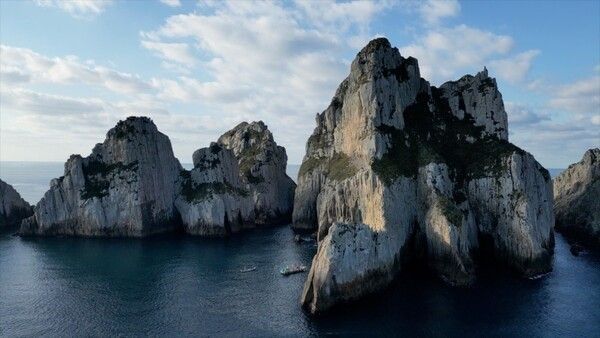
[News Culture] At Geomundo, the sea is not a backdrop. It sets the workday, feeds families, tests newcomers and binds together 10 villages scattered across one of Korea’s southernmost island communities.
Named Korea’s 2026 Island of the Year, Geomundo is the focus of a special Island Day episode of KBS1’s ‘DocuON.’ The documentary looks past the island’s blue horizons to capture the lives sustained by its fields and waters, from farmers tending mugwort in salt-laced winds to haenyeo diving for shellfish and local crews protecting fragile marine habitats.
Rather than treating Geomundo as a remote tourist escape, the program presents it as a living community shaped by work, family and an enduring partnership with the sea.
Where the Wind and Water Provide
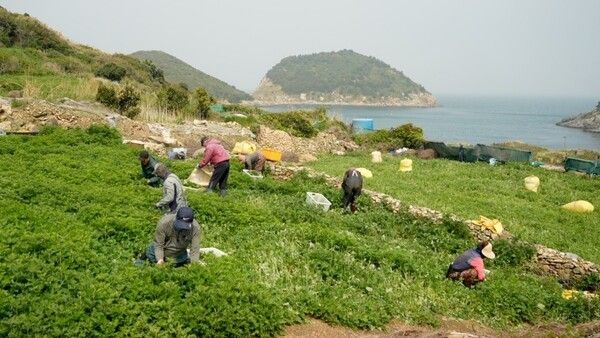
Geomundo’s weather can be unforgiving, but the same wind that batters the island also gives one of its best-known crops its character. Mugwort begins to emerge as early as February, carrying residents through a period when rough seas can bring fishing and other marine work to a halt. For local families, the crop is more than a seasonal specialty. It keeps income flowing through the quieter months and turns the island’s harsh climate into an advantage.
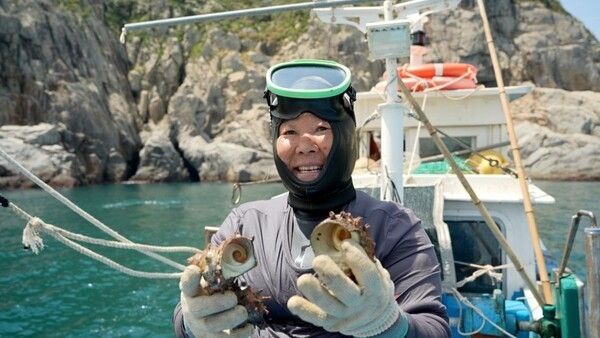
The sea offers its own harvest. Seaweed, abalone, conch and octopus have supported generations of islanders, including veteran haenyeo Lee Seong-ja. Her days still begin with the familiar rhythm of preparing her gear and entering the water, reading currents and seabed conditions through instincts built over decades.
For Lee, diving is not simply a job preserved from another era. It is a way of living within the limits of the ocean, taking what the season allows and returning home with gratitude rather than entitlement. Her story reflects a relationship shared across Geomundo, where the sea is treated not as an unlimited resource but as a member of the family whose moods and boundaries must be respected.
The Diver Who Came for the Sea and Stayed for a Family
Scuba instructor Jeong Min-gyo had explored waters around the country before Geomundo changed the direction of his life. Captivated by what he found beneath the island’s surface, he left the city behind and eventually built both a home and a family there.
His mother-in-law, Gwang-ok, calls him her “million-dollar son-in-law.” The affection is grounded in everyday partnership. They work side by side in the fields, help each other at sea and board a boat together when work calls them to Daesambudo. What began with Jeong’s fascination for an underwater landscape has grown into a bond that crosses generations.
His arrival also offers a different view of island survival. Geomundo’s future does not rest only with families who have lived there for decades. It also depends on whether newcomers can find a place within the community, take responsibility for its environment and choose to stay. Jeong’s life shows how the island can welcome new people without surrendering the character that drew them there.
Protecting the Waters That Define Korea’s Edge
Geomundo carries significance beyond its scenery and local fisheries. Together with the uninhabited island of Habaekdo, it is associated with one of the 23 reference points used to define South Korea’s territorial sea. Its surrounding waters are both an ecological habitat and part of the country’s maritime frontier.
That importance has made conservation work increasingly urgent. Sunken vessels and marine debris can remain underwater for years, damaging protected habitats and threatening the species that depend on them. Jeong and other divers join an operation near Habaekdo to remove wreckage without disturbing the marine life growing around it. The work demands patience: clearing the debris too aggressively could cause the very damage the crews are trying to prevent.
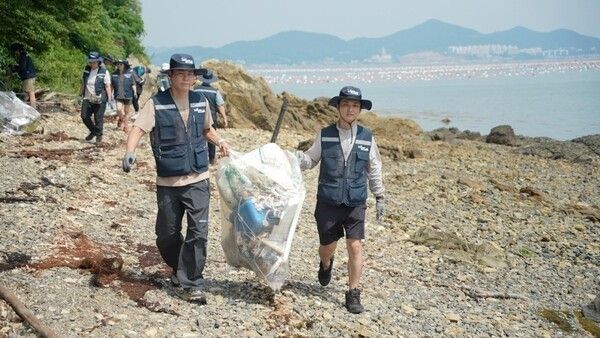
Cleanup efforts continue above water on uninhabited islands such as Daesambudo. With no permanent residents to manage waste carried in by tides, discarded fishing gear, plastic and other debris can accumulate unnoticed. The Korea Marine Environment Management Corporation conducts collection work around these islands, where protecting an empty shoreline is ultimately an investment in the health of the wider sea.
One Island, Ten Villages and a Shared Future
The people who protect Geomundo are not limited to those who live there. Ahead of the World Island Expo in September, a public expedition invited participants to spend two days on the uninhabited Kkamakseom. With few facilities and no familiar comforts, strangers quickly learned to cooperate, sharing food and responsibilities before collecting waste from the shoreline on their final day.
The experience turns an island visit into something more demanding than sightseeing. Participants leave not only with memories of an unusual night outdoors but also with a clearer understanding that remote islands cannot remain pristine without human care.
That same sense of connection is visible at the annual Samsan-myeon residents’ sports festival. Around 700 people from 10 villages come together for games, shared meals and a rare day in which neighbors separated by stretches of water gather in one place. The event is less about competition than reaffirming a community whose geography can easily pull it apart.
‘DocuON’ finds Geomundo’s greatest treasure not in any single crop, catch or landscape, but in the relationships that allow island life to continue. Farmers, haenyeo, divers, conservation workers and residents each hold one part of a delicate system in place. Their work reveals an island that is not frozen in tradition but constantly adapting while remaining rooted in the sea.
The Island Day special featuring Geomundo airs Aug. 8 at 10:15 p.m. on KBS1.
Reported by News Culture M.J._mj94070777@nc.press
Copyright ⓒ 뉴스컬처 무단 전재 및 재배포 금지


