[News Culture] The National Orchestra of Korea will open its new repertory season with five original works that push gugak orchestral music into unexpected territory, drawing inspiration from a crowded subway station, an island ritual and a mythical creature that feeds on iron.
The “2026 Composer Project,” the first production of the National Theater of Korea’s 2026–2027 repertory season, will be staged at the Daloreum Theater on Aug. 21.
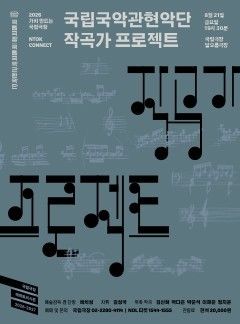
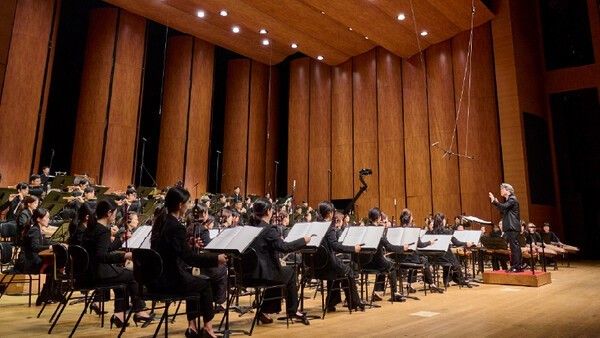
Five composers selected through an open call and workshop performance have spent the past six months refining their pieces through orchestral readings and mentoring sessions. The completed works will be performed by the National Orchestra of Korea, with conductor Kim Sung-kook guiding the audience through the program with commentary.
The 70-minute concert is divided into two parts. It opens with Lee Jae-jun’s “Sindorim Station: On the Chaos,” a witty orchestral portrait of one of Seoul’s busiest transit hubs. The work translates the station’s noise, crowds and restless motion into the distinctive textures of traditional Korean instruments.
Kim San-ha’s “Island Shade” takes its cue from the Jeju Chilmeoridang Yeongdeunggut, a shamanic ritual associated with the island’s sea communities. The piece captures the prayers of people who have long lived with the volatility of the ocean, balancing urgency with a sense of spiritual cleansing.
Park Da-eun’s “Peach Blossom Revelry” imagines immortals crossing the sea to gather for an elegant celebration. Irregular rhythms and mounting tension reshape the seemingly idyllic scene into something more unpredictable and theatrical.
The second half begins with Jung Ji-yoon’s “Interwoven Ridge,” which follows the physical and emotional course of a mountain journey. Rhythmic patterns rooted in Honam Udo Nongak drive the piece forward with exuberant energy.
Park Jun-seok closes the program with “Dream of Iron,” inspired by Bulgasari, the iron-eating monster of Korean folklore. Weighty, cinematic passages evoke the moment when metal hidden deep in the mountains begins to stir, take shape and awaken with a life of its own.
Together, the five works reveal how a new generation of composers is expanding the narrative range of gugak orchestra. Rush-hour congestion, Jeju ritual music, celestial festivities, mountain paths and ancient monsters all become material for contemporary orchestral storytelling.
News Culture M.J._mj94070777@nc.press
Copyright ⓒ 뉴스컬처 무단 전재 및 재배포 금지


