[News Culture] A major experiment is taking shape to turn K-pop’s massive global reach into lasting momentum for Korea’s popular culture industry.
The Presidential Committee on Popular Culture Exchange has unveiled an ambitious blueprint for the FANomenon Awards, aiming to draw 520,000 people over 11 days and generate an economic impact of around ₩1 trillion.
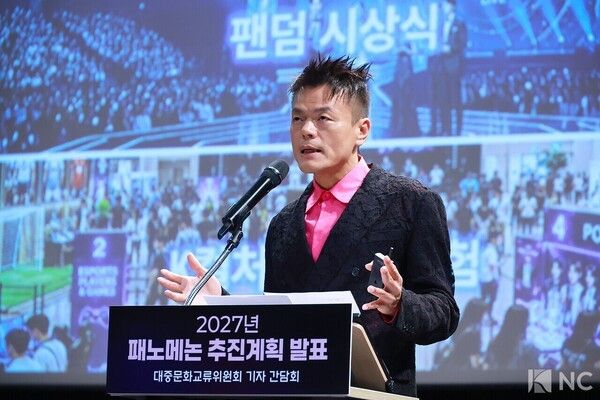
The unprecedented public-private project, developed with direct participation from Korea’s four major entertainment companies, carries clear potential to strengthen Korea’s position in the global cultural market.
At the same time, the scale of the project brings several questions that will shape its long-term success: how FANomenon can distinguish itself from existing awards shows, how it can create a sustainable funding and compensation structure, and how it can build confidence in the data behind its results.
Differentiation and data fairness, in particular, are closely linked. The more FANomenon seeks to establish its own identity, the more carefully its evaluation system will need to be designed and verified.
Broader fandom data is a start…now comes the question of distinction
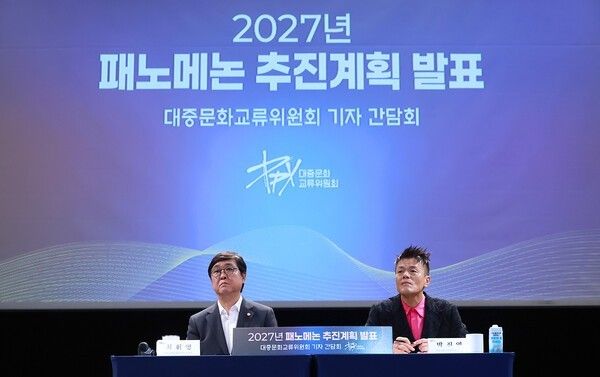
One of the most notable elements of the plan is its decision to make fandom activity data a core part of the evaluation process.
Expanding the scope beyond popularity voting on a single platform marks a meaningful step. Park highlighted that direction by saying fans should no longer remain simply consumers, but take part more like partners.
K-pop fandom has already grown into an active force that helps create cultural and commercial value. Recognizing that role and building a framework that encourages voluntary participation could become an important foundation for FANomenon’s long-term growth.
The next question is how to make that wider pool of data meaningfully different from the global voting and streaming formulas already used by many awards shows.
That is where major international awards systems offer useful reference points.
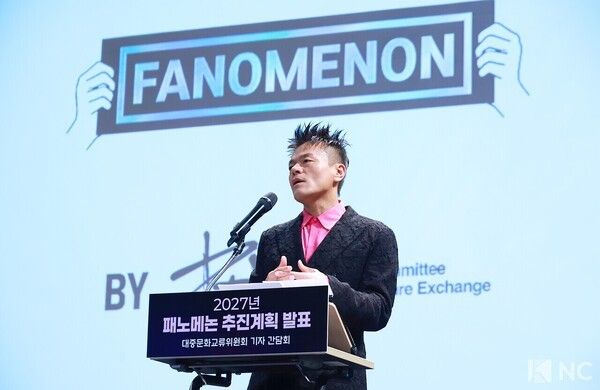
The strongly data-driven Billboard Music Awards could provide a quantitative foundation, while the MTV Video Music Awards offer a model that combines fan participation with professional assessment.
The Grammy Awards, meanwhile, show how genre-based expert evaluation can give greater weight to musical narrative, artistic context and broader social meaning.
A carefully balanced combination of those approaches could give FANomenon a clearer identity of its own, rather than leaving it as another variation on fandom voting and streaming performance.
The launch structure also raises the question of how participation can expand beyond the four major entertainment companies.
Measures such as weighting growth in new fandom or creating dedicated categories for smaller agencies could help widen opportunities and prevent the event from becoming too concentrated around established players.
Park has made clear that broader participation remains part of the long-term vision.
“I took on this role with a sense of mission,” he said. “The four major agencies may draw attention at first, but ultimately I hope this will help bring other fields and smaller agencies into the conversation as well.”
Turning that direction into a concrete action plan will be one of the next important steps.
Funding the ₩1 trillion vision while keeping artists and fans on board
Building an event on a global scale also requires a sustainable financial structure.
A project targeting economic impact of around ₩1 trillion will naturally rely on major sponsorships and ticket revenue. At the same time, FANomenon is a public-private initiative, meaning commercial growth will need to remain balanced with public value.
The operating model of Lollapalooza offers one possible reference.
The Chicago-based festival generates an estimated $480 million in annual economic impact while also returning value to the local community through initiatives including education-related investment.
A similar hybrid structure could allow public funding to support FANomenon’s public-interest role while private capital provides the scale needed for expansion.
Sponsorships and ticket sales could be complemented by premium packages such as backstage access, along with digital revenue streams that carry relatively low marginal costs.
Fan participation will also be central to that balance.
If fandom is viewed only through ticket and merchandise spending, the relationship risks becoming too one-sided. Membership-based free content, community benefits, special artist messages and online event access could offer non-monetary value and create a broader incentive to participate.
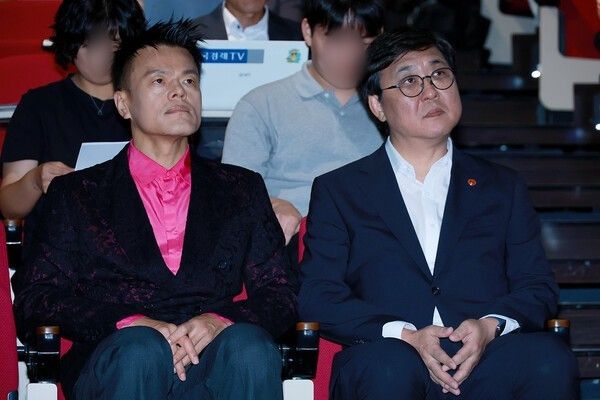
That kind of hybrid funding model is also broadly in line with the organizers’ own thinking.
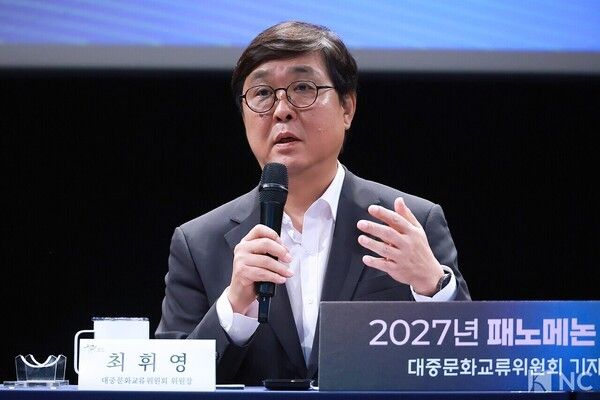
Choi said the event would be structured so that revenue from sponsorships and ticket sales could circulate back into the project.
Park added that private companies are more likely to participate actively when there is a clear prospect of returns, while government funding can help ensure that the public-interest purpose of the event remains intact.
The year-end schedule creates another important consideration.
December is a peak touring period for top artists, and taking part in FANomenon could mean giving up highly profitable arena or dome-tour dates.
Choi acknowledged the issue, noting that the relatively limited capacity of Seoul Arena could mean artists face some trade-off in potential revenue.
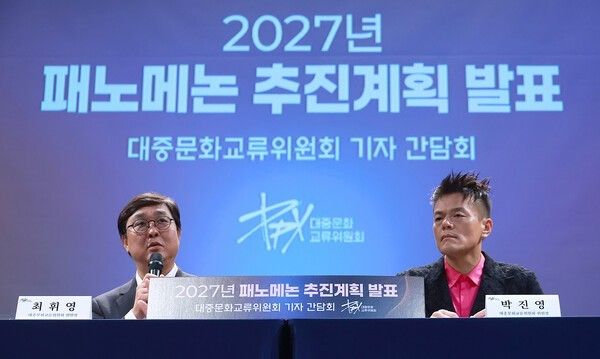
That makes the value of participation especially important.
A useful reference is the so-called “Coachella effect,” where a major festival appearance can lead to greater global exposure, increased streaming and stronger touring demand.
FANomenon could aim for a similar structure by combining appearance fees with global promotion and other longer-term benefits.
Park described that as part of the project’s ambition.
“If the event can build the kind of authority that Lollapalooza or Coachella has, top artists will naturally want to participate,” he said. “The goal is to make this an event artists themselves want to join.”
Data credibility could become FANomenon’s strongest foundation
The final piece is a transparent and credible evaluation system.
The Billboard Music Awards have built much of their authority around measurable market data, creating a clear connection between performance and recognition.
FANomenon will need to establish a similarly trusted framework of its own.
A multi-layer data matrix could combine activity on core fandom communities such as Weverse, global social-media buzz on platforms including TikTok, and actual purchasing data.
The broader the dataset becomes, however, the more important verification will be.
External review capable of filtering out bot activity, coordinated manipulation and other forms of abuse would help ensure that the results remain credible to artists, agencies and fans alike.
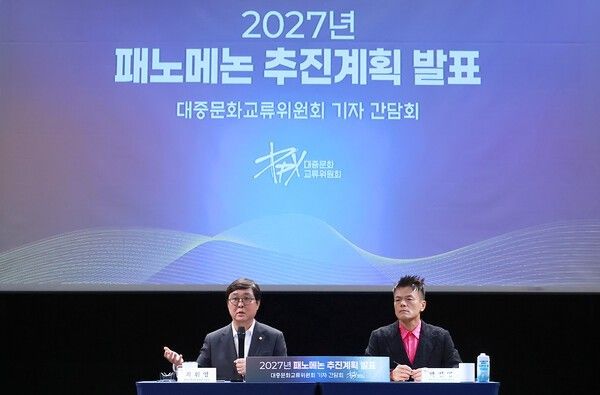
Park has also emphasized the importance of reliable data.
“We plan to select several companies through a bidding process to secure accurate data,” he said. “The first goal is to build the authority and credibility of the awards.”
A carefully verified data system could become the foundation that connects FANomenon’s different ambitions—from differentiation and broader participation to artist engagement and market confidence.
The projected ₩1 trillion economic impact is therefore more than a headline number.
Its realization will depend on whether FANomenon can build a structure that the market sees as fair, distinctive and sustainable.
Park also stressed the need for a long-term view.
“If we only calculate the profit and loss for next year or the year after, it might make more sense not to do it,” he said. “But this is a festival with the potential to lead the world, so even if it does not establish itself immediately, I believe it is still worth pursuing.”
FANomenon now has the scale and ambition to become a major new platform for K-pop and the wider cultural industry. The next phase will be about turning that vision into a system that can sustain participation, trust and growth over time.
The FANomenon Awards, the first K-pop event led by the Presidential Committee on Popular Culture Exchange, is scheduled to begin with a pre-event on Dec. 2, 2027, and run through Dec. 12.
Events will take place at Seoul Arena in Chang-dong, scheduled for completion in May 2027, and around KINTEX Exhibition Center 2 in Ilsan.
Reported by News Culture M.J._mj94070777@nc.press
Copyright ⓒ 뉴스컬처 무단 전재 및 재배포 금지


