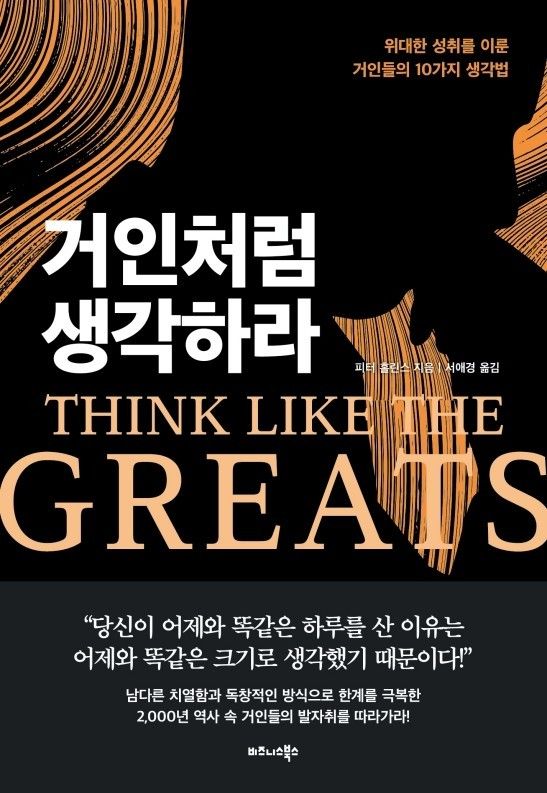
[News Culture] A new practical guide makes the case that extraordinary achievement has less to do with inborn genius than with how people think when circumstances turn difficult.
Peter Hollins’ new book Think Like the Greats examines the mental habits of 10 towering figures in history, from Marcus Aurelius to Marie Curie. Rather than presenting greatness as the product of exceptional talent, Hollins looks at the ways these figures handled setbacks, uncertainty and relentless pressure—and asks what those habits can offer people facing everyday limits of their own.
Marcus Aurelius lived through war and political turmoil, while Michelangelo spent four years working high above the ground on scaffolding. Hollins strips away the mythology surrounding such figures and focuses instead on the thinking that carried them through demanding circumstances. Marie Curie answered skepticism with results. Hippocrates resisted premature conclusions and relied on evidence. Leonardo da Vinci found new possibilities by connecting disciplines that appeared to have little in common.
The book then brings those approaches into the present. A medical student frustrated by difficult circumstances adopts an Aristotelian approach to learning and begins taking greater control of the process. An office worker convinced that ADHD is behind persistent concentration problems keeps detailed records in the manner of Herodotus for six months, only to discover that an irregular daily routine is the more immediate cause. A negotiator who has reached an impasse borrows from Mozart’s way of thinking, creating enough mental distance to regain perspective and find room for compromise.
The argument running through Think Like the Greats is that excellence is built rather than inherited. History’s celebrated masters were hardly immune to doubt or repeated failure. What separated them, Hollins suggests, was often a seemingly small shift in perspective at the moment when circumstances became most difficult.
No one begins life as a historical giant. Greatness takes shape through repeated choices about how to interpret a problem and what to do next. By changing the frame through which an obstacle is viewed, the book argues, the same barrier that once stopped progress can become something to build on. For readers looking to break with familiar habits and find a different route forward, Think Like the Greats offers a set of thinking tools drawn from some of history’s most enduring minds.
Reported by News Culture M.J._mj94070777@nc.press
Copyright ⓒ 뉴스컬처 무단 전재 및 재배포 금지


