[News Culture] Korea’s southwestern tidal flats have once again gained international recognition for their ecological value.
The UNESCO World Heritage Committee approved the second-phase expansion of Getbol, Korean Tidal Flats during its 48th session at BEXCO in Busan.
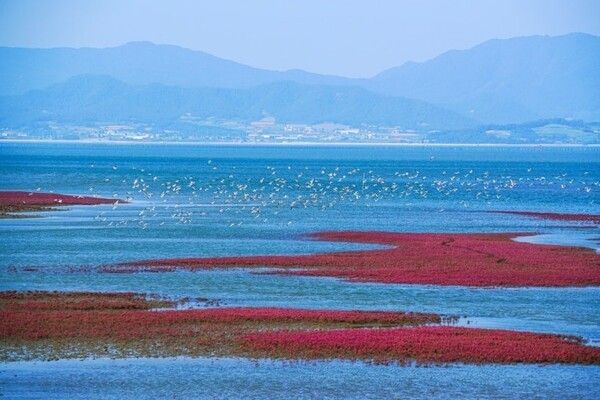
The latest decision brings tidal flats in Seosan, South Chungcheong Province, and Yeosu, Goheung and Muan in South Jeolla Province into the UNESCO-listed property. It marks the first expansion since the tidal flats of Seocheon, Gochang, Shinan and Boseong-Suncheon were initially inscribed in 2021.
The World Heritage Committee recognized the Korean tidal flats as meeting international standards for biodiversity conservation. It placed particular emphasis on their role in the Yellow Sea ecosystem and along the East Asian-Australasian Flyway.
Millions of waterbirds visit the tidal flats each year, while a wide range of marine species share the same coastal ecosystem, underscoring the area’s importance as a major reservoir of biodiversity.
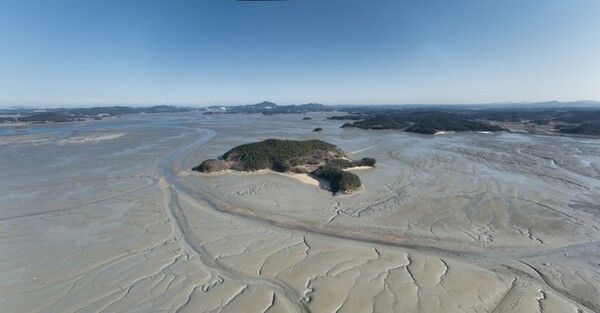
Seosan is regarded as an important northern habitat for spotted seals and is also home to rare birds including black-faced spoonbills and Chinese egrets.
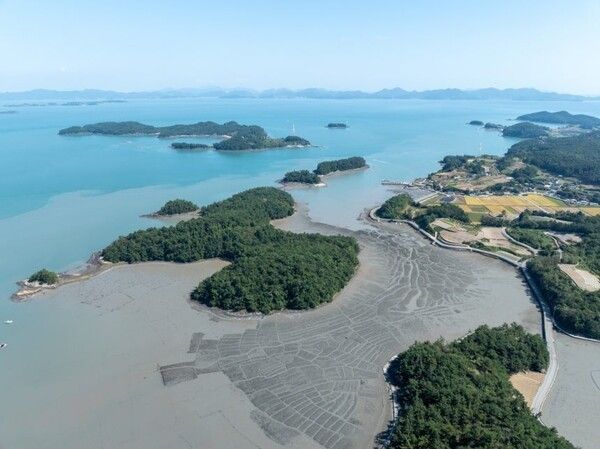
Yeosu supports diverse crab species, including endangered wildlife, while Goheung has a complex tidal-flat ecosystem inhabited by more than 700 species. Muan’s Tando Bay and Hamhaeman tidal flats are also considered important habitats for internationally protected migratory birds.
Following the expansion, Getbol, Korean Tidal Flats now comprises six areas: Boseong-Suncheon-Yeosu-Goheung, Shinan-Muan Tando Bay, Muan Hamhaeman, Gochang, Seocheon and Seosan.
The World Heritage property covers approximately 27,975 hectares, with an additional buffer zone of about 24,795 hectares.
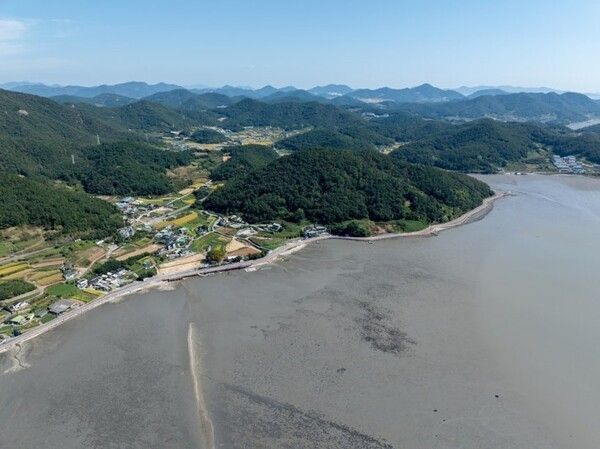
Tidal flats in Incheon and Gyeonggi Province, however, were not included in the latest expansion.
Civic groups have called for a third-phase expansion to include additional areas, while the International Union for Conservation of Nature, UNESCO’s advisory body on natural heritage, has also recommended considering further candidate sites.
The Korean government plans to build on the latest designation by strengthening international cooperation. The Korea Heritage Service said it expects the expansion to broaden cooperation on protecting migratory bird routes and conserving coastal ecosystems across the Yellow Sea.
With the latest addition, Korea now has 17 UNESCO World Heritage properties. Getbol, Korean Tidal Flats is the country’s second natural World Heritage property after Jeju Volcanic Island and Lava Tubes.
Korea is also set to pursue another World Heritage inscription next year for a group of historic capital defense sites, including Seoul’s fortress heritage.
Reported by News Culture M.J._mj94070777@nc.press
Copyright ⓒ 뉴스컬처 무단 전재 및 재배포 금지


