[News Culture] There is a particular kind of loneliness that arrives before a move. The destination has been decided, the ticket booked, yet everyday life continues for a little longer in rooms that will soon belong to someone else.
"Those Who Leave Buy Flowers," directed by Nam So-hyun, stays inside that uneasy interval.
After seven years in Berlin, Eun-ha is preparing to return to Korea. Her immediate problem is painfully ordinary: she has to fit what she is taking home into the airline's 23-kilogram baggage allowance. Clothes, household objects and the small possessions accumulated over years must be sorted, weighed and, in many cases, left behind.
Nam turns that practical task into the heart of the film. Packing is never simply packing. Each object carries evidence of a life that is ending, and every discarded possession makes Eun-ha's departure a little more real.
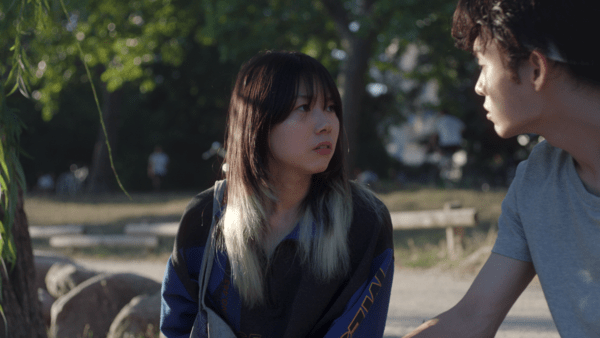
The film understands that leaving a city after seven years is not a single goodbye. It happens gradually—in emptied shelves, familiar objects passed over for the last time and routines performed with the knowledge that they will not be repeated.
This is where "Those Who Leave Buy Flowers" finds its emotional power. There is no dramatic rupture driving Eun-ha toward the airport. Nam is more interested in the almost invisible changes that occur when an ordinary place begins turning into a memory.
Berlin is essential to that approach. The film avoids the landmarks and cosmopolitan glamour that so often define the city on screen. Eun-ha's Berlin consists instead of apartments, streets, tables, windows and the mundane geography of daily life.
It is no longer an exciting foreign city. It is simply where she has lived.
And that makes leaving complicated.
Seven years is long enough for a temporary home to become something more permanent, but not necessarily long enough to erase the feeling of being an outsider. Eun-ha occupies that uncomfortable space between attachment and belonging. Berlin has become part of her life without ever becoming entirely hers.
Nam does not spell out that contradiction. Her camera observes rather than interprets. Conversations remain understated, silences are allowed to stretch, and emotions emerge through gestures and expressions rather than explanatory dialogue.
The restraint gives Jung Jae-won's performance room to work. Her Eun-ha does not announce her sadness. Exhaustion, uncertainty and attachment appear in small shifts of expression and in the way she handles the objects around her.
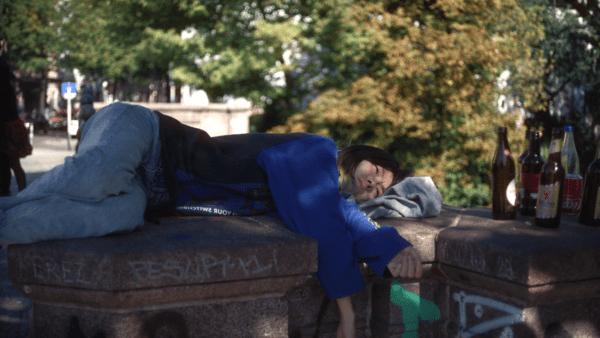
The 23-kilogram limit eventually becomes less important as a number than as a boundary. Eun-ha can decide which belongings will travel with her, but she cannot organize seven years of experience with the same precision.
That distinction keeps the film away from easy sentimentality. Objects can be thrown away. A former life cannot.
"Those Who Leave Buy Flowers" is especially perceptive about the experience of a generation accustomed to crossing borders. Studying abroad, working holidays, overseas jobs and migration have made international mobility an ordinary part of many young adults' lives. Yet the ability to move freely does not guarantee the ability to feel at home.
The film is interested in what happens after the excitement of departure has worn off: friendships stretched across countries, routines rebuilt in unfamiliar languages and the persistent question of where one's life actually belongs.
Eun-ha's return to Korea offers no simple answer.
Homecoming is often imagined as a restoration—a return to the place where uncertainty ends. Nam rejects that comforting narrative. Seven years abroad have changed Eun-ha, just as the place she is returning to has continued without her.
Going home, in that sense, can involve another kind of displacement.
The film's social dimension grows naturally from this personal story. Contemporary life celebrates mobility as opportunity: go farther, gain experience, become more competitive, build a life beyond national borders. Much less attention is paid to the emotional consequences of repeatedly uprooting oneself.
"Those Who Leave Buy Flowers" never turns that observation into a manifesto. It does something more effective. It watches one woman clean out a room.
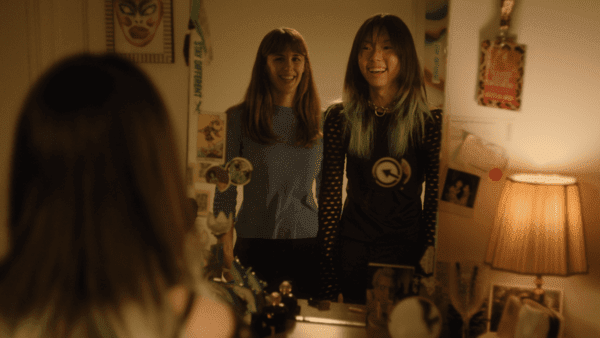
There is also an intriguing reversal in the film's attention to possessions. Contemporary culture is largely organized around acquiring things, while Nam devotes much of her film to deciding what can disappear.
The process is neither a celebration of minimalism nor a rejection of material life. Eun-ha's belongings matter precisely because they have been lived with. Throwing them away means acknowledging that a particular period of her life has reached its end.
Jung carries that tension with remarkable restraint. Im Kkot-shin, Alba Guilela Ranz and Moon Jung-won work within the same naturalistic register, allowing conversations and encounters to retain the slightly uneven rhythm of everyday life.
The visual language is equally unforced. Berlin is neither romanticized nor deliberately drained of warmth. Interiors and streets are allowed to exist without demanding attention, while the camera remains sensitive to the emotional distance opening around Eun-ha. The film's recognition for cinematography at the Mise-en-scène Short Film Festival feels particularly fitting given how much of its storytelling is entrusted to observation rather than dialogue.
Nam has explored similar questions before. Her earlier work "Growing Stateless Bulbs in Seoul and Berlin" also examined borders, identity and lives suspended between places. Here, those concerns feel more intimate and assured.
Rather than asking where Eun-ha belongs, "Those Who Leave Buy Flowers" allows a more difficult possibility to emerge: perhaps belonging does not always resolve itself into a single place.
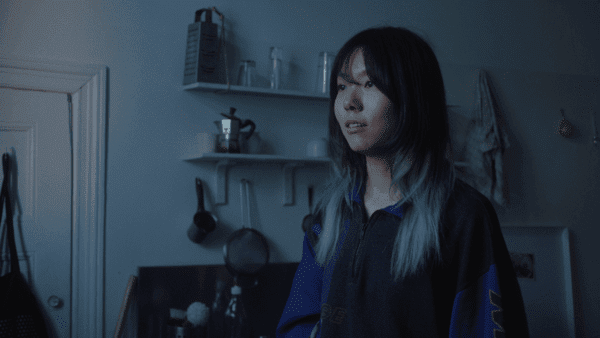
That idea gives the film resonance well beyond people who have lived abroad. Most lives eventually contain a room that must be emptied, a place that must be left or a collection of things that can no longer follow us.
The details are personal. The experience is not.
"Those Who Leave Buy Flowers" understands that departures rarely feel as decisive as they look from the outside. There may be a final flight, a final box and a final glance at an empty room, but the life attached to a place does not end on schedule.
Nam So-hyun leaves Eun-ha—and the audience—in that unresolved space. The suitcase can be closed. Seven years cannot.
Reported by News Culture M.J._mj94070777@nc.press
Copyright ⓒ 뉴스컬처 무단 전재 및 재배포 금지


