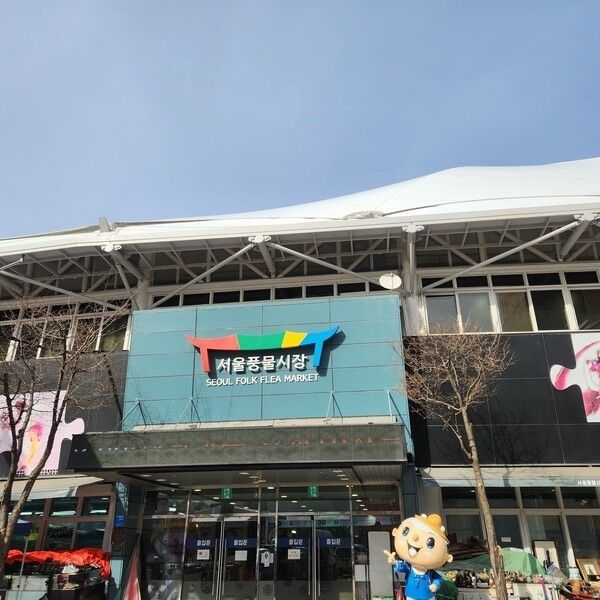
[NewsCulture] Tucked among the high-rises of Sinseol-dong in Dongdaemun-gu, Seoul, the Seoul Folk Flea Market offers a shopping experience far removed from the capital’s sleek malls and department stores.
The market specializes in secondhand goods and objects that carry traces of Korea’s recent past. Over the years, markets in this lineage have been known by various nicknames, including “everything market,” “flea market” and “last market” — names that reflect the everyday lives and economic struggles of ordinary Koreans.
The Seoul Folk Flea Market now occupies a two-story indoor complex built on the former site of Sungin Girls’ Middle School. Its merchants arrived here after a long journey shaped by the Cheonggyecheon restoration project, a temporary relocation to Dongdaemun Stadium and yet another move when the stadium site was redeveloped.
Today, antiques, vintage clothing, discontinued electronics and all manner of curiosities fill its stalls. The once-scattered world of outdoor vendors has found a permanent home indoors, where visitors can browse without worrying about rain, wind or summer heat.
For those drawn to the analog era, the market is a treasure hunt in the heart of Seoul. Objects discarded by one generation wait to be rediscovered by another, making the market a vast archive of everyday Korean life.
A ‘Goblin Market’ Born from Postwar Survival
The roots of this market culture stretch back to the years immediately following the Korean War.
People who had lost their homes built makeshift shacks near Cheonggyecheon, settling on fields once used to grow minari, or water parsley. The surrounding area was already a bustling commercial hub, with firewood arriving from Ttukseom and cabbages from Wangsimni. For displaced families struggling to survive, setting up a street stall offered a way to make a living.
Military surplus that had found its way out of U.S. bases was traded alongside scrap metal and used goods collected from across the country. The market would be packed with people during the day, only for merchants to disappear when night fell.
Their seemingly sudden comings and goings inspired the nickname “dokkaebi sijang,” or “goblin market,” after the elusive creatures of Korean folklore.
Few things were considered beyond saving. A broken watch could tick again in the hands of a skilled repairman. A dented pot could return to the kitchen, while worn-out shoes could be patched up for another round of use.
That ability to give discarded objects a second life became part of the market’s identity. Merchants built livelihoods out of what others had thrown away, creating a place where survival, ingenuity and commerce came together amid the hardship of postwar Seoul.
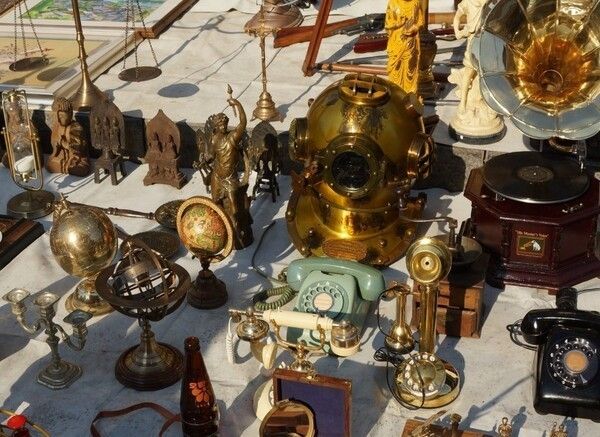
The Golden Age of Seoul’s Antique Trade
South Korea’s rapid modernization in the 1960s and 1970s unexpectedly opened a new chapter for the antique trade.
As rural communities were transformed under the Saemaul Undong movement and traditional thatched-roof homes disappeared, old wooden furniture, ceramics and rare books began flowing into secondhand markets.
Collectors traveled through villages across the country in search of forgotten objects. Some items bought cheaply from old homes later turned out to possess considerable cultural or historical value.
Dealers, collectors and middlemen converged on Hwanghak-dong, turning its alleys into a thriving center of the antique trade. At its peak, more than 130 shops specializing in rare antiques operated in the area.
The boom was not without controversy. Concerns over counterfeit artifacts prompted merchants to police their own trade in an effort to restore confidence. Shop owners watched the market closely, aware that its reputation depended on trust.
Hwanghak-dong eventually became known as a place where valuable objects from around the country could unexpectedly resurface. Antiques forgotten in attics and storerooms returned to circulation, while veteran dealers developed a discerning eye for objects whose true worth was hidden beneath years of dust.
Their ability to recognize value where others saw only age and wear became one of the forces sustaining the market.
Merchants on the Move as Seoul Remade Itself
The boom did not last forever.
As Seoul prepared for major international events in the 1980s, including the Asian Games and the Olympics, sweeping urban redevelopment reshaped the city. Many antique merchants operating in Hwanghak-dong were relocated to the Janghanpyeong area as authorities sought to reorganize street commerce and improve the urban landscape.
Secondhand appliance dealers and repair shops gradually filled parts of the commercial district left behind.
Then came the Asian financial crisis in the late 1990s. As unemployment surged, people who had lost their jobs took to the streets to sell goods and earn a living.
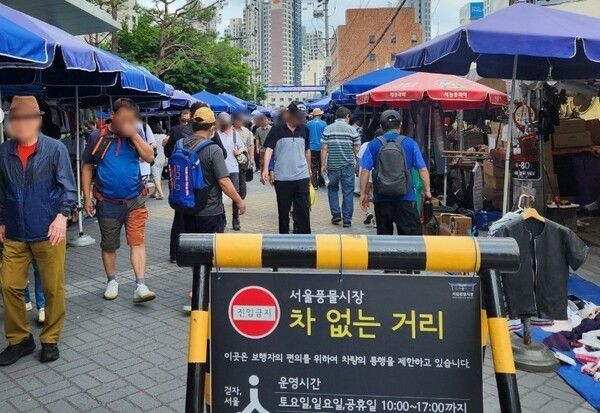
The four-lane road around the former Samil Citizen Apartments became crowded with street vendors trying to make ends meet.
Another major upheaval followed with the Cheonggyecheon restoration project, which began in 2003.
Merchants displaced from their trading grounds were moved to the football field at Dongdaemun Stadium, where they continued doing business from temporary tents. That chapter was also short-lived.
When redevelopment plans for the stadium site moved ahead, the merchants packed up once again and eventually relocated to the former Sungin Girls’ Middle School site, where the Seoul Folk Flea Market stands today.
For these vendors, packing, moving and rebuilding became a recurring part of life.
Their story runs parallel to Seoul’s own transformation. Behind the city’s rapid redevelopment lies the history of merchants repeatedly pushed from one place to another, yet determined each time to rebuild their livelihoods.
A Global Hotspot Where Bargaining Starts with a Translation App
After decades of upheaval, the Seoul Folk Flea Market is entering a new era.
International visitors now roam its aisles in search of hard-to-find pop LPs, vintage leather jackets and manual film cameras. Smartphones double as translators as tourists try their hand at bargaining in Korean, while merchants bridge the language gap with smiles, gestures and a few shared words.
The growing international appetite for Korean vintage culture has brought fresh energy to corners of the market once frequented mainly by local collectors.
For overseas travelers, the attraction goes beyond shopping. The market offers a tangible encounter with Korea’s modern history through objects that were once used, repaired, discarded and ultimately preserved.
The appeal of analog nostalgia crosses borders. Travelers looking beyond luxury boutiques and department stores come here for the thrill of digging through crowded stalls and finding something they may never see again.
Objects carrying the texture of 1970s Korea are taking on a new life as cultural artifacts. Old cassette tapes, vintage electronics and the mechanical click of a film camera now captivate younger international visitors.
Foreign travelers hunting for their own piece of Korea’s retro past have become an increasingly familiar sight in Sinseol-dong.
Retro Seoul Comes Alive in Youth Alley
On the second floor, the market’s themed Youth Alley invites visitors to travel back in time.
Designed to evoke the streets of Seoul in the 1960s, the zone recreates scenes from another era, including an old fabric shop, barbershop and black-and-white photo studio. Inside a retro-style dabang, or Korean coffeehouse, songs from decades past evoke the atmosphere of a city that has largely disappeared.
Food adds another dimension to the experience.
The market’s dining area serves up an assortment of affordable dishes and snacks, from crispy fried meat to steaming bowls of ox-head soup and hotteok sizzling on the griddle. The aromas offer visitors an irresistible excuse to rest their legs after exploring the densely packed stalls.
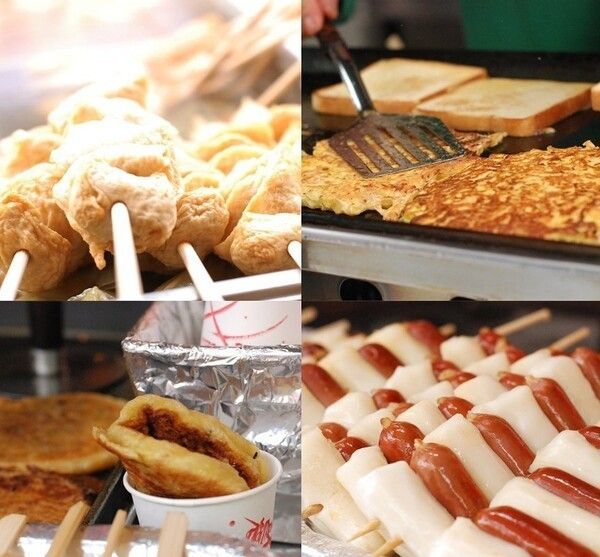
A visit can also be paired with a walk to the nearby Yongdu-dong webfoot octopus restaurant district, creating a half-day itinerary that combines vintage shopping with one of the neighborhood’s best-known local food experiences.
The Seoul Folk Flea Market has evolved far beyond a place where secondhand goods change hands. Today, it serves as a living archive of Korea’s modern history, shaped not by museum display cases but by the objects and people that endured decades of upheaval.
Generations of merchants built this market by salvaging what others discarded, repairing what appeared beyond saving and recognizing value where others saw none.
Now, as international visitors arrive in search of K-retro, those once-forgotten objects are finding yet another life.
Reported by News Culture M.J._mj94070777@nc.press
Copyright ⓒ 뉴스컬처 무단 전재 및 재배포 금지


