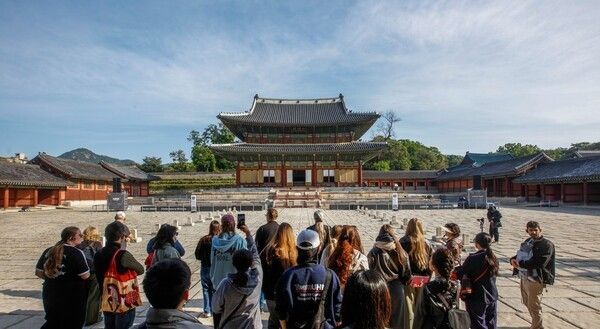
What began as a simple change in terminology is rapidly becoming a fundamental shift in national policy.
Just over two years after South Korea replaced the term "cultural property" with "national heritage," the government has unveiled its first comprehensive long-term roadmap built around the new concept. Rather than treating heritage solely as something to preserve, the 2026–2030 Master Plan for Cultural Heritage positions it as a strategic asset capable of supporting tourism, regional development, digital innovation and the creative economy.
The blueprint offers the clearest indication yet of where Korean heritage policy is heading over the next five years—and signals the arrival of what officials increasingly describe as the K-Heritage era.
From protecting monuments to creating public value
One of the plan's most significant changes is its underlying philosophy.
For decades, heritage policy focused primarily on conservation and preventing damage to historic sites and artifacts. The new strategy expands that mission, recognizing heritage as a public resource that can generate cultural, educational and economic value while remaining carefully protected.
It is also the first mid- to long-term policy framework established since South Korea formally adopted the National Heritage system in 2024, replacing the long-used Cultural Property framework with terminology that aligns more closely with the internationally recognized concept of heritage.
That change reflects more than language. It broadens policy beyond preservation to include management, public participation, regional revitalization and industrial development.
The shift also responds to new challenges. Artificial intelligence and digital technologies are transforming how heritage is documented and restored, while climate change is increasing threats from wildfires, heavy rainfall and extreme weather. At the same time, population decline and regional depopulation are making it increasingly difficult to maintain historic sites using conventional management systems alone.
Rather than treating preservation and utilization as separate objectives, the government now seeks to integrate them into a single policy framework—combining digital documentation, AI-based management, tourism development and cultural content production.
Sustainability becomes the next challenge
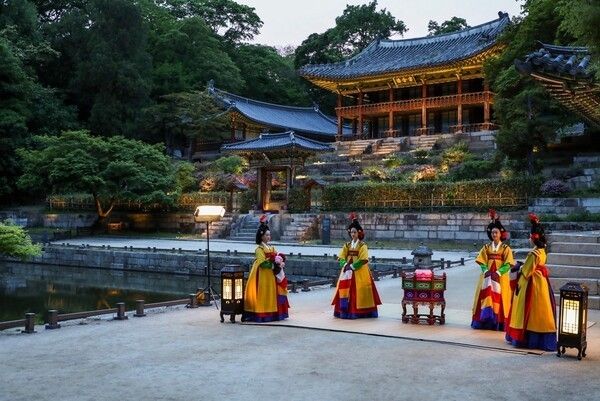
Protecting heritage is becoming increasingly complex as the environment surrounding it changes.
The master plan identifies climate change as one of the most pressing risks facing Korea's historic assets. More frequent wildfires, floods, earthquakes and other natural disasters have exposed the limitations of a management system that has traditionally focused on post-disaster restoration rather than prevention.
Regional depopulation presents another growing concern. As rural communities shrink and populations age, many historic houses, traditional villages and cultural landscapes face a shortage of caretakers, increasing the risk of neglect. In this context, heritage conservation is no longer viewed solely as protecting physical structures, but also as sustaining the communities that give them meaning.
To address these challenges, the Korea Heritage Service plans to broaden its management framework beyond officially designated properties.
Resources that have not yet received formal designation but possess historical or cultural significance will also be identified, documented and systematically managed. The approach marks a notable departure from previous policy, under which government support largely depended on official designation status.
By expanding the scope of what qualifies for protection, the government hopes to build a more comprehensive and resilient national heritage system.
Can heritage become a new growth industry?
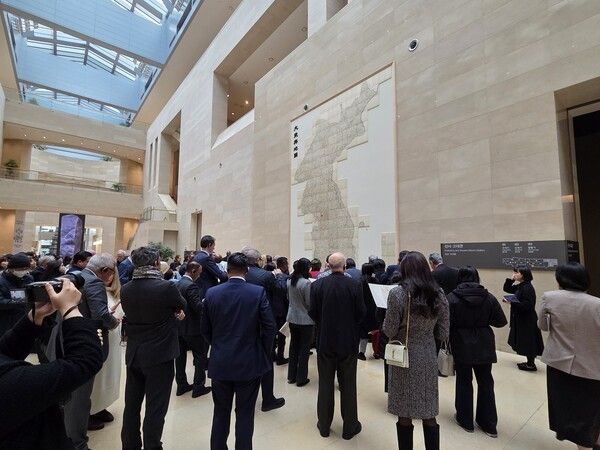
Perhaps the boldest element of the new roadmap is its economic vision.
The government aims to strengthen the K-Heritage brand while fostering industries built around cultural heritage, including tourism, licensed merchandise, digital content and immersive cultural experiences. The objective is to move heritage beyond museum walls and transform it into a dynamic part of Korea's broader cultural economy.
Signs of that transition are already visible.
International visitor numbers at royal palaces and Jongmyo Shrine have continued to rise, while digital exhibitions and media art installations are attracting new audiences. Heritage-based regional programs are also expanding nationwide, helping historic sites evolve into sustainable tourism destinations.
Building on this momentum, the government plans to accelerate investment in heritage-driven tourism and cultural industries under a long-term vision of allowing people to both safeguard and fully experience Korea's cultural legacy.
The strategy, however, also raises important questions.
Commercialization must be carefully balanced against historical authenticity and public value. Regional disparities in infrastructure, limited budgets and shortages of heritage specialists remain significant challenges that could influence how successfully the plan is implemented.
the success of Korea's new heritage policy will not be measured simply by how widely cultural assets are utilized, but by whether preservation and innovation can advance together in a sustainable way.
Part Two examines how artificial intelligence and digital technologies are reshaping heritage conservation, documentation and cultural tourism in South Korea.
Reported by News Culture M.J._mj94070777@nc.press
Copyright ⓒ 뉴스컬처 무단 전재 및 재배포 금지


