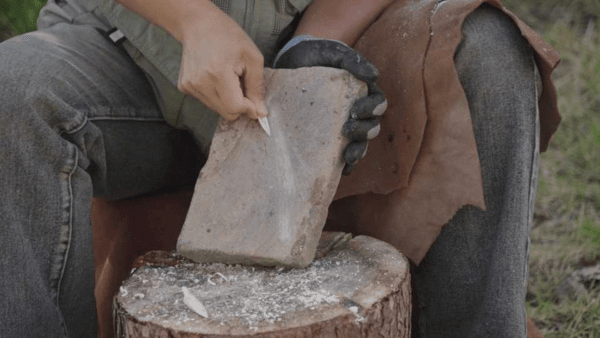
The Bonghwang-dong Archaeological Site in Gimhae is one of the most significant settlements of the Gaya Confederacy, offering a detailed picture of everyday life and residential patterns during the period. Excavations have revealed elite residential areas on Bonghwangdae Hill, shell middens, houses, storage facilities, earthen fortifications, iron-production workshops, and ancient docking facilities, underscoring the site's role as a major center for iron manufacturing and maritime trade.
Among the discoveries, archaeologists recovered a substantial number of bone arrowheads crafted from animal bones. Their presence has drawn particular attention because they continued to be produced and used extensively even after iron weapons and agricultural tools had become commonplace across Gaya society.
While prehistoric bone and antler tools have long been studied, relatively little research has focused on the manufacturing techniques or battlefield performance of bone arrowheads from the Three Kingdoms period. The latest study provides new evidence that the Gaya people employed bone and iron weapons side by side, selecting each according to practical needs rather than abandoning older technology altogether.
The National Gaya Heritage Research Institute, under the National Research Institute of Cultural Heritage of the Korea Heritage Service, reconstructed the manufacturing process based on excavated artifacts from Bonghwang-dong and conducted a series of archery experiments. The findings will be released sequentially through the institute's YouTube channel from July 15 to 19.
For the experimental archaeology project, researchers obtained the same raw materials used in antiquity—including metacarpal bones, metatarsal bones, and antlers from sika deer—to recreate the original production techniques. A traditional mulberry wood bow paired with bamboo arrows was also reproduced to simulate the conditions under which Gaya archers would have fought or hunted.
Performance tests measured penetration, range, and durability across multiple reconstructed arrowhead designs. The results were striking. Bone arrowheads successfully penetrated not only hemp clothing but also leather armor, one of the primary defensive materials of the period. Their lighter weight also enabled them to travel farther than comparable iron arrowheads.
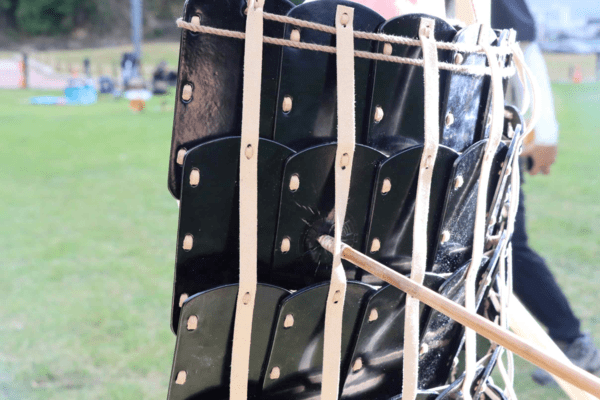
Researchers further compared arrowheads measuring approximately 10 centimeters and 6 centimeters in length. Longer examples consistently demonstrated greater penetrating power, while designs featuring a raised central ridge along the full length of the point delivered the strongest overall performance. The experiments indicate that both arrowhead length and ridge placement played decisive roles in maximizing effectiveness.
The study also showed that bone arrowheads required fewer manufacturing steps than iron counterparts, making them easier to mass-produce. Because the raw materials could be readily obtained through hunting, they also offered practical logistical advantages.
Rather than disappearing with the spread of iron technology, bone weapons remained a functional component of Gaya military equipment, complementing iron arrowheads according to circumstance. Researchers believe the findings provide important new insight into the evolution of weapon systems and daily life during the Three Kingdoms period.
The National Gaya Heritage Research Institute plans to continue investigating the functional characteristics and chronological development of bone arrowheads using the newly accumulated experimental data, providing a stronger archaeological foundation for understanding Gaya warfare and material culture.
Reported by News Culture M.J._mj94070777@nc.press
Copyright ⓒ 뉴스컬처 무단 전재 및 재배포 금지


