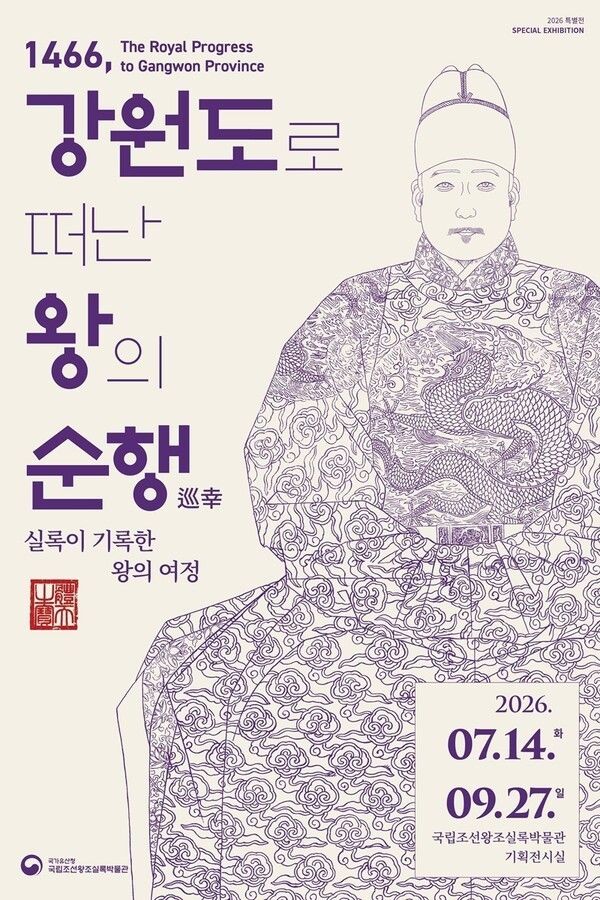
More than 560 years ago, King Sejo left the palace on a 39-day journey through Gangwon Province. It was more than a ceremonial procession. The royal tour became an opportunity to strengthen central authority, inspect regional affairs, promote scholarship and reaffirm the monarchy's ties to Buddhism. A new exhibition now retraces that historic route through the records of the Annals of the Joseon Dynasty.
The National Museum of the Annals of the Joseon Dynasty, operated by the National Palace Museum of Korea under the Korea Heritage Service, opened the special exhibition 1466: The Royal Progress to Gangwon Province on July 14. Running through Sept. 27 at the museum in Pyeongchang, Gangwon Province, the exhibition reconstructs King Sejo's 1466 royal progress while examining its political, cultural and religious significance.
Royal progresses, known as sunhaeng, were official tours in which Joseon monarchs traveled beyond the palace to inspect local administration, meet regional officials and reinforce royal authority. Sejo's journey came during a pivotal period of his reign as he worked to consolidate power after ascending the throne.
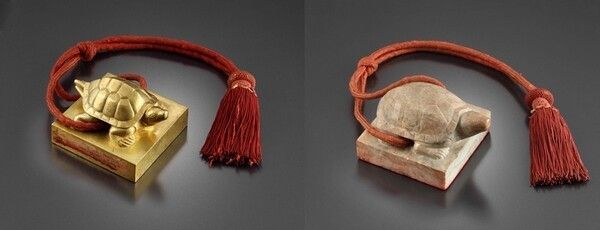
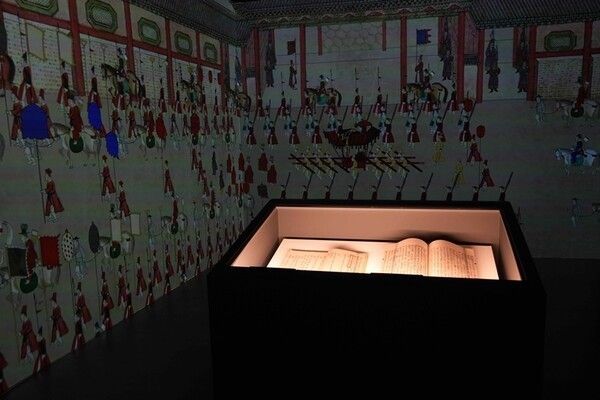
Drawing on entries from the Annals of King Sejo, the exhibition follows the king's 39-day itinerary across Gangwon Province and explores why the region became an important stage for royal governance. Archival records, artifacts and multimedia installations recreate the journey while placing visitors in the political landscape of early Joseon.
The first section, "The Road of the Royal Progress," traces Sejo's route through historical records and immersive media, illustrating how royal tours served as major affairs of state rather than symbolic ceremonies.
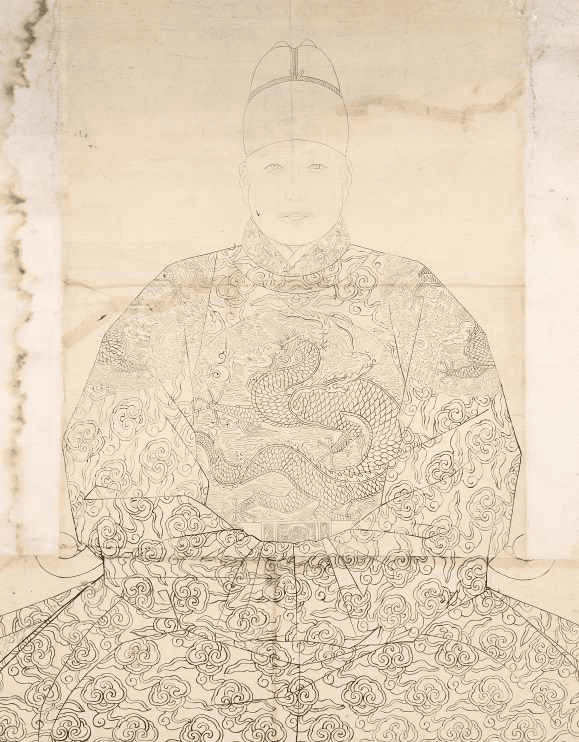
The second gallery, "Those Who Accompanied the King," introduces members of the royal family and senior officials who joined the expedition, including the future King Yejong, Grand Prince Hyoryeong, Chief State Councillor Shin Suk-ju and Left State Councillor Gu Chigwan. Highlights include a preliminary sketch of King Sejo's portrait and a portrait of Shin Suk-ju.
The final section, "Mount Odae, the Provincial Examination and Sangwonsa Temple," focuses on Sejo's activities at Mount Odae. During the journey, the king personally oversaw a special provincial civil-service examination to identify promising local scholars and attended the completion ceremony marking the reconstruction of Sangwonsa Temple, reflecting the close relationship between the monarchy and Buddhism during his reign.
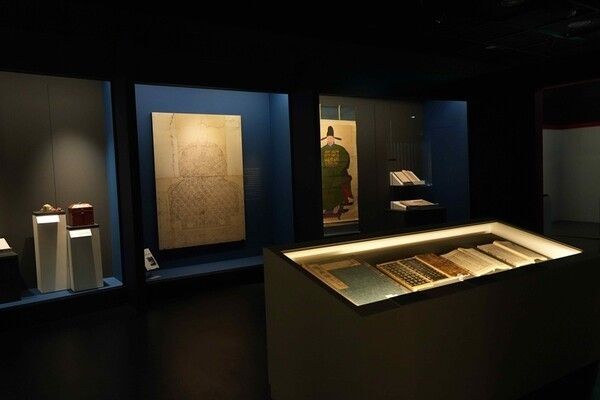
Original documents including Appeal for the Reconstruction of Sangwonsa Temple and Record of the Reconstruction of Sangwonsa Temple, written by Kim Su-on, further illustrate Sejo's connection with the temple and the broader religious dimension of the royal progress.
Rather than reducing Sejo to either an effective ruler or the controversial king who seized the throne from his nephew Danjong, the exhibition presents his 1466 journey as a window into how royal authority operated beyond the palace walls. Through the king's footsteps, visitors gain a deeper understanding of governance, culture and faith in early Joseon Korea.
Reported by News Culture M.J._mj94070777@nc.press
Copyright ⓒ 뉴스컬처 무단 전재 및 재배포 금지


