
The extraordinary life of Ota Julia, a Korean woman taken to Japan during the Imjin War who later became a figure of lasting reverence, takes center stage in History Special: Time Traveler.
The July 12 episode, titled "The Sword, the Cross and Julia," follows her journey from war captive to a woman whose convictions endured amid political upheaval, religious persecution and exile. Drawing on historical records and newly examined documents, the program reconstructs the life of a figure whose story has long remained on the margins of history.
Julia's life changed dramatically during the Japanese invasions of Korea. Taken to Japan as a child, she was raised under the protection of military commander Konishi Yukinaga and baptized into the Catholic faith, receiving the name Julia. After Konishi's downfall, however, she found herself drawn into a new political landscape when she entered the household of Tokugawa Ieyasu.

Recently uncovered handwritten correspondence offers new insight into her position within Japan's ruling elite. The documents suggest she maintained close ties to influential figures and reveal that her younger brother was officially recognized as a samurai under Tokugawa's authority, underscoring the family's unusual status.
Yet Julia's defining legacy was shaped not by political influence but by religious conviction. Historical accounts indicate that she secretly relayed information about anti-Christian persecution from within the court, helping believers avoid arrest and protecting vulnerable Catholic communities during one of Japan's most turbulent periods.
Her unwavering faith eventually brought her into direct conflict with Tokugawa's government. Refusing to abandon Christianity, she is said to have declared that she could not forsake "the King of Heaven" for "the king of the earth." Rather than renounce her beliefs, she accepted exile to a remote island.
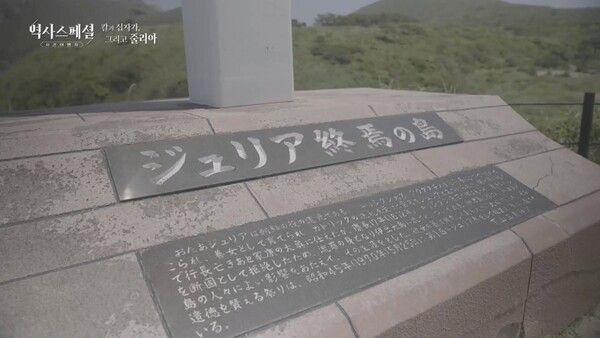
Far from ending her story, exile transformed her legacy. Julia devoted herself to caring for local residents, and over time she came to be remembered by the island community as a sacred figure whose compassion outlived political power.
Her remarkable life also inspired celebrated Japanese novelist Shusaku Endo, who drew on her story in his literary work. Combined with newly revealed historical evidence, the documentary offers a fresh perspective on Julia's final years and the enduring impact of her choices.
Born in Joseon but never able to return home, and living at the heart of Japan's ruling class without ever truly belonging to it, Ota Julia forged a legacy defined not by power or nationality, but by conviction.
History Special: Time Traveler airs July 12 at 9:30 p.m. on KBS1.
Reported by News Culture M.J._mj94070777@nc.press
Copyright ⓒ 뉴스컬처 무단 전재 및 재배포 금지


