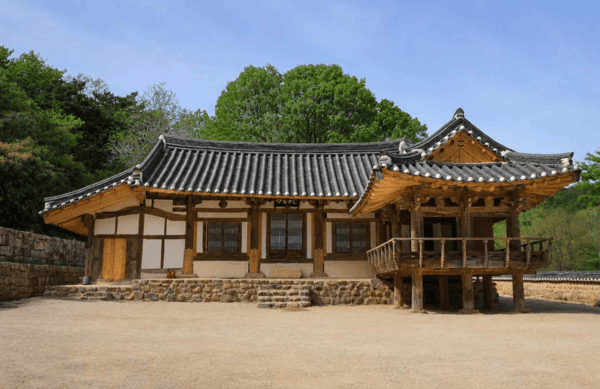
Few heritage sites illustrate Korea's changing ritual traditions as vividly as Daljeon Jaesa. Once established as a small Buddhist hermitage and later transformed into a Confucian ancestral shrine, the historic complex in Pohang, North Gyeongsang Province, has preserved more than four centuries of ceremonial life. That remarkable continuity has now earned the site a nomination for National Folk Cultural Heritage designation.
The Korea Heritage Service announced the proposed designation on July 3, recognizing Daljeon Jaesa as an exceptional record of the evolution of Korean ancestral culture. The proposal begins a 30-day public review period before the Cultural Heritage Committee reaches a final decision.
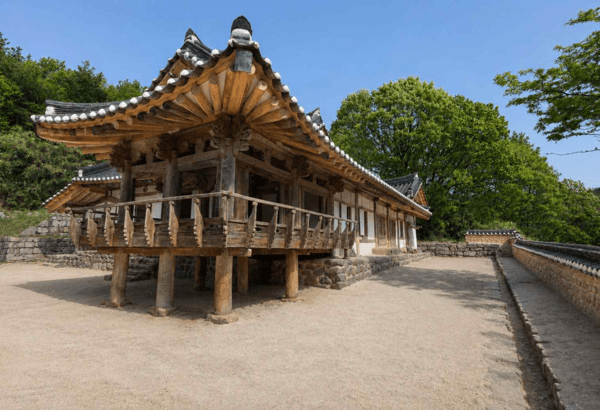
The site was originally founded as a bunam, a modest Buddhist hermitage where resident monks cared for the tombs of the renowned Neo-Confucian scholar Eon-jeok Yi (1491–1553) and members of the Yeoju Yi clan. Its identity changed dramatically in 1754, when residential quarters for clan members, spaces for preparing ancestral rites, a ceremonial granary and Okseongnu Pavilion were added, gradually reshaping the compound into the Confucian jaesa that survives today.
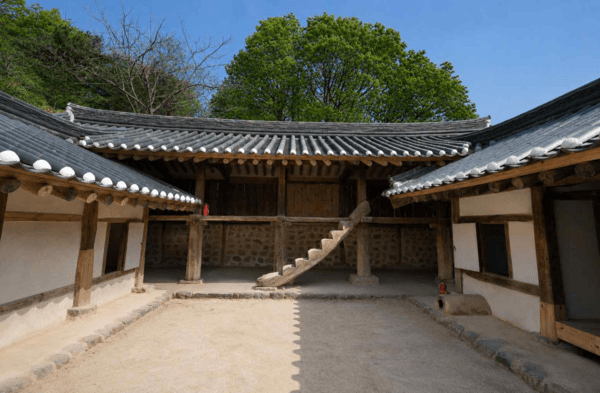
Unlike many historic sites whose transformations can only be inferred, Daljeon Jaesa preserves an unusually clear record of its own evolution. Historical documents, including the Daljeonamgi and the ridge-beam inscription of Daljeon Jaesa, trace the complex's gradual transition from a Buddhist retreat to a Confucian ritual space, documenting a broader shift that reshaped Korean religious and family traditions after the seventeenth century.
The architecture reflects that layered history. The compound follows the distinctive open-corner layout characteristic of northern Gyeongsang Province, combining multiple building forms into a unified ceremonial complex. Together with the family burial grounds, a memorial stele erected in 1586 and the ritual lands that sustained generations of ancestral ceremonies, the site preserves a remarkably complete example of a late Joseon clan shrine.
Its Buddhist origins remain visible as well. The former worship hall still retains the spatial characteristics of a hermitage where Buddhist images were once enshrined, while double ikgong-style bracket systems and traditional wooden panel ceilings survive from the earliest phase of construction. Even Okseongnu Pavilion, added during the eighteenth-century expansion, consciously continued those architectural traditions instead of replacing them.
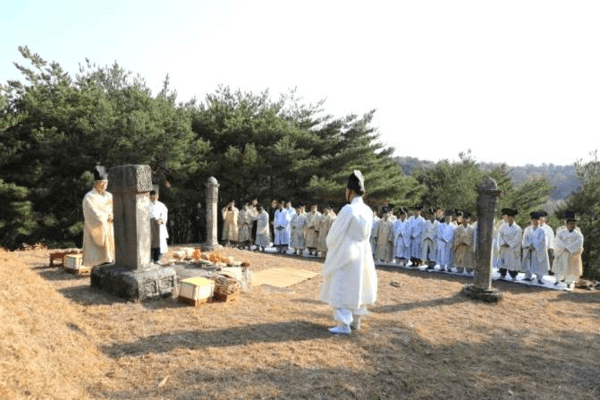
Yet architecture tells only part of the story. Daljeon Jaesa continues to serve the purpose for which it was transformed centuries ago. Members of the Yeoju Yi clan still gather here to perform ancestral rites according to long-established customs, preserving not only the historic buildings but also the ceremonial traditions that give the site its enduring meaning.
That living continuity ultimately sets Daljeon Jaesa apart. More than a well-preserved historic compound, it stands as a rare cultural landscape where architecture, family lineage and ritual practice have remained inseparable for generations, offering an enduring record of how Korea's ancestral traditions continue to be lived rather than simply remembered.
Reported by News Culture M.J._mj94070777@nc.press
Copyright ⓒ 뉴스컬처 무단 전재 및 재배포 금지


