The Korea Association of Performing Arts for the Disabled concluded its two-day "ALL SEE FESTA 2026" at Bukahyeon Art Hall in Seoul, presenting an inclusive arts festival designed to rethink how audiences experience live performance. Centered on accessibility and shared participation, the event highlighted new approaches to barrier-free cultural programming.
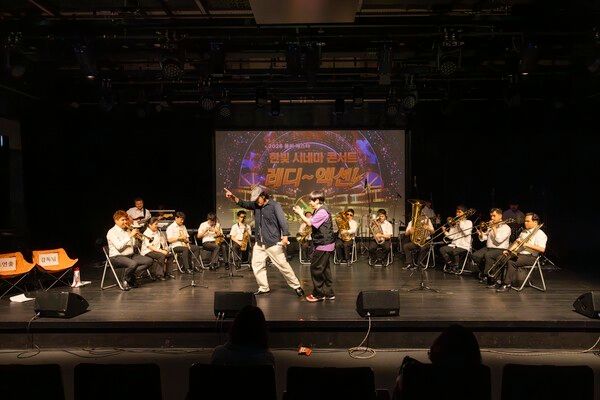
Rather than relying on a single way of experiencing performance, the festival encouraged audiences to engage through multiple senses. Its production incorporated accessibility features that invited visitors to experience the stage beyond conventional visual and auditory formats, creating a more open and individualized relationship between performers and audiences.
Festival artistic director Choi Yong-hwan said the event began with a simple goal: creating an environment where everyone could experience art regardless of differences in perception. He added that the organization plans to continue expanding performance programs centered on accessibility and diversity.
The opening day featured the ALL SEE Ensemble, whose performance brought together disabled and non-disabled musicians on the same stage. Hanbit Arts Troupe followed with a concert reimagining music from films, television dramas, and animation, while brass ensembles, live bands, and K-pop performances showcased a broad musical spectrum that emphasized artistic diversity.
The evening program featured jazz pianist Maria Kim performing with her band in a set of jazz standards. Dance performances were integrated with the live music, creating a multidimensional stage production, while guided commentary helped make the program more approachable for audiences unfamiliar with the genre. Despite unfavorable weather, the venue drew a strong turnout throughout the evening.
On the festival's second day, the opera L'elisir d'amore was presented in a barrier-free format. Simultaneous subtitles and audio description allowed both deaf and blind audience members to follow the narrative and emotional development of the work. The production balanced accessibility with artistic quality, earning positive responses from both experienced opera-goers and first-time audiences.
Outside the theater, visitors participated in interactive programs including Braille and white cane experiences, demonstrations of assistive technologies, keyring-making workshops, caricature sessions, and exhibitions. By combining education, participation, and performance, the festival demonstrated how accessible arts events can serve as comprehensive cultural experiences for a broad public.
Reported by News Culture M.J._mj94070777@nc.press
Copyright ⓒ 뉴스컬처 무단 전재 및 재배포 금지


