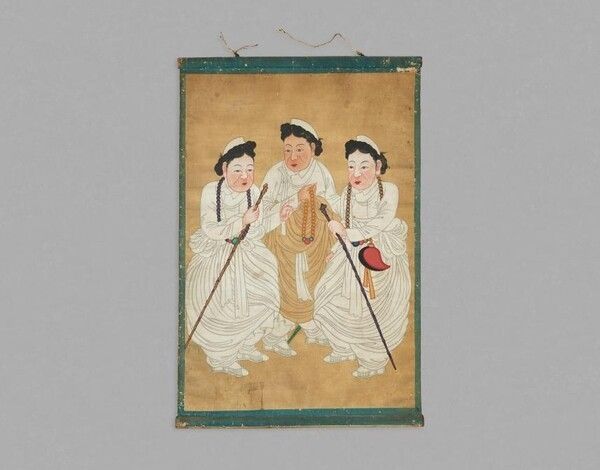
The Seoul Geumseongdang Shamanic Paintings, a set of ritual artworks depicting deities worshipped in Korean shamanism, have been designated as National Folk Cultural Heritage, recognizing their importance as rare visual records of traditional shamanic practices in Seoul and the surrounding Gyeonggi region.
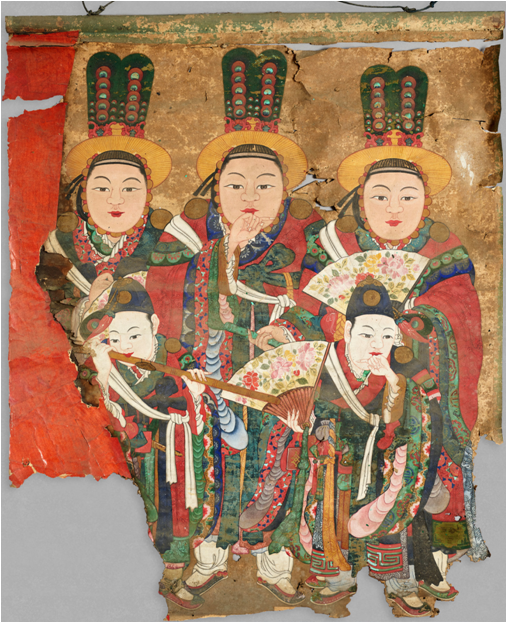
The designation, announced June 23 by the Korea Heritage Service, covers eight paintings currently housed at the Eunpyeong History Hanok Museum. Pigment analysis revealed a combination of traditional materials such as mercury- and lead-based pigments alongside synthetic pigments introduced during the modern era, confirming that the works were produced in the late 19th century.
The paintings originally belonged to Seoul Geumseongdang, a ritual shrine dedicated to both Geumseong Daewang, the mountain deity of Geumseongsan in Naju, and Grand Prince Geumseong, the sixth son of King Sejong of the Joseon Dynasty.
Grand Prince Geumseong was exiled and executed after opposing Grand Prince Suyang's seizure of the throne from King Danjong. Folk tradition later deified the prince, and Geumseongdang became a site where his spirit was honored. The newly designated paintings were actively used in shamanic rituals within the shrine and remained in place until their preservation as cultural heritage.
Each painting serves a distinct religious and symbolic function. The set includes Sam Bulsa Grandmother, associated with longevity and blessings; Blind Taoist Master, believed to grant prosperity, family fortune and long life; and Blind Samsin Lady, a deity connected with childbirth and the healing of eye ailments.
Other paintings portray Hogu Agassi, a deity believed to ward off diseases such as smallpox; Jung Bulsa, associated with childbirth and longevity; Changbu Gwangdae, patron of music and performance; Byeolsang, another protector against smallpox; and Mal Seonang, a guardian spirit believed to repel evil entities at village entrances.
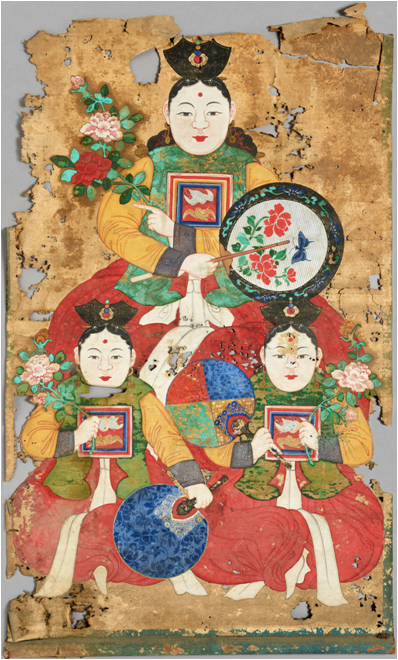
The designation is particularly significant because very few shamanic paintings from the late 19th century survive today. Scholars also noted stylistic elements more commonly found in Buddhist paintings, including rounded facial features and elongated fingers, suggesting that the works may have been created by professional monk-painters active in temple art production.
The paintings further stand out for their sophisticated use of shading, detailed decorative motifs and heightened sense of dimensionality, characteristics that distinguish them from many surviving examples of Korean shamanic art.
The Korea Heritage Service said it will work with the Eunpyeong History Hanok Museum and local authorities to develop long-term preservation and public-utilization strategies for the eight paintings.
Reported by News Culture M.J._mj94070777@nc.press
Copyright ⓒ 뉴스컬처 무단 전재 및 재배포 금지


