By the mid-1960s, South Korean college students embraced personal freedom and smaller family ideals while remaining largely cautious about political engagement, according to newly examined archival materials from the United States.
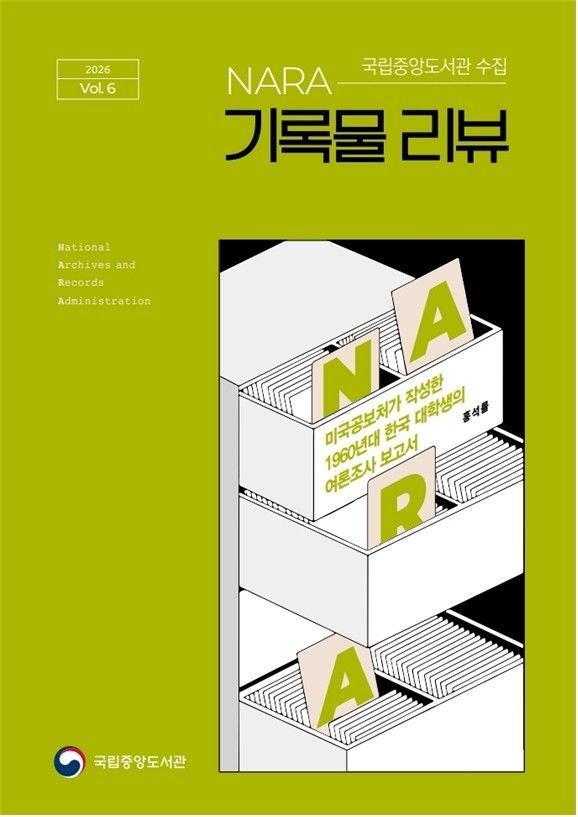
The National Library of Korea has published the sixth edition of its NARA Records Review series, titled Public Opinion Surveys of Korean College Students Conducted by the United States Information Agency in the 1960s. Written by Professor Hong Seok-yul of Sungshin Women’s University, the study provides an in-depth analysis of six public opinion reports produced by the United States Information Agency (USIA), shedding light on the political views, cultural lifestyles, media consumption patterns, and social attitudes of Korean university students during the era.
According to the records, students in Seoul displayed strong interest in Korean reunification but showed limited enthusiasm for direct political participation. A 1965 survey found that while reunification ranked high among student concerns, politics remained a relatively distant issue. By 1968, 61 percent of respondents agreed that political affairs should be left to politicians and that economic development should take precedence over political reform.
Researchers suggest that this perspective reflected the realities of a nation still focused on reconstruction and economic survival in the aftermath of war and political instability.
By the end of the decade, however, student attitudes had begun to shift. A 1969 survey conducted by the Korean National Commission for UNESCO found that 67 percent of male students and 63 percent of female students disagreed with the statement that “politics is not a matter for students.” The findings point to growing support for political participation among young people.
The report argues that the prominent role university students later played in South Korea’s democratization movement was not predetermined. Rather, it emerged gradually through encounters with major historical events, including protests against the Korea-Japan normalization treaty between 1964 and 1965 and opposition to the constitutional revision for a third presidential term in 1969.
The records also offer a detailed portrait of student life beyond politics. News and current affairs were primarily consumed through newspapers, while radio served as the dominant source of music and entertainment. Moviegoing was a regular activity, with many students visiting theaters at least once a month.
Particularly notable was the role of dabang—traditional Korean coffeehouses—which functioned as far more than places to drink tea or coffee. Students gathered there to listen to music, read newspapers and magazines, exchange ideas, and engage in discussion. Some establishments even evolved into informal social hubs frequented almost exclusively by university students.
Viewed from today’s perspective, the surveys trace the formative stages of modern Korean youth culture and civic consciousness. They reveal how a generation initially focused on personal freedom gradually found a public voice, responding to the demands of its era and helping shape broader social change.
The transformation of those students—from observers of society to active participants in it—continues to resonate with younger generations navigating their own relationship with citizenship, culture, and public life.
Reported by News Culture M.J._mj94070777@nc.press
Copyright ⓒ 뉴스컬처 무단 전재 및 재배포 금지


