Walking through the capital of the ancient Silla Kingdom is becoming a reality again — not through physical reconstruction, but through digital technology.
As South Korea’s Heritage Administration accelerates its Silla Royal Capital Digital Reconstruction Project, the cultural heritage sector is emerging as a new frontier for immersive content industries. Backed by a budget of KRW 8.6 billion ($6.3 million), the initiative aims to recreate key Silla-era sites and architectural landmarks within virtual environments, allowing visitors to experience them firsthand.
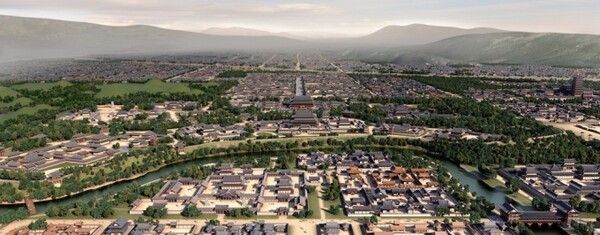
Dexter Studios has joined the project through a consortium with the Technology Research Institute for Culture (TRIC). The company will oversee 3D content production and creative direction for large-scale VR experiences and immersive exhibition programs. The project marks another expansion for Dexter, which built its reputation through visual effects work in film and television before moving into cultural heritage applications.
The digitization of cultural heritage has become one of the content industry's fastest-growing sectors. While preservation and exhibition once dominated heritage management, the market is increasingly shifting toward interactive and participatory experiences. Advances in artificial intelligence, 3D scanning, digital twins and extended reality (XR) technologies have made it possible to reconstruct historical spaces that would be difficult—or impossible—to restore physically.
South Korea has already launched a number of related initiatives. The National Museum of Korea operates immersive digital galleries featuring Joseon-era paintings and cultural artifacts presented through large-scale media art installations. The Heritage Administration has also expanded digital restoration programs covering royal palaces, tombs and archaeological sites. In Gyeongju, media-art exhibitions inspired by Silla history and folklore have become established tourism attractions, generating new visitor demand.
Private-sector participation is growing alongside public investment. Companies specializing in VFX, XR and immersive storytelling are increasingly entering the cultural heritage market, applying technologies developed for film and television production to digital restoration and exhibition design.
Industry observers believe these projects could generate broader benefits for tourism, education and regional economies. Internationally, virtual recreations of ancient ruins and historic cities are already being used as tourism drivers. In South Korea, similar initiatives are expanding across major heritage destinations including Gyeongju, Gongju and Buyeo.
The Silla Royal Capital Digital Reconstruction Project reflects that broader trend. Rather than simply viewing artifacts in display cases, visitors will be able to explore reconstructed palaces and cityscapes, experiencing historical environments in a more direct and immersive way.
As cultural heritage evolves from something preserved to something experienced, digital technology is increasingly serving as the bridge connecting the past with the present.
Reported by News Culture M.J._mj94070777@nc.press
Copyright ⓒ 뉴스컬처 무단 전재 및 재배포 금지


