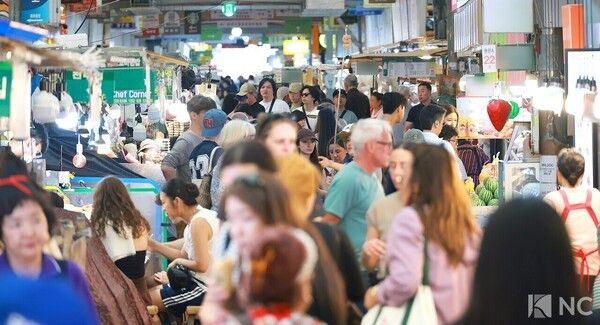
As international tourism moves beyond recovery and into a new phase of expansion, South Korea is emerging as one of the industry's standout growth markets.
According to the June edition of the International Tourism Market Outlook published by the Korea Culture & Tourism Institute, South Korea received approximately 4.74 million inbound visitors during the first quarter of 2026. The figure represents a 22.6% increase from a year earlier and stands more than 23% above pre-pandemic 2019 levels, marking the strongest first-quarter performance on record.
The growth reflects more than a temporary rebound. Despite ongoing economic uncertainty and geopolitical tensions worldwide, inbound demand for South Korea has continued to rise steadily, suggesting a broader expansion of the country's tourism base.
Diversified Source Markets Fuel Momentum
Regional data shows South Korea's tourism growth is becoming increasingly balanced across multiple markets.
Europe posted the strongest gain, with arrivals rising 27.5% year-over-year, while Asia recorded a 21.7% increase. Oceania and the Americas also contributed to the upward trend, growing 15.5% and 12.7%, respectively.
The shift has been supported by the global popularity of Korean cultural content, the normalization of international flight networks, and improvements in entry procedures.
Growth from Europe is particularly notable, as long-haul travelers typically stay longer and spend more than visitors from nearby markets, generating wider economic benefits across the tourism sector.
At the same time, travel patterns within Asia continue to evolve. Independent travelers are accounting for a larger share of arrivals, driving demand for regional destinations, cultural experiences, and experiential tourism products.

China and Japan Show Structural Changes
South Korea's two largest inbound markets, China and Japan, are also undergoing significant changes.
China generated approximately 1.42 million visitors during the first quarter, up 26.9% from the previous year. Arrivals have already surpassed 2019 levels, while monthly figures continue to show stable growth. Although the market remains below its 2016 peak, industry observers see substantial room for further expansion.
The growing share of independent Chinese travelers and changing spending patterns point to a broader transformation in visitor behavior.
Japan presents a similarly encouraging picture. Despite Japan's overall outbound travel market not yet returning to full strength, travel demand for South Korea continues to increase.
Approximately 940,000 Japanese visitors traveled to South Korea during the first quarter, representing a 20% increase year-over-year and surpassing 2019 levels. Analysts say cultural appeal and accessibility are becoming stronger drivers than exchange-rate considerations.
The influence of K-pop, Korean dramas, and film, combined with expanded air connectivity, has helped strengthen South Korea's position among Japanese travelers. Tourism is increasingly functioning as an extension of cultural consumption rather than a purely leisure-oriented activity.

From Recovery to Sustainable Growth
Industry observers note that the latest figures represent more than rising visitor numbers.
South Korea's inbound tourism market is becoming more diversified, reducing dependence on specific countries while improving resilience against external shocks. At the same time, traveler preferences are shifting beyond shopping toward cultural experiences, local exploration, food tourism, and lifestyle-focused activities.
The combination of restored airline capacity and policy support has further accelerated the sector's recovery and strengthened its long-term growth outlook.
Content-Led Tourism Becomes a Competitive Advantage
Current indicators suggest inbound demand for South Korea will likely remain on a stable upward trajectory.
The next phase of competition, however, may depend less on visitor volume and more on the quality of experiences offered.
Industry stakeholders increasingly view content-driven tourism as a key growth engine. Travel programs linked to K-pop, film and television locations, live performances, and regional cultural assets have the potential to extend visitor stays and increase spending.
As global tourism becomes increasingly experience-oriented, South Korea's long-term competitiveness may hinge not on how many travelers it attracts, but on how effectively it transforms cultural appeal into meaningful visitor experiences.
Reported by News Culture M.J._mj94070777@nc.press
Copyright ⓒ 뉴스컬처 무단 전재 및 재배포 금지


