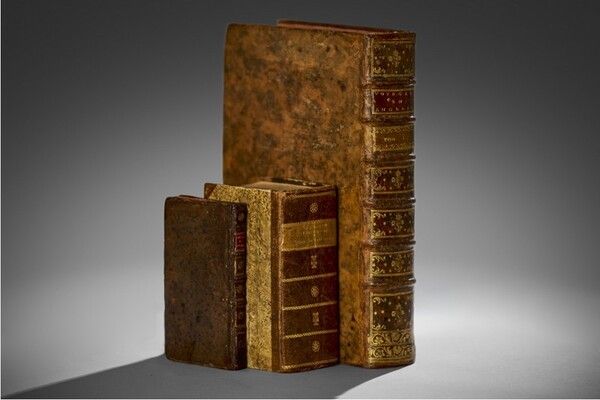
In an era when European merchant fleets were expanding trade routes across Asia, the accidental voyage of a Dutch sailor produced one of the most influential accounts of Korea ever written. Hamel's Journal stands as both a firsthand record of 17th-century Joseon society and a valuable document illuminating the history of maritime exchange in East Asia.
The National Museum of Incheon Maritime History has selected Hamel's Journal, the account of Dutch sailor and clerk Hendrick Hamel's years in Joseon, as its Maritime Artifact of the Month for June.
Hamel served as a clerk aboard the Sperwer, a merchant vessel operated by the Dutch East India Company. In August 1653, the ship was wrecked off the coast of Jeju Island, marking the beginning of a 13-year stay in Joseon for Hamel and his fellow Dutch sailors. Although they were granted an audience with King Hyojong and repeatedly requested repatriation, their appeals were denied. Several crew members eventually escaped through Nagasaki and returned to the Netherlands.
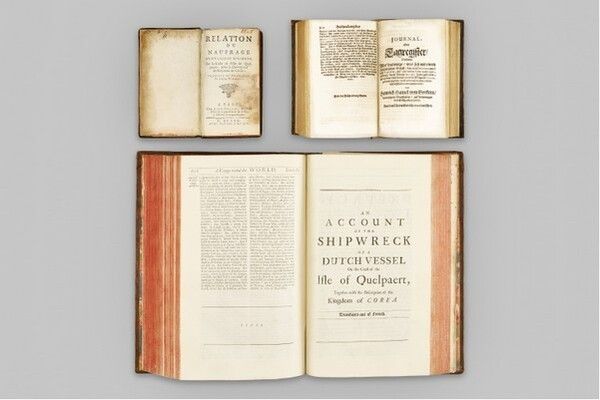
Contrary to what its enduring popularity might suggest, Hamel's Journal was not written as a memoir. Hamel compiled the report for practical purposes: to prove to the Dutch East India Company that the shipwreck had not been caused by negligence and to claim wages that had gone unpaid during his years of involuntary residence in Joseon.
The text documents the crew's shipwreck, detention, and daily life while also offering detailed observations on Joseon's geography, industries, political and military institutions, foreign relations, customs, and social practices. Its value lies in providing one of the earliest and most comprehensive Western descriptions of Korea.
At a time when little information about Joseon had reached Europe, the account captured the imagination of readers amid a growing market for travel narratives and exploration literature. Following its first publication in the Netherlands, the work was translated into French, German, English, and several other languages, gaining widespread popularity across Europe.
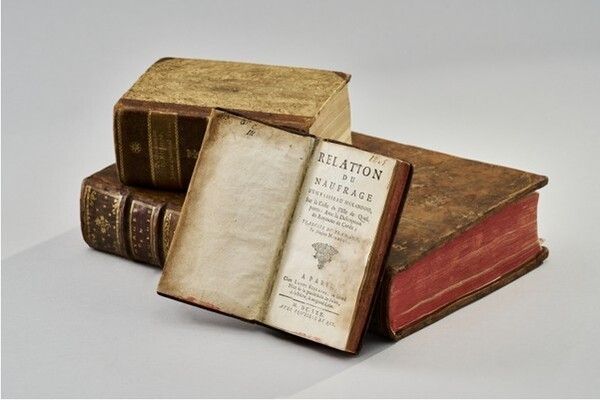
The book's publishing history was not without complications. As commercial editions and translations spread, publishers often added sensational titles, illustrations, and even material absent from Hamel's original manuscript in order to attract readers. These alterations contributed to distorted perceptions of Joseon in parts of the Western world.
Nevertheless, until Korea's ports were opened to foreign powers in the 19th century, Hamel's Journal remained one of the most important sources through which Europeans understood the Korean Peninsula.
Today, the volume is preserved and studied as part of the collection of the National Museum of Incheon Maritime History. Through ongoing exhibitions and research, the museum continues to explore how Hamel's account reveals both the maritime networks of East Asia and Western perceptions of Joseon during the 17th century.
Reported by News Culture M.J._mj94070777@nc.press
Copyright ⓒ 뉴스컬처 무단 전재 및 재배포 금지


