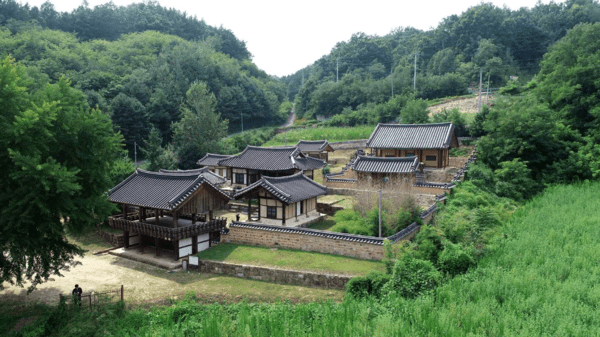
Andong Yean Hyanggyo, which served as a center of Confucian education and local community organization during the Joseon Dynasty, stands as one of the region’s most significant architectural heritage sites. Despite facing the threat of inundation during the construction of Andong Dam, the complex remained in its original location and has survived to the present day. For centuries, it functioned as a key space for education and ancestral rites, playing a central role in local society.
According to the Korea Heritage Service on June 5, the agency has announced plans to designate the Daeseongjeon Hall of Andong Yean Hyanggyo as a state-designated cultural heritage property, officially classified as a Treasure. Following a 30-day public notice period and the collection of expert opinions, the proposal will undergo final review by the Cultural Heritage Committee.
Historical records, including Yean Hyanggyoji and Chucheonjip, indicate that Yean Hyanggyo was first established in 1411 during the early Joseon period. Daeseongjeon, the main ritual hall within the complex, was also completed that year and later underwent major reconstructions in 1569 and 1723.
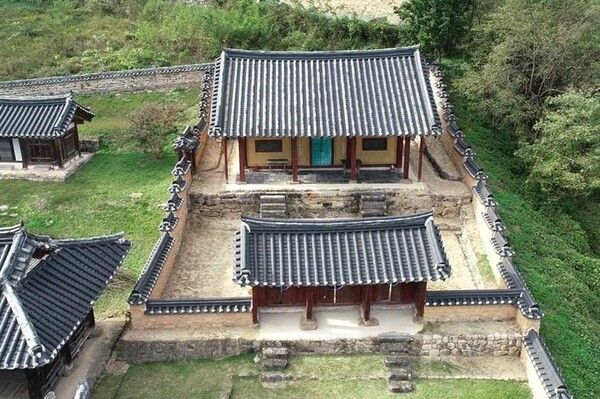
Its level of historical preservation has been confirmed through scientific investigation. Tree-ring dating analysis conducted on interior wooden components revealed timber associated with the 1569 reconstruction. The findings demonstrate that architectural elements spanning from the 16th century to the early 18th century remain intact, supporting its value as a rare example preserving the original characteristics of mid-Joseon government-sponsored educational architecture.
Architecturally, Daeseongjeon displays distinctive features that set it apart from other Confucian school buildings across Korea. The lecture area centered on Myeongnyundang and the ritual area containing Daeseongjeon were arranged in response to the site's sloping terrain, creating a unique dual-axis composition that combines both the traditional Jeonhak Humyo layout, with educational facilities in front and ritual spaces behind, and the Jwahak Umyo arrangement, with educational and ritual functions positioned on separate lateral axes.
The hall consists of three bays across the front and three bays in depth. It features square pillars along the exterior and round pillars within the interior, an uncommon combination that reflects a bold architectural approach. Traditional construction techniques preserved in the window and door framework further enhance its academic and historical significance.
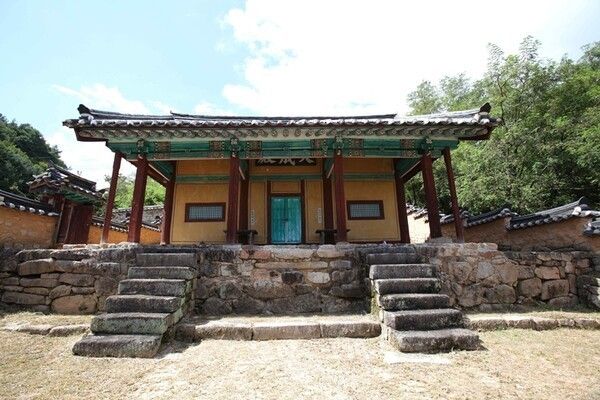
In terms of aesthetics, the building embodies a restrained beauty that prioritizes function over ornamentation. Straight, carefully finished structural members are used throughout the building. Rather than incorporating elaborate decorative elements within the bracket system connecting columns and beams, builders reinforced the structure with linear components designed to withstand lateral and compressive forces.
Above the main beams sits a meticulously assembled bracket support in the shape of the Chinese character 工. This feature reflects the understated traditional construction methods commonly found in Confucian architecture throughout the Andong region, including structures such as Sangdeoksa and Jeongyodang at Dosan Seowon.
The proposed Treasure designation of Andong Yean Hyanggyo Daeseongjeon highlights a heritage site where precise historical chronology, regional architectural identity, and artistic originality converge. The designation is expected to bring renewed attention to the significance of Confucian architecture in Korea's cultural heritage landscape.
Reported by News Culture M.J._mj94070777@nc.press
Copyright ⓒ 뉴스컬처 무단 전재 및 재배포 금지


